Category: Destinations
dambulla

Dambulla

Dambulla

Dambulla situated in the Matale District, Central Province of Sri Lanka. Due to its location at a major junction, it’s the centre of vegetable distribution in the country. Major attractions of the area include the largest and best preserved cave temple complex of Sri Lanka, and the Rangiri Dambulla International Cricket Stadium, famous for being built in just 167 days. The area also boasts the largest rose quartz mountain range in South Asia, and the Iron wood forest, or Na Uyana Aranya.

Hot Air Ballooning – Registered with Civil Aviation Authority of Sri Lanka, Sun Rise Balloning is based in the Cultural Triangle launching from Kandalama. Operated by certified commercial Hot Air Balloon Pilots, with an excellent knowledge of the equipment, weather and terrain to make all flights sage. A balloon fling time is approximately one hour. Pick time between 4.45 am – 5-30am. The launch and picturesque landscape at sunrise, as nature awakens to the first rays of the new day is the reward to an early start. Ballooning is totally weather dependent and can be cancelled at the launch site. The final decision will be made by the Pilot as safety first is vital. Landing…. the smiling faces and hearty welcomes of the local villagers coming to greet you is an unexpected delight. Hot Air Baloon will come down to earth and the reality of returning to life as seen from the ground.
The distance and direction of travel will depend on the winds of the day. Season is November to April.

Dambulla Rock Temple

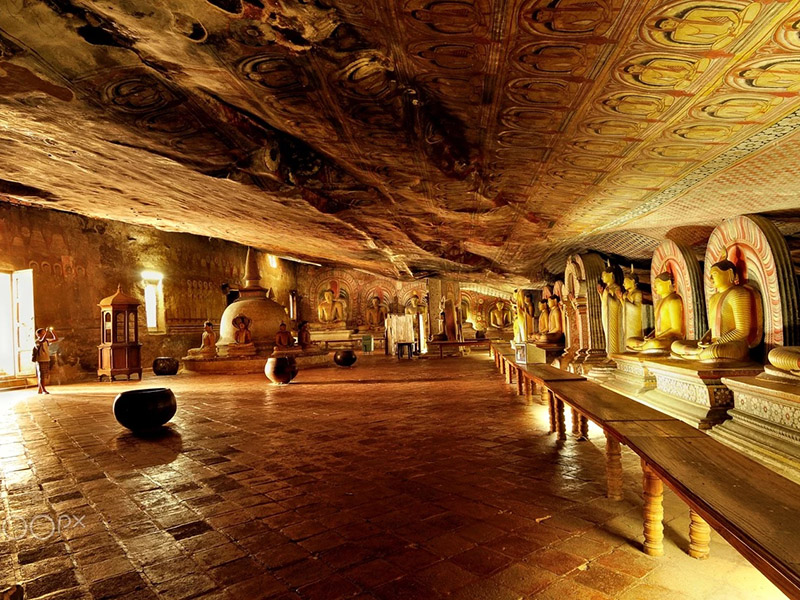
Dambulla rock temple has been built in the 1st century B.C. and it is a UNESCO world heritage site. King Valagaba of Anuradhapura is traditionally thought to have converted the caves into a temple in the 1st c. BC. Exiled from Anuradhapura, he sought refuge here from South Indian usurpers for 15 years. After reclaiming his capital, the King built a temple in thankful worship. Many other kings added to it later and by the 12th century, the caves had become a major religious centre and still are. Also, it is the most impressive of Sri Lanka’s cave temples. Hewn into a 160m granite outcrop are the remarkable cave temples of Dambulla. Located at the centre of the Island and on the main route north to Anuradhapura and Polonnaruwa, the cave temples are masterpieces of Buddhist art. Each is filled with murals depicting scenes from the Buddha’s life, and gilded statues of the Buddha in various poses. Prehistoric Sri Lankans would have lived in these cave complexes before the arrival of Buddhism in Sri Lanka as there are burial sites with human skeletons about 2700 years old in this area, at Ibbankatuwa near the Dambulla cave complexes.

These were embellished by subsequent rulers, especially during the Kandyan period in the 17th and 18th centuries. The golden age of the temple dawns with the work done by King Nissankamalla in the 12th century. There is an inscription by him below the cave to the south of the frontispiece, incidentally the longest epigraph found here. Mention is made in it of the work he did to unite the Buddhist Order and the renovations he carried out in various temples in the country. In the Dambulla temple he had gilded the standing, sitting and recumbent images of the Lord Buddha and named the temple “Golden Rock Caves”. He did gild 73 statues of Lord Buddha at the Dambulla temple. After King Nissankamalla the site seems to have been abandoned again and the next major renovation occurs in the reign of King Senerat in 17th century. He had renovated 63 statures of the Lord Buddha. King Kirti Sri Jajasinghe of the late 18th century too was responsible for the decoration of the caves with a large series of murals.

There are more than 80 documented caves in the surrounding area. Major attractions are spread over five caves, which contain statues and paintings. A cave 2, the Maharaja Vihara is the largest and most spectacular at over 50m long, 7m high and almost 25m deep. The spiritual energy at Dambulla is palpable and the Buddhist art on display is unparalleled in Sri Lanka. An added bonus is the majestic view from the top of the rock. The complex of five caves with over 2000 sq. meters of painted walls and ceilings is the largest area of paintings found in the world. It contains over 150 images of the Buddha of which the largest is the colossal figure of the Buddha carved out of rock and spanning 14 meters, three statues of Sri Lankan kings and four statues of gods and goddesses. The latter include Vishnu and the Ganesha. Depictions on the walls of the caves include the temptation by the demon Mara, and Buddha’s first sermon. This is one of the largest rock temples in Sri Lanka, with its history extending from prehistoric times down to the modern period. The caves scattered in the area must have served as cells where Buddhist monks lived, but as time passed by, they were enlarged and transformed into shrines. It is a popular center of Buddhist pilgrimage and also a complex of archaeological and historical interest. Dambulla had played an important part throughout Sri Lanka’s history because of its strategic location and scenic beauty. The rock rises amidst the surrounding sylvan landscape hiding in its bosom the caves containing exquisite murals and sculpture. A characteristic feature is a large vessel kept to collect water dripping from the ceiling, the water believed to be sacred and used in daily temple rituals. Apparently these water drops fall through a split in the rock ceiling from ancient times and the artists, in order to camouflage the situation, had painted a river scene here with fish swimming about.
Nuwara Eliya

Nuwara Eliya

Nuwara Eliya

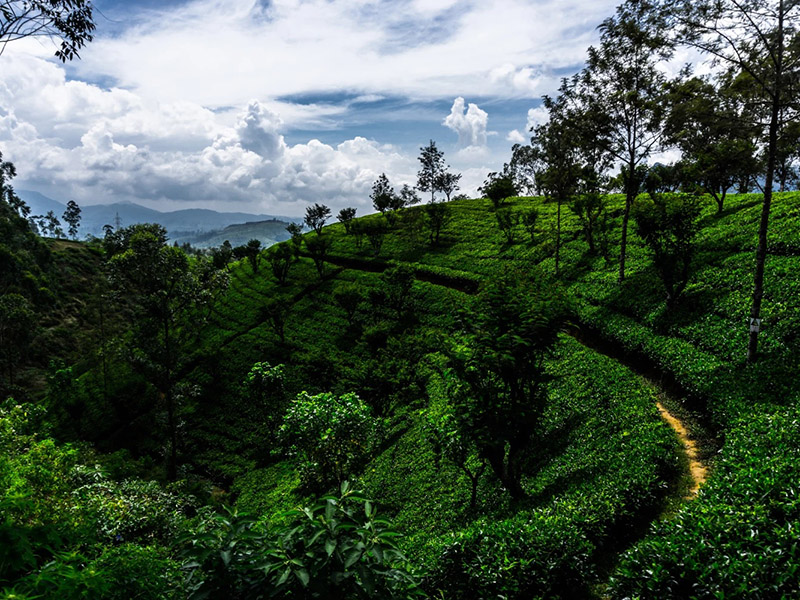
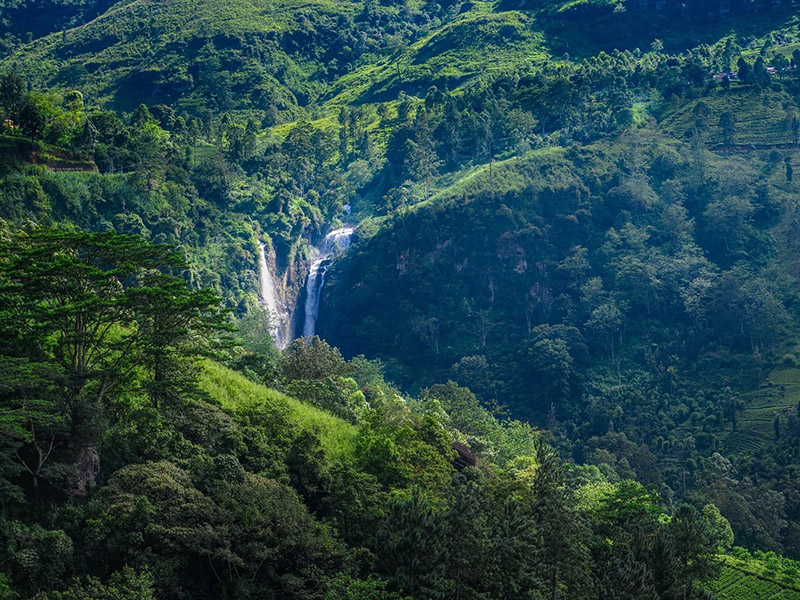
Also known as “Little England”, the scenic town of Nuwara Eliya lies nestled in a valley more than 2500 m above sea level and is surrounded by misty mountain ranges covered in pine forests and tea cultivations. Nuwara Eliya has a much cooler climate, which is in stark contrast to the tropical climate experienced in other parts of the island. The mountains surrounding Nuwara Eliya is covered witha carpet of tea bushes and the whole process of tea manufacturing, from green leaf to the fragrant contents of a packet of Ceylon Tea, can be watched at many of the tea factories in the area. Also close by is the Hakgala Botanical Gardens.

Arugam Bay

Arugam Bay

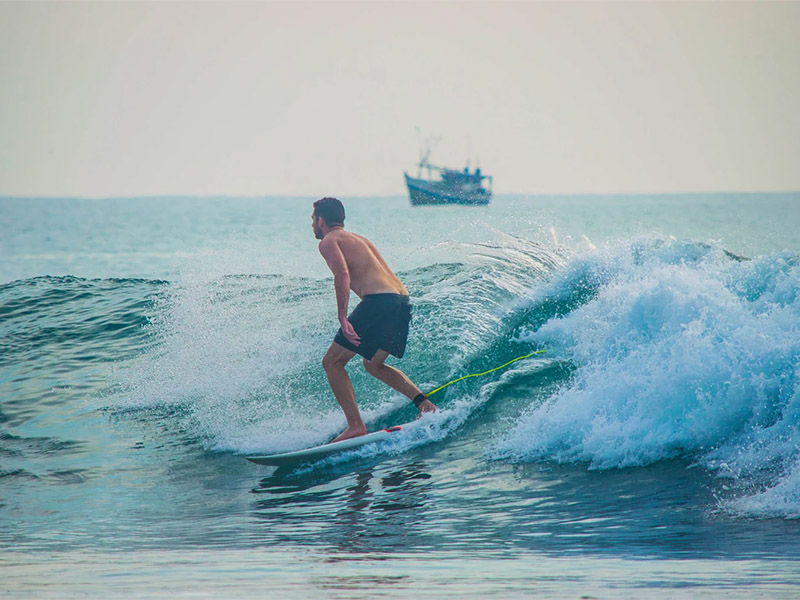
Arugam Bay is on the list of the top ten surf points in the world. The best time of the year is between May and November. In Arugam Bay there are three points’ breaks “The Point”, “Pottuvil Point” and “Crocodile Rock”. The very first international surfing competition was held by ISA (International Surfing Association) in the summer of 2004 and the surfing season in Arugambay is from beginning of April and ends of October. Surfers at Arugam Bay It’s a little after sunrise on Sri Lanka’s east coast and at Arugam Bay the first surfers are out. Tousled-haired local boys and wave-chasing tourists’ breeze across the golden sand with well-worn surfboards tucked underarm. They head to the end of the long beach, to Main Point, where six-foot waves rise and roll to shore. Arugam Bay is a bay situated on the Indian Ocean in the dry zone of Sri Lanka’s southeast coast. Lovely Arugam Bay, a moon-shaped curl of soft sand, is home to a famed point break that many regard as the best surf spot in the country. Home to pristine beaches and a laidback lifestyle, Arugam Bay is carving out a niche for itself as a surfing paradise. Arugam Bay also makes a great base for several adventures in the surrounding hinterland. During the low season (November to April) things get extremely quiet and many places close altogether, but it can also be a serene time to visit, with few tourists and verdant landscapes. It’s a tiny place, with a population of a few hundred, and everything is dotted along a single road which parallels the coast. If you’re not a surfer, there are plenty of other draws: beachfront guesthouses, Oceanside restaurants and a mellow, swing-another-day-in-a-hammock kind of vibe that’s totally removed from the brash west-coast beach resorts.

Anuradhapura

Anuradhapura

King Pandukabhaya was the first Sri Lankan born king and who founded Anuradhapura may have built the citadel about the fourth century BC. In fact, even by modern standards, he laid out a well planned city with four suburbs, the Abhaya reservoir, and common cemetery and established a city scavenging service. This UNESCO World Heritage  sacred city was established around a cutting from the ‘tree of enlightenment’, the Buddha’s fig tree, brought there in the 3rd century B.C. by Sanghamitta, daughter of Indian Emperor Ashoka, the founder of an order of Buddhist nuns. Anuradhapura, a Ceylonese political and religious capital that flourished for 1,300 years, was abandoned after an invasion in 993. Hidden away in dense jungle for many years, the marvelous site, with its palaces, monasteries and monuments, is now accessible once again. Throughout history successive kings have made additions and alterations to the site. To the Sri Lankan Buddhist nothing is more sacred than this Bodhi Tree at Anuradhapura and the Tooth Relic in Kandy. On the full moon of June, hundreds and thousands of Buddhists throng here to pay their respects. As they do so they silently offer their humble thanks to their ancestors who fought at the risk of their lives to protect this sacred tree from the ravages of nature and devastation by wild animals.

Anuradhapura is nestled between three vast reservaoirs known as tanks – the Basawakkulama, the Tissa Wewa and the Nuwara Wewa. Part of sophisticated irrigation system developed from the 4th c. BC onwards, therse still carry life-giving water to the field in the dry zone, living testament to the engineering skills of the ancient rulers. The raised bunds of the tanks are perfect for an evening stroll and some bird-watching, while also offering great views of the City’s dagobas.

Monuments in Anuradhapura

Sri Maha Bodhi (The Sacred Bo Tree) 

The Sri Maha Bodhi is regarded as the first of the eight sacred places in Anuradhapura. This is recorded to be the right branch of the Sri Maha Bodhi Tree in Buddhagaya in India under which the Lord Buddha attained Enlightenment, and was sent here by Indian Emperor Ashoka through his daughter, the Buddhist nun Their Sangamitta on request of Sri Lankan King Devanampiyathissa in the 3rd century B.C. It is generally accepted that it is the only tree in the world with the longest written history, and at present nearly 23000 years old.

Thuparama Stupa

King Devanapiyatissa built the Thuparama on the site of a pre Buddhist shrine in the 3rd century B.C. This is also considered the first historical Buddhist building in the country and it contains the right collarbone of the Lord Buddha. The site was completely ransacked during the Cola invasion in the tenth century and what you see now is the restoration as done in 1862.The three concentric circles of pillars you see once held a roof over the stupa. Such stupas were called Shrine Enclosing Stupa.

Ruvanveliseya

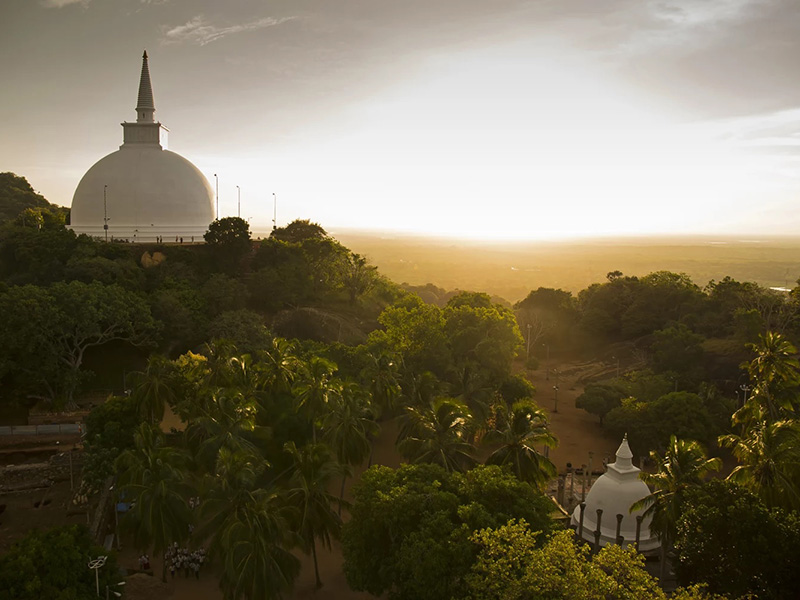
Ruvanveliseya also known as the Great Stupa was built by Sri Lankan national hero King Dutugamunu. Five kings reigned after the death of king Devanampiyathissa, Elara who came from India overpowered the then reigning king Asela and seized the kingdom. At the time there were two other kingdom in the south of the country at Magama and kelaniya and both kings remained independent but maintained a policy of co-existence with Elara. But this situation left Prince Dutugemunu the son of the king of Magama by the daughter of the king at Kelaniya unhappy, who determined to reunify the county. He waged war against Elara, declaring that it was not for personal glory but to foster Buddhism. Defeating Elara, he reigned for twenty four years which period marks one of the finest spells of Buddhism. Ruvanveliseya is of interest to note that India had nothing to compare with these massive monument and elsewhere in the world only the two great pyramids in Egypt were taller than them. But brick structures of such dimension were not found anywhere in the world. The chronicle describes the inauguration of the stupa as a great festival that was held in Anuradhapura. But the king died when the building reached halfway and his brother King Saddhathissa completed it.

Mirisaveti Stupa

On the old Puttalam road adjoining the Tisaveva lies the Mirisaveti Stupa. When King Dutugemunu went for a bath in the Tissa reservoir after defeating the Cola invaders his people who carried the spear planted it on the spot where the Mirisdaveti Stupa is now located. Coming back from his bath he found that the pear could not be moved from the spot where it was planted.

The Brazen Palace

To the north of the Secret Bo Tree you will see a collection of standing stone pillars which has been identified as the ruins of the Brazen palace. In the centre is a structure on stone pillars, which is the chapter house of the present Bodhi tree guardian monks. The location of the terrace for holding fortnightly rehearsals of the monks’ code of discipline was later constructed into a nine storied building with thousand rooms by King Dutugemunu in second century B.C. The name, Brazen Palace derives from the fact that its roof was covered with copper tiles.

Isurumuni Monastery

Isurumuni Monastery is located near the Royal Pleasure Gardens by the side of the Tissa reservoir.  Nestled in a pleasant environment here is a temple within the huge boulder. The moonstone at the food of the steps, guardstones and the balustrades are carved. The rock face with a herd of elephants is of special significance. The sculptor has magnificently captured the sagacious look of the leader elephant. This scene reminds one of the similar carved scenes at Mahabalipuram. Above in a cavity are the figures of a horse’s head and a seated man. He has his right hand on his raised right knee. According to Prof Senerat Paranavithana, the figure of the man represent Parjanya, the personification of the cloud, and the horse symbolizes Agni, the Fire God. He also believes that the sculpture was concerned with some kind of agricultural ritual.

Isurumuni Lovers

Perhaps it is correct to say that the Isurumuni Monastery became famous in recent times because of the sculpture on a slab of granite popularly referred to as the “ Isurumuni Lovers”. Many interpretations have been given to this. It has been identified by some as representing Saliya, the son of King Dutugemunu and Ashokamala, the low-caste girl with whom he fell in love. What is important to note is the elegance of the sculpture, the graceful movement of the girl’s body and the marvelous suppleness. Note the expression in her face, the bashful look of a girl in love.

Royal Pleasure Gardens (Gold Fish Garden / Ranmasu Uyana)

As you walk along the embankment of the Thissa reservaoir you will see below some small ponds and remains of buildings. Open brick aqueducts supply water to the ponds and remains of buildings. Open brick queducts supply water to the ponds and the site has been identified as the Royal Pleasure Gardens. The Pond here displays a cheery group of elephants sporting themselves in a lotus pond carved out of the rock similar to the group of elephants seen on the boulder at the Isurumuni Vihara. That this was certainly not a religious site but meant for some mundane purposes is quite evident. And the baths here were not meant just to have a dip, but the king perhaps spent much of the day on certain occasions here with his queen engaging in water sports. Note the stone couch with a headrest in the room adjoining the pond. With many ponds and the open aqueducts carrying water, it must have been quite a refreshing spot. There is evidence showing that it was once landscaped and obviously it contained many varieties of trees. A Gold Fish pond here had added to the beauty of the site in ancient days. 

Mihinthale Rock

About 16km to the east of Anuradhapura ies Mihinthale remembered in national consciousness at the cradle of the Sinhala Buddihist Civilisation. It is here that Thera Mahinda, son of the Indian Mauryan Emperor Ashoka,met King Devanampiyatissa in the third century BC, as a result of which the king embraced Buddhism. In fact the name Mihinthale, which menas the “Plateau of Mahinda” is derived from the thera’s name. Since then, various kings of Sri Lanka have blessed this rock with magnificent masterpieces of architecture. On the western slope of the mountain is the main flight of steps that would take you to Ambastala plain. It is a wide flight of steps, perhaps the widest in Sri Lanka, and is considered symbolic of the spiritual ascent of man. It has 1840 stone steps arranged in three flights. Shaded by temple trees on either side, a slow and leisurely climb along the steps listening to birdsong on a sunny day is a memorable experience. These include a hospital, a monastic complex, stupas and dagebas. While some of these structures are in an almost perfect state of preservation, some others are in complete ruin. The most spectacular of these is the Kantaka Chaitiya, which displays some of the finest architecture of the early Anuradhapura era.

The Avukana Lord Buddha Statue

This Colossal statue of the Buddha carved out of living rock is situated to the west of Kalaveva, an artificial reservoir built by king Dathusena in the fifth century. It is one of the five colossal standing statues of the Buddha found in Sri Lanka. Situated on a hilltop it is in a state of perfect preservation. From the lotus seat to the top of the head it is 11.36 meters in height. The stature is unusual not only in size but also in its expression. The massiveness of the statue suggests the transcendental quality of the Buddha that is in essence a basic ideal in the Mahayana form of Buddhism. The right had is in fearlessness and the left hand holds the end of the robe, which is depicted as clinging to the body outlining the limbs. Although the face displays prominent thick lips, it somehow expresses and fortitude. Bronze statuettes Brahma and four directional divinities within the chamber of the lotus pedestal suggest the Buddha’s supreme position above gods and Brahmas as opined by Prof. S.Paranavitana.

Ritigala Mountain

Not only because of its sheer rise but also because of its isolation from a mountain range, Ritigala rock, rising up some 766 meters towards the sky, captures the imagination of the visitor. Having a legendary, historical and monastic past it remains in the consciousness of the villager a retreat that jealously guards many a secret of years bygone. Ruins of monasteries, ponds, and other unidentified edifices, now silent and reticent, evoke awe and wonder for a stupendous past where hundreds of monks once lived in these monasteries, cells and rock shelters a life of utter simplicity and detachment.

Abhayagiri Monstery

The Abhayagiri Vihara is not only a complex of monastic buildings, but was also a great seat of learning. Established in the second century BC, it had reached international recognition by the first century of this era. Going beyond the conventional Mahavihara, it entertained various shades of Buddhist opinion and thus fostered lively intellectual discussion. Even a casual glance at the now tumbled down carved pillars, the weatherworn stupa and many ruined buildings about the place, you will not fail to realize the grandeur that these magnificent ruins would have displayed in the days bygone. In fact, the monasteries here rose to many stories and their roofs were covered with gilt bronze or tiles of burnt clay burnished in brilliant colours. Abhayagiri stood in the centre encircled by great walls within which were bathing ponds that were architectural marvels, exquisitely carved balustrades and moonstones.The monastery was founded by King Vattagamini Abhaya during the period of his second reign from 89-77 BC. During his first ascension, a Brahmin called Tissa declared war against him. But at the time, there was a Tamil invasion and the shrewd king sent a message to Tissa that if he could conquer the Tamils he could have the kingdom to himself. In the battle that ensured the Tamils killed Tissa, and enraptured by the victory, they entered the city and defeated the king. He abandoned the throne and went into hiding in the hills.

When the king got into vehicle to flee, a Niganta ( a jaina monk) called Giri cried out rudely: “The great black lion is fleeing”. Hearing this the king resolved to build a temple at the site of the Niganta’s monastery if his wish of regaining the throne was fulfilled. To do thathe had to live in exile for nearly fourteen years. In 89 BC he marched on Anuradhapura, and overcome the reigning king, Bhatiya. He then built the Abhayagiri Vihara at the site of the Niganta’s monastery as he vowed.  It is said that the monastery was so named by the combination of the King’s name (Abhaya) wit that of the Niganta’s (Giri). No one knows for sure how the monastery was named, but the fact remains that its establishment heralded a religious and national resurgence and marked the end of Brahmin and Jain authority in the county. Abhayagiri Vihara is located in an area of roughly 200 hectares and it contains all the essentials required by the doctrine for a Buddhist Monastery: the image house, stupa, Bodhi Tree Shrine, chapter house, living quarters, refectories, bath houses etc.

Lankarama

The Lankarama monstery is located to he south of the Abhayagiri Vihara and east of the Bulankulama tank. The chronicle states that wattagamani Abhaya built a stupa called Silasobbhakandaka, which is generally believed to be the one now known as Lankarama built on raised ground to the north of Ruvanweli Stupa. Built on a high platform it has the signs of a Circular Relic House as evidenced by the three concentric circles of columns. An opinion has also been expressed that this stupa and the monastery were meant for the nuns of the Abhayagiri Vihara just as the Thuparama, was meant for the monk of the Mahavihara.

Elephant Pond

Popularly known as the Eth –Pokuna or Elephant Pond, situated to the south west of the Abhayagiria Vihara closer to Lankarama, is perhaps the largest man made pond in the Island. Built during the third century AC, it is roughly 150 meters long, 50 meters wide and 10 meters deep. A flight of steps leads down to the pond from all four sides. Underground conduits supplied (one of which functions even today) water to the pond from nearby reservoirs. In the south west corner there exists a cistern sluice which suggests that water was distributed to other ponds in the vicinity. A conduit that supplied water to the refectory has been found. By its sheer massiveness and design it remains an eloquent testimony to the superb hydraulic engineering skills of the ancient Sinhalese.

Moonstones

The moonstone is one of the most beautiful creations of the ancient sculptor. It serves as a doormat at the foot of a flight of steps to the shrine, but the sculptor transforms it into a work of art par excellence. Both exquisitely carved moonstones so far discovered in Sri Lanka are found within the Abhayagiri Vihara premises. Various scholars have expressed many views about the figures appearing on the moonstone. As explained by Prof. Senarath Paranavitana: ‘the outer motif represents the world on fire that symbolizes desire. The next ring of animals depicts the four states of birth, disease, ageing, and death. Going beyond these sorrows on your path of emancipation there is the creeper and leaves that symbolize the life force. When you surpass this craving you reach the swan representing purification. And the lotus at the center represents Brahama World.’

Samadhi Stature

known as the Samadhi Stature, this is one of the finest specimens of Buddha Statures in the Buddhist world. Samadhi is the state of deep mediation, and in this particular posture the Buddha is represented after his Enlightenment. Note how the legs are placed, the right leg over the left, which is known as virasana, common feature in Sri Lanka. This stature originally must have been under a Bodhi tree as one of the four statures facing the four cardinal points. The ruins of a similar stature can be seen back to back with it. The stature may be datable to about the fourth century. The nose, as is visible. Is a modern restoration in the thirties. Some pigments now visible on the body of the stature suggest that it was once painted. Probably the eyes were inlaid with gems.

Twin Ponds

Built on low ground the twin ponds are undoubtedly exquisite specimens of landscape architecture. They are of the same breadth, namely 51ft, but differ in length: the larger of the two being 132 ft and the smaller 91ft long, at the ground level. The stone molding and the flight of steps leading to the ponds are executed with a fine aesthetic sense and poise. Resting on lotus pedestals there are post of plenty at the head of the flights of steps. The five hooded cobra sculpture, topped with a Dragon arch, to the north of the smaller pond is an appealing work of art. Incidentally, this cobra sculpture is found hear reservoirs and ponds in Sri Lanka revealing that there was some connection between the cobra and water. No one knows for sure what this connection was, but probably the ancients believed that the presence of the cobra could ensure a constant supply of water. The ponds are not mere showpieces but are functional. Believed to have been constructed during the reign of King Aggabodhi in the 6th century they were meant for the use of the resident monks of the Kapara mula fellowship. Steps lead into the ponds in tiers so that monks would sit on them with their feet in the water and bathe pouring water onto their heads with pots. At the far end of one of the ponds there is a cistern sluice that purifies the water draining into the ponds. The water is poured into the pond through a stone spout.

Willpattu national Park

This national park is located 30 km west of Anuradhapura. The park that lies on the northwest coast spans the border between North Central Province and North Western Province of Sri Lanka. To The south of wilpattu national park is River Modergam Aru to the north is River Kala Oya. Wilpattu is among the top national parks world-renowned for its leopard population. Samples of forty-nine individual leopards were photo-captured in the surveyed area and the core area density was between that of Yala National Park’s Block I and Horton Plains National Park. There are many types of vegetation to be found in Wilpattu, including littoral vegetation, such as salt grass and low scrub monsoon forest with tall emergents, such as palu (Manilkara hexandra), and satin (Chloroxylon swietenia), milla (Vitex altissima), weera (Drypetes sepiaria), ebony (Diospyros ebenum) and wewarna (Alseodaphne semecapriflolia). 31 species of mammals have been identified within Wilpattu national park. Mammals that are identified as threatened species living within the Wilpattu National Park are the elephant, sloth bear, leopard and water buffalo. Sambhur, spotted deer, mongoose, mouse and shrew are more of Wilpattu’s residents. The painted stork, the open bill, little cormorant, Sri Lankan junglefowl (Gallus lafayetii) along with many species of owls, terns, gulls, eagles, kites buzzards are to be found at Wilpattu National Park. Wetland bird species that can be seen in Wilpattu are the garganey, pintail, whistling teal, spoonbill, white ibis, large white egret, cattle egret and purple heron.
The most common reptiles found in the park are the monitor lizard, mugger crocodile, common cobra, rat snake, Indian python, pond turtle and the soft-shelled turtle which are resident in the large permanent Villus. The unique feature of Wilpattu National Park is the existence of “Willus” (Natural lakes) – Natural, sand-rimmed water basins or depressions that fill with rainwater. Nearly sixty lakes (Willu) and tanks are found spread throughout Wilpattu. Located in the Northwest coast lowland dry zone of Sri Lanka. The park is located 30 km west Anuradhapura and located 26 km north of Puttalam. The park is 1,317 square kilometers (131, 693 hectares). The best time to visit Wilpattu is during the months of February and October. There are a few private eco-tourism groups that show tourists around the park in Safari like trips. In 1905 the area was designated a sanctuary and in 1938 it was upgraded to the National Park status.

Ella

Ella

Hiker’s Paradise

 From Paragliding, canoeing, hiking and trekking to bird watching, the list is very long. Some of the other activities are camping, rock climbing, fishing, mountain biking, caving, train tours and wildlife safaris. Camping is available in either jungle or riverside locations. Let us know like to have an adrenalin rush, and we can plan some adventure activities in Ella for your tour. The climate throughout most of the year is typical of the high Hill Country, with a hot sun by midday, but a moderate air temperature. It will often rain in the afternoon, but only for an hour or so. A sweatshirt, or light jacket is needed at night. In December it can rain a lot!

Ella is blessed with some of the most beautiful views, you could find in Sri Lanka. Ella is a magnificent place to trek through, with its breathtaking views and varying landscape. Ella is a hiking hotspot in the mountain country of Sri Lanka. Some of the views from hikes in Ella are phenomenal with the region well known for its tea plantations and spectacular mountain ranges. If you want to enjoy some of the best views without needing to hike for hours, The area has a rich bio-diversity, dense with numerous varieties of flora and fauna. Ella is surrounded by hills covered with cloud forests and tea plantations. Only 8 km from Bandarawela, this small town is used as a base for plenty of trekking expeditions to the surrounding countryside. The town has a cooler climate than surrounding lowlands, due to its height. The Ella Gap allows views across the southern plains of Sri Lanka. On a sunny morning, you can even see the glow from the lighthouses along the southern coast. A taste of the breathtaking scenery of Ella could be had, if you just walk where you seem to be standing at the edge of the world, and everything around you seems to disappear at your feet. By rail Ella’s a few stops from Badulla at the end of the railway line that snakes through the Hill Country. Ella’s railway station itself is prettily quaint. There are countless travelers who visit ella by train. Ella is one of the most scenic venues for a vacation of adventure. Ella offers a choice of sports and activities for the adventurous. The trails will take you through dense forests, past rivers and cascading waterfalls and into nearby villages, where you can share their lifestyle and culture during your brief sojourn.

Things to do in Ella

Little Adam’s Peak

One of the best ways to spend a morning in Ella is to tackle the beautiful short walk up to the top of Little Adam’s Peak, a pyramid-shaped rock which stands opposite the far larger Ella Rock and offers marvelous views out over the hills. The beginning of the path goes through beautiful lush green tea plantations full of tea picking ladies. If you want to enjoy some of the best views without needing to hike for hours, Little Adam’s Peak is the perfect trek, especially for an unforgettable sunset. There are some great photo opportunities early on in the hike if you keep your eyes open! The Little Adam`s Peak, 1141 m high, is fairly easy to climb, with a good path all the way up. The trip took us about 2-3 hours in total. The trail is marked the whole way with well-maintained paths and stairs to the first set of viewpoints. As you can see below there are multiple platforms, rocks, and viewpoints perfect for photos once you hit the top of Little Adam’s Peak. Although, you can and should keep going along the ridge and the view only gets better. It is not a challenging hike and it`s quite short, but gives you a good impression of the landscape around Ella and the view is fantastic! So absolutely worth the climb! For just a short hike, Little Adam’s Peak gives you unbelievable views and is the ideal way to spend sunset in Ella. It’s definitely a worthy addition to your Sri Lanka itinerary!

Rawana Falls

The 25m-high Ravana Falls cascades from an oval-shaped concave rock outcrop. Kirinidi Oya is the water course for this beautiful cascading waterfall. It currently ranks as one of the widest falls in the country. This waterfall measures approximately 25 m (82 ft) in high and cascade from an oval-shaped concave rock outcrop. During the dry season water level reduces drastically and Ravana falls becomes very skinny, but again becomes majestic during the upstream rainy seasons. In the dry season, the flow of water is markedly reduced, whereas rain turns the fall into what is said to resemble an area flower with withering petals. But this is not the case in the wet season, where the flow of water reduces dramatically. The falls is a part of the Ravana Ella Wildlife Sanctuary, and is located 6 km away from Ella Railway station. Many of the Sri Lankan waterfalls can be spotted in middle of the jungle, with some lengthy routes. But since this falls is located just next to the main road, everybody can reach this without any trouble. So this becomes very popular sightseeing spot for photography. The falls have been named after the legendary character Ravana, which is connected to the famous Indian epic, the Ramayana. According to story, it is said that Ravana (who was the king of Sri Lanka at the time) had kidnapped princess Sita, and had hidden her in the caves behind this waterfall, now simply known as the Ravana Ella Cave. At the time, the cave was surrounded with thick forests in the midst of wilderness. It is also believed that Rama’s queen bathed in a pool that accumulated the water falling from this waterfall. Locals who are traveling to upcountry used to stop by the ella and get shower at here, so you can stay,relax and refresh and continue your journey.

Train Ride 

In the 19th Century, during the British occupation of Sri Lanka, British constructed the railway lines in Sri Lanka and started the Railway service in Sri Lanka for the greatest commercial export of the colonial Ceylon, from the Hill country estates to Colombo Port and imported goods to the interior of the Island. The very first steam trains were running in Sri Lanka. Major Thomas Skinner was involved in setting trains up and he describes in his book “Fifty years in Ceylon” how he had to convince the British colonial government to set up the network of railway lines, bridges/aqueducts, for Trains, today it stands as one of the most scenic journeys to be done on rail in the world. So Sri Lanka’s hill country Railway line goes through Tea Estates, thus making the train journey a scenic ride. Therefore we facilitate our clients to get that experience. Why is the Nuwara Eliya to Ella train journey so amazing? The views on both sides of the rail are breathtaking. The train winds through the mountains overlooking farms and villages and of course vast tea plantations. The scenery changes throughout the trip. Often at times, you are looking out at an entire green view than the next minute you are in the middle of a green forest. The train also passes through several tunnels. As well as often you can see the waterfalls too. The Demodara nine arch bridges close to Ella station is as picturesque as bridges get. The bridge was constructed in the early 1900’s and is built completely out of rocks and cement without a single bit of steel. The views from the window will have you snapping photos at every turn. Hanging out of the train gives you the best views and is a grand feeling but be careful not to leave your limbs out of the train at the incorrect time as there are trees and tunnels that come close to the train.

Nine Arch Bridge

The Demodara nine arch bridges close to Ella station is as picturesque as bridges get. Visitors can ride the train over the bridge and also walk along it in the other direction if they spend a night in the area. The bridge was constructed in the early 1900’s and is built completely out of rocks and cement without a single bit of steel. The views from the window will have you snapping photos at every turn. The journey through the hill country not only gives you countless breathtaking sights, it also takes you through long dark tunnels where there is always fun to be had for the passengers, yelling while the train travels through the tunnels.

Galle

Galle

Galle

Is the timeless song of the sea

The Arabian traveler Ibn Batuta who visited Galle about 1344 started that he reached Quali (Galle) on his way from Devinuwara to Colombo. The trilingual inscription in Chinese, Arabic and Tamil, discovered in 1911 on a culvert on Cripps road is a significant piece of evidence for the antiquity of Galle. Accordingly the place name Galle has considerable antiquity.

Galle, the capital of the Southern Province is a city with a colorful history. The headland of Galle before its fortifications were constructed would have been a romantic picturesque landscape overlooking Rumassala Mountain with a natural circular bay lying on the south coast of Sri Lanka. The history of Gale goes back to the days of the Ramayana with local tradition which moves from the Ramayana to the chronicle Mahawamsa in which no mention is made of Galle until the reign of King Parakramabahu the Great (1153-1186). The main source of economy for the locals of the Galle region is the cultivation of cinnamon, tea and coconuts as well as fishing and tourist industry. The Portuguese and other subsequent Europeans called this place Point de Galle in the French fashion especially in naval charts and maps. This was popular form used even during the early British administration. It had been the European administrative center for over four centuries. The Dutch Fort a UNESCO World Heritage Site is the most popular attraction of the city. The charming old Dutch Fort beautifies this coastal city of Gale which is located approximately 112 km or 72 miles to the south of the capital city of Colombo.

This work, however, focuses on nothing but the area of the modern Galle Fort, an icon of national heritage. The Portuguese Captain Don Lorenco De Almeyda, while chasing the Moorish fleet, was driven by the winds and waves and landed in Gale on 15th November 1505. Legend says that he approached Galle having listened to the sound of a cock. Hearing that the king of the island was in Kotte, he sailed heading towards Colombo. Galle’s glory has been referred to by many writers. Some suggested that it is the Tarsbish of the Bible where King Solomon obtained ivory, apes and peacocks. Based on this view Emerson Tennent thought that ‘Galle is by far the most venerable emporium of foreign trade existing in the universe’. He even went on to presume that Galle was Kalab, a port of call for Arabian seafarers to the east lying between Persia and China.

Things to do in Galle

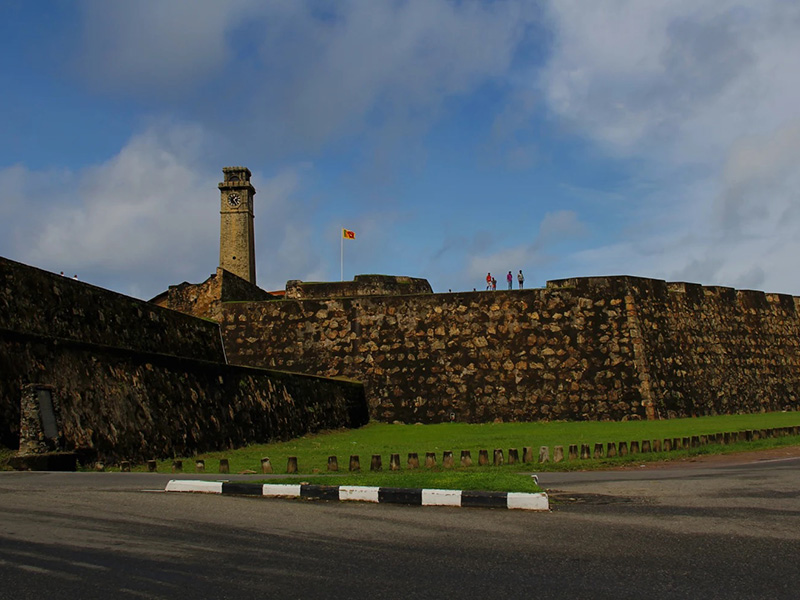
Galle Fort – It is situated in 113 kilometers away from Colombo. Galle was known as Gimhathiththa (although Ibn Batuta in the 14th century refers to it as Qali) before the arrival of the Portuguese in the 16th century, when it was the main port on the island. The fort, like most of the forts in Sri Lanka, is built on a small rocky peninsula, belonging to the sea as much as to the land. As it exists today, it covers an area of 52 hectares (130 acres). Galle reached the height of its development in the 18th century, during the Dutch colonial period. Galle is the best example of a fortified city built by the Portuguese in South and Southeast Asia, showing the interaction between Portuguese architectural styles and native traditions. The city was extensively fortified by the Dutch during the 17th century from 1649 onwards. The Galle fort is a UNESCO World Heritage Site and is the largest remaining fortress in Asia built by European occupiers. , The heritage value of the fort has been recognized by the UNESCO and the site has been inscribed as a cultural heritage UNESCO World Heritage Site under criteria IV, for its unique exposition of “an urban ensemble which illustrates the interaction of European architecture and South Asian traditions from the 16th to the 19th centuries.” The Galle Fort, also known as the Dutch Fort or the “Ramparts of Galle”, is a historical, archaeological and architectural heritage memorial, which even after more than 423 years maintains a polished appearance, due to extensive reconstruction work done by Archaeological Department of Sri Lanka. Enter through the imposing stone bastions that encircle the sea-facing promontory and step back in time. Inside the Fort you will find that it exudes old-world charm. The narrow streets are dotted with Dutch colonial villas and there’s a welcome absence of vehicular traffic. There are several museums and antique shops that display curiosities from the island’s colonial era. Of the many colonial buildings, perhaps the most absorbing is the Dutch Reformed Church, containing ornately carved memorials to the city’s Dutch settlers. The Fort also hosts some of the island’s most exclusive boutique-style accommodation in former villas restored to their colonial glory. The atmosphere of the Dutch era is still very much alive around the fort with many historical buildings. The fort has a colorful history, and today has a multi-ethnic and multi-religious population. The Sri Lankan government and many Dutch people who still own some of the properties inside the fort are looking at making this one of the modern wonders of the world.The ramparts and the bastions bring to life the old world. Some of the buildings are converted into beautiful up market places of tourist accommodation. The old part of town is compact so you can explore by foot. A tour of the fort’s fortified walls is the highlight of a visit to Galle. The Portuguese established the first fort in Galle. This was captured by the Dutch in 1640, after which the fortifications were expanded and the grid street system established. Further extensions were made during the British period. The passenger port gained importance, but with the construction of a breakwater at Colombo, Galle slipped into maritime decline. Stroll along the massive ramparts at dusk. Experience the tranquil ambience of a bygone era yet see life as it proceeds: children flying kites, games of softball cricket, and couples canoodling behind the privacy of umbrellas. They all seem to enhance the magic of the fort.

Hikkaduwa Beach – It is situated in 15 kilometers away from Galle. Along the Galle road to Colombo, you will found this mesmerizing town with a fabulous reef, waves made for surfing and people made for partying. It used to be popular only for a stopover on the way to Galle and mostly worldwide surfing fans but now the town has taken over the hearts and minds of everybody who just basically hears about it. Hikkaduwa is one of the best surfing wave’s spots in Sri Lanka, offering a clear hot water base. Surfing in the Hikkaduwa area is fairly well known and gets the best surfing during its dry season, surfers gather here from November to April, using the advantage of wide beaches with perfectly formed shorelines. The waves rise from 4 to 11 feet and even though the surfing period is well packed, a few surfers will always be wondering the beach at any given time of the year. Hikkaduwa has emerged as a modern goal for sun-seekers and wave-worshipers. (Distance from Colombo – 99km, Distance from galle – 15 km). Hikkaduwa appears to have been an early tourist destination in Ceylon, for J. W. Bennett reported in 1843 that it “is most pleasantly situated, and a great resort of picnic parties from Galle”. Hikkaduwa National Park one of the three marine national parks in Sri Lanka. The national park contains a fringing coral reef high degree of biodiversity. The area was declared a wildlife sanctuary on May 18, 1979 and then on August 14, 1988, upgraded to a nature reserve with comprehensive land area. The reef was affirmed a national park on 2002. The coral sanctuary along the coast of Hikkaduwa is a large shallow body of water surrounded by a reef, decorated with layers of multicolored corals, and is home to countless colorful fish. Off the beach there is a collection of small islets surrounded by beautiful coral formations. Many species of fish and large turtles are found here. The beaches are beautiful and wide and swimming is safe here. The impressive coral reef lies just offshore and is still populated with exotic fish and sea turtles. After a short distance south of the center of the reef, it decreases and begins a wider sandy beach with good wave’s ideal for board surfs and body surfing. Snorkeling and Diving, Scuba, Glass Bottom Boat Ride (you can see the marvelous underwater wander land). Glass bottom boats are available for visitors who want to admire the wonders of deep while keeping their feet dry! Scuba diving and diving in clear waters are a major past time along this stretch and is the most ecological way to see the colorful fish that dart around. A long stretch of beach packed with restaurants serving deliciously fresh seafood, an equally long stretch of memento shops for the serious customer, Mask Factories & Battik Factories guesthouses and hotels in great quantities, from the cheap and cheerful to star-class, partygoers looking for a crazy night out and travelers looking for the perfect getaway. From July onwards everyday at Hikkaduwa is a night life. Hikkaduwa is infamous for its perfect blends of ingredients served with rotti and almost any restaurant will offer a form of rotti. Rotti shops are placed all by the side of the Galle road and varieties offered are from cheese and chicken, devilled chicken to chocolate/ banana and avocado. Just stop by any rotti and pick your choice.

Unawatuna Beach – Unawatuna Beach is among the best 10 beaches in the world. It is a suburb of Galle, about 5km southeast to the city center. Unawatuna is located at an altitude of 5 meters (16 ft.) above the sea level. The beach at Unawatuna is considered to be one of the safest beaches in Sri Lanka with the reef defensive it. The water is truly beautiful and displays the true turquoise blue of an ideal sea. Off the coast of Unawatuna, beneath the Indian Ocean lie a number of coral reefs, shipwrecks, and a great variety of fish and turtles. The turtles still wade onto the coast to lay their nests and eggs. Underwater expeditions between corals and school of fish can be arranged with activities such as windsurfing, snorkeling and scuba diving to truly make your vacation a more special time.

Turtle Hatchery – (Sea Turtle safari) – Seven species of sea turtles representing two families, Dermochelyidae and Cheloniidae are the only living members among the turtles. These seven species include the largest among the turtle, the leatherback and the smallest, the olive ridley turtle. The other five species are the hawskbill turtle, green turtle, loggerhead turtle, Kemp’s ridley and flatback turtle. Five of the seven known species of sea turtles are reported form the Sri Lanka. All the species of sea turtles found in Sri lanka are presently endangered and are protected by law. Olive turtles are predators by their nature and they eat jelly-fish, shrimp and crabs, but actually there is no need in hunting as human are for all time glad to feed the creatures. In the morning turtles swim up to Hikkaduwa beach to make people happy by eating luminaries from their hands. Swim with sea turtles while the latter sun their carapaces on soundings. By the way, carapaces of old olive turtles can reach the size of 60-70 centimeters and weight of 40 kilos. On the fringes of Bentota and Kosgoda have turtle hatchery. Guests can see vast tanks filled with new born sea turtle hatchlings. In an effort to promote responsible tourism and conservation, the hatchery buys turtle eggs off fishermen, in an attempt to discourage them from poaching & selling the eggs for food. Although October to April is the main laying period, at night marine turtles come ashore, dig a hole and lay their eggs, covering them up before heading back to see. Some eggs can be found at Kosgoda beach & Bentota beach throughout the year. As well the wide sandy beaches that exist round the island of Sri Lanka are utilized by several of the marine turtles for laying their eggs. Guests are educated on the importance of defensive turtle life, via the hatchery’s facilities that care for newborn sea turtles until they are ready to be released back into the ocean, an experience that some lucky visitors may even have the opportunity to do themselves first-hand. After being fed, the newborn sea turtles are taken to the sea and released when they are 2-4 days old, usually during the safer hours of night.

Dooli Water Fall – Many secrets and wonders of nature lie hidden within the Sinharaja Forest Reserve. One such wonder is the Dooli Ella; a beautiful waterfall a beautiful creation of nature. A rivulet cascading down the slopes of Sinharaja forest forms into a nearly 500ft. waterfall at Kosmulla a village of Neluwa. A four wheel drive up to a point and a walk down a narrow foot path take you the foot of the falls. The flow rate of the waterfall is constant all year through, and the spray creates a misty halo around the area. Dooli Ella gets its name from the falling waters spreading over the surrounding area. The name ‘Dooli’ means ‘fine dust’ –therefore we can assume that the natives compared the water spray to a dusty look and hence the waterfall was named Dooli Ella. The road up to the Fall from galle, you going through the Kottawa Jungle. A short foot path from the tea factory through a dense thicket leads to the base of the waterfall which is a beautiful creation of nature. There are many indigenous plant and animal species to be establish in this pure environment surrounding the waterfall. It has retained its natural habitat due to its location, which is not easily easy to get to by motor vehicles. A number of smaller waterfalls, about 50 to 60 feet high, can be spotted on the path to Dooli Ella, point of view you on towards the vision of beauty ahead.

Stilt Fishing – Ritipanna is the Sinhalese expression for stilt fishing, which is a long-established method for fishing practiced by most fishermen along the southern coast of Sri Lanka. A stick standing up with another piece of wood tied to it to create a seat where fisherman climb on to during the low tide to fish in the increasing waters of the high wave, though is a lovely sight is a hard and uncomfortable task of few hours fishermen on stilts usually catch small fish like the spotted herring and tiny mackerel it’s enough to feed few mouths. Stilt fishing season is at its hit the highest point during the southwest monsoon because fishermen using boats also end up on stilts since the sea is too rough. A narrow pole is tied to a stick that is anchored on the ocean bed. Fisher folk climb onto this stick and settle on the pole for a few hours in an effort to catch some fish. Each stilt can accommodate only one fisherman. For catching fish, they produce a bar made of Kithul, and a small bag is tied around their waist to hold the fish that they catch. With one hand they hold onto the stilt and with the other they hold the bar that catches fish. The habit of stilt fishing will always be practiced by those who cannot have enough money to invest in modern fishing tools. Still fishing is twice a day. It is on sunup and sundown, stilt fishermen gather together on the southern shoreline. The morning sitting goes on till about 9.00a.m., or pending they have sell their day’s catch to nearby village buyers who come to the stilt fishing location. Stilt fishing is a huge attraction for tourists. If you need to get that experience, on your request, you can get an opportunity to test their skills at stilt fishing in exchange for cash from the stilt fishermen, you should have to come to Ahangama Beach; it is a 15-minute drive from Galle. Fish bites the best early in the morning or evening, go fishing earlier. The only things you need are fishing line and a needle, Sri Lanlkan fishermen will gladly give up their stilt seats to you for additional pay or they can even let somebody use their tackle. The main thing is to go up the stilt and take hold till the first catch. Actually the sundown stilt fishing session is usually to entertain foreigners, and this ends at sunset. Tourists are fond of to climb up on the stilt and truly skill this activity as well as capture photographs for memoirs. According to stilt fishermen, this art requires a lot of patience and endurance. The first lesson is to strike a balance while sitting on the narrow wooden stick. Then the process requires quite a few hours of waiting in full quiet while catching the fish. They should not move or make any sound because if there is even a minor trouble in the atmosphere, the fish will swim away.

Moonstone Mine – Have you ever wondered where that pretty little moonstone on your finger actually comes from? Head inland 7km to Mitiyagoda and you can descend into the mucky world of mining – 18th-century style! Moonstone has been mined in these sweltering forests forever and the moonstone mines, little more than muddy rabbit holes, 6m or 7m long, are fascinating – as is the process of filtering out the precious stones, cutting them up and polishing them up ready for sale. Entrance is free, but expects a hardcore sales pitch in the on-site shop afterwards. To get there head towards Kahawa and turn inland to Mitiyagoda after which it’s clearly signed.

Koggala Beach & Lake – Koggala home for the famous writer Martin Wickramasinghe. Koggala famous among the visitors, because there is a amercing beach and a marvelous lake. Koggala Beach is one of the longest beaches in Sri Lanka. The beach of Koggala is tidy tourist destination. The beach is a nesting area for marine turtles, who visit the island during the breeding season, although the opportunity to actually see the laying process is very rare, The ancient practice of stilt fishing on the coastlines, may see at Koggala beach. Koggala Beach is 8 km from Galle City. In a great dry season begin from December to March, and tiny dry season begin from July to August. The largest lake in the island, Koggala Lake is an unspoiled ecological haven a few hundred meters away from the resort. The small islands scattered in the lake ideal for bird watching at sundown. Koggala Lake near Koggala in Sri Lanka is a freshwater lagoon which sits 3 meters above the sea level near the south coast of Sri Lanka. This gorgeous turquoise lagoon is just a couple of kilometers away from the town; dotted with stony islands & fringed with mangroves. The cerulean Koggala lagoon was once a haven to a rich ecological system. It was also a beauty which was described with much fondness by the well-known writer Martin Wickramasinghe in his masterpieces such as Madol Duwa. There have famous five islands. Those are Spice Island, Cinnamon Island, Temple Island, Bird Island and Madol Duwa Island.

Spice Island has about 4000 residents; they grow many spices then made into oils and tonics used for indigenous healing.

As you come up to Cinnamon Island there is a little jetty, when jumping off the boat you notice that are two holes filled to the brim with golden fish, you get to stick your feet in the water to have them nibbled upon. It feels very strange to begin with but slowly becomes more soothing. You head to the top of a steep lane; this island has a much smaller community than the Spice Island. Only four families are living here. It is surrounded by cinnamon trees. This cinnamon flavor is much more delicate that the king you buy in supermarkets back home. You can see and joined in a woman making cinnamon powder, she gathered a few dried out sticks and placed them in the major mortar and pestle you have forever seen. She then bashes the sticks until powdery, spoons the mixture into a fine sieve and taps the powder through leaving behind the rubbery bark fragments – again the flavor is delicate, you are able to drink a cup of helthey cinnamon tea.

There is a island is called Temple Island. It has a temple; this island seemed eerily quiet, a very distinct lack of noise or persons. It was a very small temple but pretty nevertheless. That is very beautiful on full moon days. Surrounded by jungle this is a landscape rich in wildlife.

Bird Island is a little deceptive, bird according to Sri Lankan’s are, in this case, bats. As you get closer to the island you see lots of bats flying into the air, they aren’t afraid of birds why should you be afraid of bats, because they stay very much high the tree tops. Alive with birds and small islands rich in tropical greenery, Koggala Lake feels like you’re the very first to discover this sanctuary of untouched natural world.

When your boat ride at Koggala lake also offer a chance to go have a look the famous Madol Duwa Island, which Author Martin Wickramasinghe wrote a book on. The navel was fist publiched in 1947, telling a story of Upali & his friend Jinna. They lived on the Southern coast of Sri Lanka during 1890. It later leads to Upali and Jinna trying to live in a deserted island, which was Madol Duwa. The novel has been made into a movie in 1976. Take a tour of the lagoon in boat; find there have famous 4 islands. Those are Spice Island, Cinnamon Island, Temple Island and Bird Island and visit cinnamon farmers at their home and the only others you might wave hello to are a fisherman or two on the water. The abundant mangrove-fringed lake provides them with prawns, crabs, fish and oysters. The lagoon teems with birdlife & supply prawns in abundance. Motor boat trips & catamaran rides take you to the minor islands around the lagoon, each showcasing an exclusive practice in itself. I can say, you can overall a very marry day on a boat at Koggala Lagoon.

Koggala have the oldest Airport in Sri Lanka has its own motivating record stories to tell. Since the lake was used as a landing point for seaplanes when World War II was in its throes, a fixed water runway was built here and it became the chief flying-boat base in the eastern world. As well as Koggala played a part for the QEA/Imperial Airways route from London to Sydney. Because of the Japanese livelihood of the Malay Peninsula they misplaced their crucial fuel stop-off point in Singapore and another route for Britain–Australia needed to be created at Koggala. A tarmac runway was developed for Air Ceylon after the war and this continued to be hub until 1978. As calm as Koggala is today, the present landing strip is still capable of servicing Sri Lanka Air Force planes.

Jungle Beach & Rumassala Mountain – Jungle beach situated at Rumassala Mountain boarder. This place has Golden sandy shore and rich bio diversity backgrounds and suitable for swimming without waves. This area is known as the Jungle Beach because of its natural beauty; a secluded coastal line emerging from the forest lands that surround it. The beach is rich with coral reefs and marine biology. Rumassala Mountain is closer to jungle beach. The beach is located about 7.5 km from the main city, Galle and few kilometers from Rumassala. You can reach by a climb up Rumassala Mountain and then by trekking down through greenery through a small route which leads to beach. The beach is small and secluded. Snorkeling is also a great thing to do this area, you should take. The reef and secluded beach is popular among locals for recreation and is visited by tourists from nearby areas. It is a one of nudist beach in Sri Lanka. Rumassala which is located close to the Galle natural harbor area is therefore an important marine archaeological site, while the watering point on Rumassala was important during the colonial period. Rumassala famous for the tourist and naturalists, because jungle beach filled with many uncommon birds, animals, plants. As well as this place famous for rare medicinal plants. The mythology surrounding Rumassala dates back to the Ramayana times. According to the Ramayana legend the Rumassala Mountain is a piece of Himalaya in India. The monkey-soldier, Hanuman was sent back to India to bring four rare medicinal herbs from the Himalayas to make well Lakshman who was wounded trying to save Princess Sita, abducted by the devil King Ravana. Hanuman forgot the name of the herb, lifted the entire part of the mountain where the herbs were supposed to grow and carried it to the combat zone trying to save Lakshman. A large piece fell down in the location of Unawatuna. That name villagers gave ant its meaning is “fell down”. That fell down piece is currently recognized as Rumssala Mountain. Rumassala is rich in its biodiversity. Over sixty species of endemic birds as well as rare species such as the lesser whistling duck, the Asian palm swift, the white-breasted waterhen, the Loten’s sunbird and the black bittern have been sighted in the locality by the ornithologist, Clive Byers. These birds are mostly sighted in the remaining marshy area and Rumassala Hillock. The Rumassala coral reefs at the east end of the Galle Harbor attract divers; Eco treks in the shrub jungles of Rumassala are also obtainable. Your final segment will be at the Japanese Peace Pagoda When you went to the jungle beach and Rumassala Mountain, don’t forget to worship Japanese Peace Pagoda there. It is a beautiful shrine with a miraculous view of the sea. It can be spotted from the Jungle beach and from Rumassala Hill. The Japanese Peace Pagoda was built by the Nipponzan-Myōhōji order. It is a monument planned to inspire peace among all races and creeds.

Sinharaja Rain Forest – Sinharaja Rain Forest is a national park and a biodiversity hotspot in Sri Lanka. The reserve’s name translates as Kingdom of the Lion.It is of international significance and has been designated a Biosphere Reserve and World heritage Site by UNESCO. This is the only virgin rain forest in Sri Lanka with rare species of flora and fauna, which was reason to be declared a World Heritage Site. The forest takes up about 2300 hectares and about 20% of it is in the Southern Province. The average annual temperature of Sinharaja is approximately 23.6C. It annually receives more than 2500mm of rainfall. Therefore no dry season spell throughout the year. There are four main access routes to Sinharaja. The northwestern road is Kalawana-Weddagala road, North-East Rakwana-Morning side road, the Southwest Hiniduma-Neluwa road and the Southeast Deniyaya-Pallegama road. Among these roads, the Hiniduma – Neluwa road is closer and easier for visitors traveling from Galle. The hilly virgin rainforest, part of the Sri Lanka lowland rain forests ecoregion, was saved from the worst of commercial logging by its inaccessibility, and was designated a World Biosphere Reserve in 1978 and a World Heritage Site in 1988. An interesting phenomenon is that birds tend to move in mixed feeding flocks, invariably led by the fearless greater racket-tailed drongo and the noisy orange-billed babbler. Of Sri Lanka’s 26 endemic birds, the 20 rainforest species all occur here, including the elusive red-faced malkoha, green-billed coucal and Sri Lanka blue magpie. Reptiles include the endemic green pit viper and hump-nosed vipers, and there are a large variety of amphibians, especially tree frogs. Invertebrates include the endemic common birdwing butterfly and the inevitable leeches. Had an awesome trip to Sinharaja where you and Mother Nature meet and grate each other, natural pure spring water and clean oxygen with beauty of its own. After the hustle and bustle of city destinations this was simply perfect to rest our minds listening to bird calls and the concert of cicadas. There are 8 very beautiful waterfalls and unlimited waterways at Pitadeniya enterence to Sinharaja forest. Those are Kekuna falls, Pathanoya falls, Malmora falls, Brahmana falls, Galdoru falls, Uran Wetuna falls, Thattu falls and Dhooli falls. All those waterfalls and categories in Sri Lankan major waterfalls list and it may see various sceneries in various angles. Some waterfalls are very higher and some are narrow once. Dhooli falls is most beautiful waterfall in Sinharaja and Galdoru falls is somewhat different shape of waterfalls.

Kandy

Kandy

Kandy

is the Temple of the Tooth

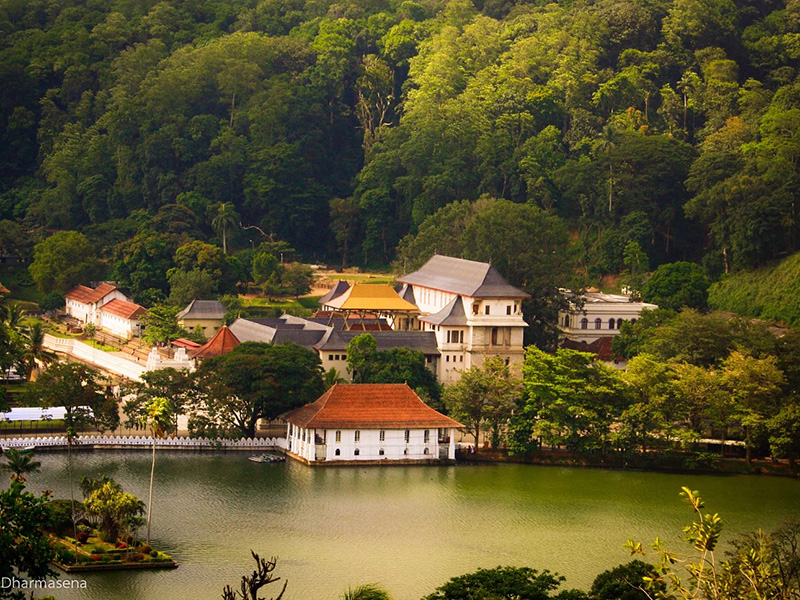
A city replete with scenic beauty and salubrious climate, Kandy is the capital of the long line of Sinhalese kings. Situated amidst lush green hills overlooking an artificial lake, it possesses a unique character holding in its bosom the Temple of the Tooth. Its historic buildings displaying the best of Kandyan architecture, and the annual procession of the Tooth Relic, the Dalada Perahera, which attracts thousands of enthusiasts from here and abroad, add a charm and quite dignity to its historically important character. Kandy is counted amongst the World Heritage sites of UNESCO. Kadny has been a human settlement form very ancient times as evidenced by the pre – Christian inscriptions found at various sites and many references to it in the Chronicles of the Sinhalese. But its significance as a city begins with the fall of the two great kingdoms of Anuradhapura and Polonnaruva and the consequent shift of the royal capital to the south west in Dambadeniya. King Vikramabahu III, who established his capital in Gampola in the 14th century, built the Nathadevale. Thus, from the beginning of the 14th century Kandy became a city of royal residence but it had to wait another century for it to become the capital of the Kandyan Kingdom. Kandy boasts of two dynasties; the first of three kings lasted for 130 years while the second which had nine kings ended with Sri Vikrma Rajasinha. In 1815 in the reign of the last named king of Kadny came under the British which annexation lasted for 133 years until the country regained its independence in 1948.

Things to do in Kandy

Temple Of Tooth ( Dalada Palace) – What is referred to as the Tooth Relic is the left canine Tooth of the Lard Buddha venerated by Buddhists all over the world. According to Chronicles the story runs thus: King Guhasiva of Kalinga, a city in East India, had with him the left Tooth of the Lard Buddha which he held in daughter Hemamala and son-in-law Dantha and told them that if he lost the war, they should remove the Tooth and hand it over to his friend King Mahasena of Sri lanka. King Guhasiva lost the war and Hemamala and Duntha came to Sri Lanka with the Tooth and hand it over to the King Mahasena who was king at the time. Ever since Sri Lankan kings have safeguarded and revered the Tooth Relic and, it had been treated as their palladium. The last king of Sinhalese as well as Kandy, Sri Vikrama Rajasinghe, made several alterations to the complex and built the octagon. It is worthwhile visiting the Tooth Relic Temple when service rituals are held daily in the morning, noon and evening.

The Council Chamber – Known popularly among the Sinhalese as the magul maduva, the Royal Audience Hall that the King used to carry out business of administration and for judicial purposes offers one of the best examples of timber architecture of the Kanyan period. This was designed during the reign of an earlier king but completed in the reign of the last king of Kandy. Many additions and alterations have been done during the British occupation. The present building contains 64 exquisitely carved timber columns ranged in four rows, two on either side of the centre aisle. The columns end in inverted lotus capitals and hold the timber roof with carved beams and rafters. The roof is clad with plain clay tiles. Prof. Nimal de Silva who directed recent conservation work under the Cultural Triangle observes that the steel supports and decayed timber added during the British period were replaced by new timber of the same identified variety. Now the building is used exclusively for state purposes.

Peradeniya Royal Botanic Garden – The history of the Royal Botanic Gardens dates as far back as 1371 when king Wickramabahu III ascended the throne and kept court at Peradeniya near Mahaweli River. Later, in the reign of King Kirti Sri Rajasinghe from 1747 to 1780 this was made a Royal Garden and from 1780 – 1798 King Rajadhi Rajasinghe resided therein, where a temporary residence was erected for him. This was a pleasure garden of a Kandyan King of the 16th Century and later made in to a Botanical Garden during the British regime. The most amazing of the Garden have, Flower Garden, Palm Avenues, Plant House and Cacti, Bamboo Collection, Orchid House and Gardens, Fernery, Great Lawn, The lake, Spice Garden and Flowering Trees and the Arboretum. The most spectacular of the Gardens are the flowering trees which come into bloom at various times with peak blooming during the first half of the year. Amherstia nobilis popularly known as the Pride of Burma is the finest and a row of this is found planted near the main entrance. An extensive Arboretum of 20 ha in extent contains approximately 8000 trees. Some of these trees are magnificent specimens which are over 100 years old.

Royal Botanic Gardens at a glance
Extent: 60 hectares
Species under cultivation: Over 4000
Annual visitor turnout: 1.2 million

Gems & Jewelry Museum – Sri Lanka is world famous for its valuable & semi-precious Gems. Specially Sri Lankan Blue Sapphire. It is very exclusive & owns a huge reputation in the world. Clients could visit a Gemological Museum, a gem cutting factory & also can witness a documentary on Gem mining & the process. Later you can shop for Gems, Jewelry & Other ornaments. Don’t forget to collect your authenticity certificate for gems.

Silk Garden – Visit the Silk Garden. Clients will be shown the process of making silk & how the handloom sarees are been made in Sri Lanka.The ladies will be given a chance to wear a traditional Sri Lankn saree & it be an ultimate opportunity to experience the Sri Lankan dressing culture. You can shop for Silk items, sarees, sarongs, shirts & many other gorgeous materials according to your choice.

Wood Carving / Handy Crafts Centre / Braze work – Wood carving – is a traditional industry in Sri Lanka. Believed to be emerged in the ancient temples, the traditions & the techniques were passed from one generation to another. Today some of the wonderful craftsmen who belonged to such generations are still engaged in the field. They create wood carvings, statues, furniture, habitual masks, sculptures, handy craft, and paintings and to a variety of other products of same nature. A visit to a wood carving centre involves.

Colombo

Colombo

Colombo

is Sri Lanka’s ocean city

The central area of the city is still known as Fort, but the remnants of the colonial battlements have long since been demolished, or incorporated in newer buildings. There are more mementoes of the British period, including the neo-Classical old parliament building, the Victorian-era President’s House (still often called ‘Queen’s House’), and the grandly mercantile brick facade of Cargill’s, a splendid 19th-century department store that has changed little since the 19th-century heyday of Sri Lanka‘s British tea planters. Due to its large harbor and its strategic position along the East-West sea trade routes, Colombo was known to ancient traders 2,000 years ago. It was made the capital of the island when Sri Lanka was ceded to the British Empire in 1815, and its status as capital was retained when the nation became independent in 1948. The legacies of colonial Colombo’s garden roots are still very much intact along its often-shady boulevards. Fort is a compelling place thanks to ongoing restoration of its landmark colonial architecture, while Pettah brims with markets and rampant commerce. In 1978, when administrative functions were moved to Sri Jayawardenepura Kotte, Colombo was designated as the commercial capital of Sri Lanka.
No longer just the sprawling city you have to endure on your way to the beaches, it has become a worthy destination in its own right and makes an excellent start – or finish – to your Sri Lankan adventures.

Colombo is the commercial capital and largest city of Sri Lanka. Its population is swollen by some 400,000 plus commuting workers during the day and is virtually empty after nightfall. It is the financial center of the island and a popular tourist destination. Although it’s unlikely it will reclaim its 19th-century moniker ‘the garden city of the East’, Colombo has nevertheless emerged as a must-see stop in Sri Lanka. Originally named Kolomthota, Colombo was the main seaport of Kotte, the country’s 15th and 16th century capital. Known to Arab traders as Kalamba, the city attracted the rapacious Portuguese as early as 1505 and became the bastion of their rule for almost 150 years. It is located on the west coast of the island and adjacent to Sri Jayawardanapura Kotte, the legislative capital of Sri Lanka. Colombo is often referred to as the capital since Sri Jayawardenapura Kotte is within the urban area of, and a satellite city of, Colombo. It is also the administrative capital of Western Province, Sri Lanka and the district capital of Colombo District. Its natural harbor at the mouth of the Kelani River was a magnet for successive traders and conquerors – initially the Arab merchants, then Portuguese, Dutch and British imperialists. Colombo is a busy and vibrant place with a mixture of modern life and colonial buildings and ruins. It was the legislative capital of Sri Lanka until 1982. The city is a jarring mix of old and new, with a central cluster of high-rise office blocks and hotels overshadowing red-tiled colonial-era buildings and sprawling street markets which overflow with high-piled fruit and vegetables, colourful silks and cottons, and deliciously fragrant spices. Colombo’s cosmopolitan side supports ever-more stylish eateries, galleries and shops. There is a lively nightlife at a number of International standard hotels, clubs, pubs and dining venues while it is limited mainly to the high end customer. During the day, Colombo’s colourful street markets, colonial-era buildings, museums and galleries, churches, mosques and temples, and the lovely Viharamahadevi Park with it beautiful trees, makes it a great place to explore on foot. Surprises abound: with a little exploration you’ll find great local food, characterful shops and tiny, convivial cafes. Meanwhile, a building boom like no other is transforming the city’s skyline.

Arcade Independence Square

The Arcade Independence Square is a shopping complex.

In the Auditor General’s building (where you can see the enormous clock tower of Independence Square), you get the Wickramarachchi opticians if you are looking for a pair of good sunglasses, Stone and String, a Complete set of Kookabura equipment (for All Your Cricket Frenzy Molecules), a Titan showroom and charming local tea, Kaema Sutra and jewelry in Sri Lanka. There is even a living room on the first floor, called the Wax Museum, and a 3D Cineplex movie.For the cheapest, on the ground floor, there are a whole lot of other places to go, including Burger King and the food court that has Paan Paan and Tropical Juice Bar among its stands Short courses are fairly reasonable). There is an unexpectedly Japanese place called Tsukui Uoichi in the former Auditor General’s building. Also in a corner building that is old and yellowing on the same premises, there is a small canteen that sells rice and short-eats. Not only that Arcade Independence Square is an incredible place to relax: you can take a good breath in here. the outside is with beautiful flowers and green grass, a smooth pavement and cane furniture, and the inside is entirely made of white wood panels. Some corridors have long benches where you can just sit and relax, there are great views of the lawn, a walk-over fish tanks and imposing lion stone caving are amazing experiences. In the Independence Square through various windows of the building, and there is a dormer window Very nice in the center of one of the stairs. This latest shopping precinct is situated in Borella (30, Bauddhaloka Mawatha, Colombo 7), near to BMICH. Arcade Independence Square is open from 7.00 am to 11.00 pm. Not only that this place is most beautiful in the evening, because of colorful lights.

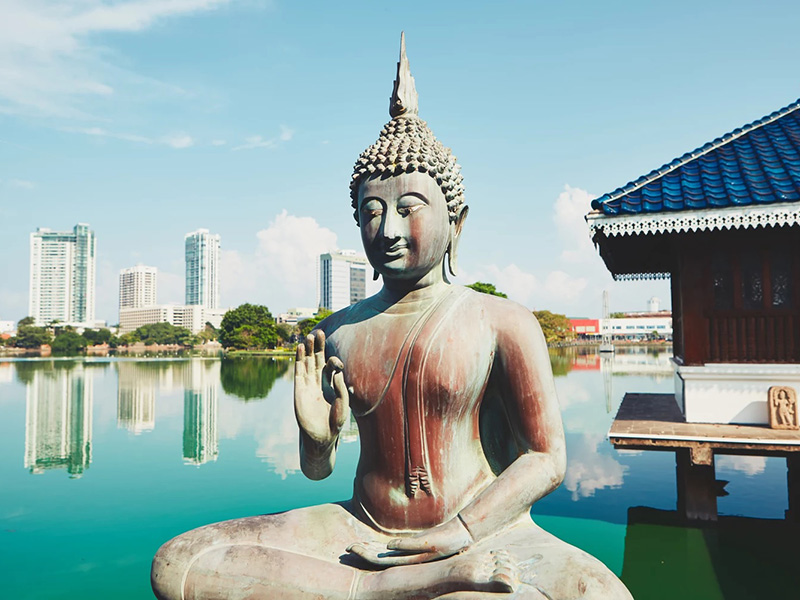
Gangaramaya Temple

What was once a swamp adjoining the famous Beira Lake, a landmark in the capital city, is today a vibrant complex comprising the Gangaramaya temple, the ‘seema malaka’ – an assembly hall for monks – in the picturesque Beira Lake and a vocational training institute. The temple has been in existence for over 120 years having being established by one of the most famous scholar monks, Venerable Hikkaduwa Sri Sumanagala Nayaka Thera,

Sigiriya

Sigiriya

Sigiriya

is carved from the bedrock

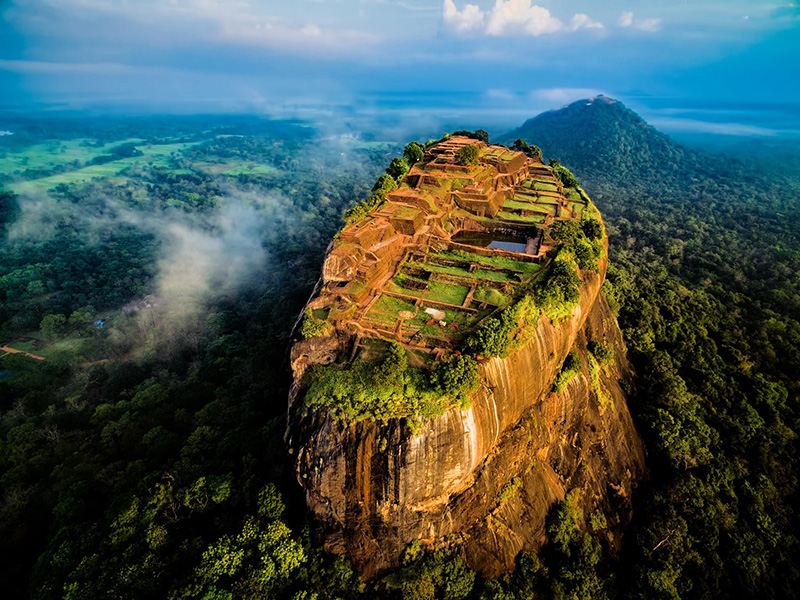
The world-renowned paintings of Sigiriya witch date from the 5th century A.D are a supreme expression of Sri Lankan art at its height. Today the paining are deduced to only 19 female figures. Historians as well as archaeologists who have studied these ancient masterpieces come up with varied interpretations. Somebody believed, the paintings depict the women of King Sigiri Kasyapa’s harem, on their way to worship, somebody says that figures depict female deities or Apsaras. Somebody says the golden or ochre tined figures depict lighting, ( Vajjukumari) while the dark tinted ones depict thunder (meghalata).

Sigiriya has a famous parapet wall; it called as Mirror Wall had been so named due to the mirror-like appearance of its polished surface. The Mirror Wall is a unique element of great importance in the study of the literature of the period. Visitors, who came to view Sigiriya from the 7th century to the 19th century A.D., have left their impressions record on the Mirror Wall. Widely known as the graffiti verses of Sigiriya, these literary compositions date from the 7th –13rd centuries A.D. These scribbled verses on the Mirror Wall are written in praise of the beautiful paintings and the surrounding environment. Sigiriya is being currently excavated and restored by UNESCO under the Cultural Triangle Project and according to sources is most likely to be declared as a Wonder of the World.

Visitors are allowed to view the Sigiriya archaeological site only from 7 a.m to 7p.m.

Sigiriya located in the northern extremity of the Matale District. Above 350 Meters Sigiriya has a striking geological profile, being a rocky outcrop, in the northern semi-highland zone. It is one of Sri Lanka’s ancient political capitals and most sensational archaeological heritage site that has also been listed on the UNESCO World Heritage List. There is sufficient archaeological evidence to prove that the history of Sigiriya goes back to pre-historic times. Sigiriya has a cave that has been used by pre-historic man, nearly 5,500 years B.P. Subsequent to this archaeological interest is centered on caves around Sigiriya rock which were built up as cave shelters from the 3rd century B.C. However, interest in Sigiriya today is focused on the constructional activities of King Kasyapa I (A.D. 477-495). King Kasyapa was a son of King Dhathusena by a lesser queen: hence his right to the throne was not a strong one. Assuming the kingship by a place conspiracy, which led to the execution of his father, Kasyapa chose to make Sigiriyahis seat of administration and reigned for 18 years. According to the eminent archaeologist Prof. Senerat Paranavitana, Sigiriya reflects the sensuousness of a pleasure-loving king, who modeled the city on the mythical Alakamanda of the god Kuvera. Research conducted in and around Sigiriya reveal that its rulers had relations with diverse foreign countries. Roman and Indo-Roman coins found during excavations provide the principal supporting evidence for this surmise. Also, earthenware utensils belonging to the Sassanian have been found. Persian influence is plainly seen in the layout of the Sigiri Water Gardens. At Least three of the graffiti verses mention silk from China. At the northern end of the rock, a narrow pathway emerges on to the huge stage from which the site derives its name – Sigiriya means ‘Lion Rock’. HCP Bell, the British archaeologist responsible for a huge quantity of archaeology in Sri Lanka, found the two vast lion paws when excavating here in 1898. At one time an enormous brick lion sat at this end of the rock, and the final climb to the top commenced with a staircase that led among the lion’s paws and into its mouth. The lion symbolism serves as a reminder to devotees ascending the rock that Buddha was Sakya-Sinha (Lion of the Sakya Clan) and that the truths he spoke of were as powerful as the sound of a lion’s growl. The 5th-century lion has since moved out, apart from the first steps and the paws. Reaching the top means clambering up across a series of metal stairs, but you can still see the original grooves and steps cut into the rock. The Water Gardens, the most striking feature of the Sigiriya city plan, occupy the central portion of the western precinct. This unique creation shows four distinct parts. There three Water Gardens. In Water Garden No. 1, there are four symmetrically arranged “L” shaped ponds, creating an island in the middle. This is considered a special feature found in ancient garden designs and is termed “Charbagh” and this specimen seems to the most ancient one extant in the world today. Sigiriya paintings are evidence that whole of the western and northern rock faces were originally plastered and painted. 

Other Activities in Sigiriya

Elephant Ride

Elephant Ride in Sri Lanka is a very popular activity among the children and also one the favorites of the adults. The scenery Elephant Ride is not only a ride; it is a marvelous way to explore the Sri Lankan nature. You will get a chance to ride thought wildest regions and attractive riverside scenery if you are dreaming to have a ride with this intelligent mammal; this is the best chance you will ever get. While you are on round tour, don’t forget to enjoy the Elephant Ride as it will be a memorable activity witch you ever have. The best places for Elephant Rides are Sigiriya and it is a delightful experience as this riding path moves through lakes, villages and wildlife.

Village Tour ( include Bullock Cart Riding, Boat Riding, Village Tour and Tuktuk Tour or Hand Tractor Tour)

Bullock Cart is the first vehicle in Sri Lanka, in the past once famous mode of transport of local royalty. Today this vehicle have become coordinating between the past and present. When you visit the great Sigiriya Rock, you can see a fortress that stands up in the wilderness. Where once upon a time, an aesthetic king built his hideaway to rule his kingdom, even today Sigiriya stands like a sentinel in the sky your experience begins the village called Ehelagala. It adjacent to the freat “Sigiriya Rock” you can ride the bullock cart in gravel path becomes the dust red soil of a bund. A line of black and makes its way across it, disappearing in to the grassy verge, flit between the a hive of activity butter files flit between the wild flowers, their wings coalescing and separating, in a kaleidoscope of colour. You can see many animals and birds; in the jungle. In the distance and the seemingly endless expanse of cool, cool green. Meander along the grassy bank of the picturesque Ehelagala for a truly satisfying birding experience. Reservoir is a stunning mixture of the village after the cart ride visitor can get a canoe boat ride in the reservoir.

Then visitor can get experience of the pleasures of village life. Visit a poor house in the village. You can see a farmer going to his rice field with a hoe on his shoulder and his wife making the lunch to him. You can get enjoy the village tour and have a simple home cooked meal and village drink by journeying into the heart of Ehelagala. At the end visitor have a Tuk Tuk tour or Hand Tractor tour back to the starting point. On request of visitor we can arrange your meal at village type Restaurant nestled in the picturesque of Sigiriya which offers true Ceylonese village experience. Enjoy a meal at village mud hut restaurant. This offers the real glimpse of village atmosphere with a tradition tree house with flute music to add real glamour of the village life style.

Aliyah Tours
aliyah tours

We're warmly welcome you to our offcial website of Aliyah Tours. We do any kind of tour in Sri Lanka. If you would like to have just a nice vehicle with a driver, or help from us to plan your dream tour, We'll be always here. Guide through the website and you'll find more interesting stories.

Contacts
Latest Articles
Privacy Settings
We use cookies to enhance your experience while using our website. If you are using our Services via a browser you can restrict, block or remove cookies through your web browser settings. We also use content and scripts from third parties that may use tracking technologies. You can selectively provide your consent below to allow such third party embeds. For complete information about the cookies we use, data we collect and how we process them, please check our Privacy Policy
Youtube
Consent to display content from Youtube
Vimeo
Consent to display content from Vimeo
Google Maps
Consent to display content from Google
Cresta Help Chat
Send via WhatsApp