Category: Destinations

Negombo

Negombo

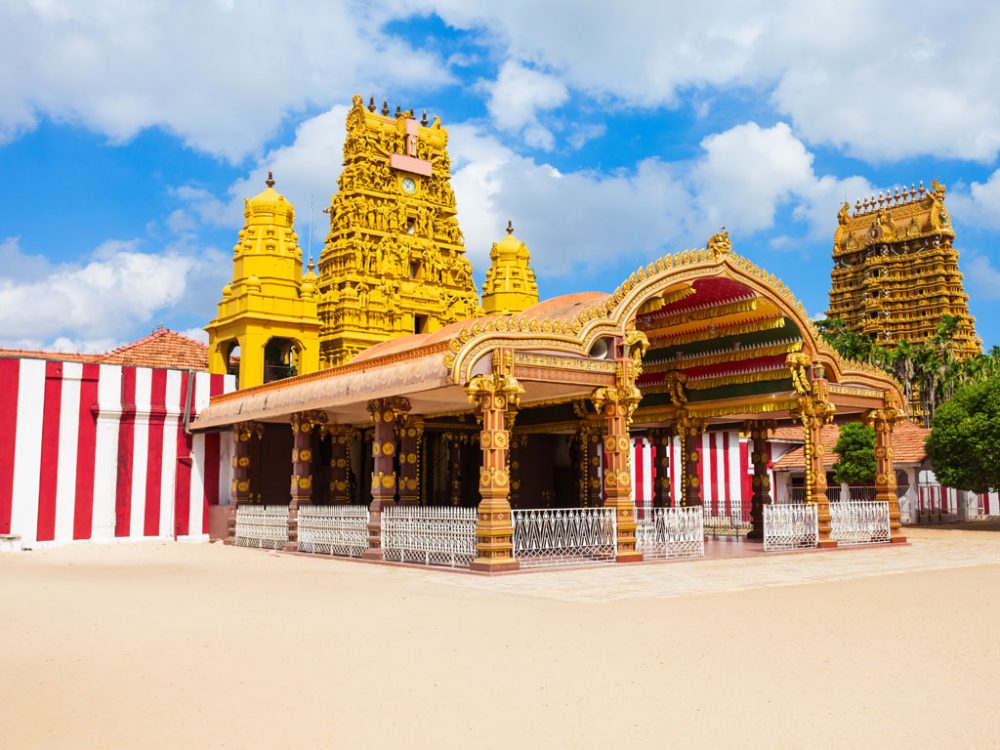
Negombo is full of churches. Ornate Buddhist temples, Hindus Shrines, Christian’s churches and Muslims mosque testify to the spiritual harmony of a cosmopolitan community speak all the three languages English, Sinhala and Tamil. The locals were so successfully converted to Catholicism by the Europeans, that the town is called `Little Rome`.

With a stash of decent hotels and restaurants to suit all pockets, an interesting old quarter and a reasonable beach. Most hotels and guesthouses are located at the main road that heads north from the town centre, going parallel to the beach. If you are a loner of Sea food, you have arrived at a right place. The ocean and the lagoon provide the delicious and the Negombo fish market has no equal to any fish market in Sri Lanka.


Highlights of Negombo:

St. Mary’s Church in Negombo

The coastal town of Negombo is an area in Sri Lanka that is dominated heavily by the Christian Faith and one of the town’s most important structures is St. Mary’s Church. This holy building is lavish and grand in nature, standing tall amidst other structure in the town. The church consists of three main levels which are immediately apparent when approaching the structure from the front.

Fishing in Negombo Lagoon & Fishing village

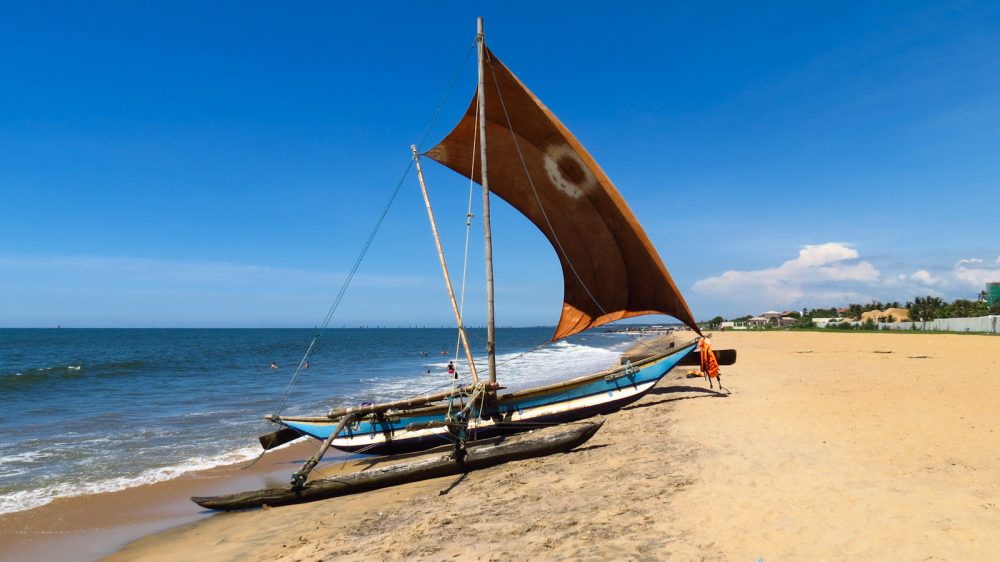
Negombo is a traditional fishing town of Sri Lanka.   The fishermen of the Negombo lagoon live in abject poverty in small, thatched palm houses in villages on the water’s edge. They rely on traditional knowledge of the seasons for their livelihood, using outrigger canoes carved out of tree trunks and nylon nets to bring in modest catches from September through till April.

Negombo is also home to the country’s second-largest fish market, the “Lellama”, at the north end of the town’s lagoon. There are daily fish auctions, which give tourists a chance to meet the area’s fishermen and even organise fishing trips into the lagoon and the ocean beyond. Other nearby attractions open to visitors includes Muthurajawela marshland, which is part.

Being a coastal town, Negombo is housed to thousands of fisherman who actively take part in fishing on a daily basis. The excess catch is being dried & preserved using indigenous technologies. One can visit the area where locals are busy with drying fish & packing them. Well the smell is a part of the experience.

Negombo is a modest beach town located just 10km from Bandaranaike International Airport.Negombo is frequently where tourists spend their first day or two in Sri Lanka resting up after a long and exhausting plane ride. Holiday in Negombo will give you both multiple pleasure and value.  

The Dutch captured the town from the Portuguese in 1640, lost it, and then captured it again in 1644. The British then took it from them in 1796 without a struggle. Negombo was once one of the most important sources of cinnamon during the Dutch era, and there are still reminders of the European days. Remains of colonization include the Dutch fort built in 1672, as well as centuries-old Portuguese and Dutch houses, Administrative buildings, Churches and the ceiling frescoes of St. Mary’s cathedral church.

The facilities for swimming, snorkeling, driving, wind surfing, deep sea fishing and scuba diving. The Negombo lagoon, the sea, the scenic beaches and a large polyglot community inflects the essence of the ultimate Sri Lanka holiday experience. The Dutch canal crossing the heart of Negombo is ideal for making a boat trip. The Dutch canal is the boat house for many thousand fishing boats.


Dutch Fort in Negombo

One of the most distinct tourist attractions in Negombo is undeniably the Old Dutch Fort. This is a structure that goes back to Sri lanka’s   colonial days when the nation was once under the rule of the Portuguese and then the Dutch. The city was encircled by an earth wall. Eventually the landmass on which the Old Dutch Fort Gate was constructed was regularly washed by the sea.

Negombo Beach

Negombo is a beautiful beach resort on the western coast of Sri Lanka. The wide sandy beaches and the safe sea are the major tourist attractions of Negombo bringing locals and tourists to enjoy a memorable beach holiday.

Negombo Lagoon

The Negombo Lagoon covers an area of 3164 hectares. It is situated some 40 km north of Colombo. The Lagoon is part of the much larger Muthurawajawela Marsh and Negombo Lagoon coastal wetland.
Mirissa

Mirissa


The ever cheery, playful dolphins will put on a show while some of the oldest and the largest marine creatures, the humpback and the blue whales, will nonchalantly glide past you, when you embark on a whale/dolphin watching excursion off the Southern coast of Sri Lanka. The perfect locations for whale watching would be Mirissa.

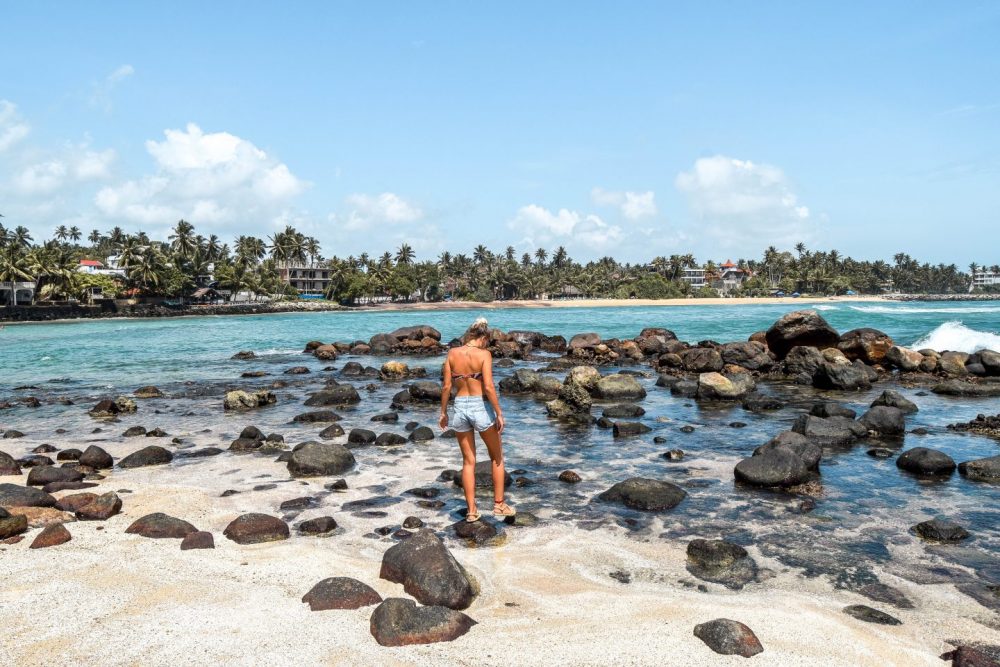
Mirissa and its magnificent sandy beach cute much transform your imaginings and visions of a tropical paradise into an everyday reality. Mirissa Located close to the Southern tip of the Island of Sri Lanka and only about 200 km from the Equator, this beach is the perfect place to sit back, relax and forget about all the hustle and bustle of your other life that’s a million miles away. This small tropical beach boasts some of Sri Lanka’s most excellent and most.

Since of late it has become the best place in the world to observe the mighty Blue Whale, as it has come to be that unlike other places where they roam, most of the Blue Whales in Sri Lanka do not migrate. They can be found residing among other whales and all kinds of dolphins.

With the whale watching season (November to April / May to October) in Mirissa being in full swing and many local and foreign tourists gathering to the Mirissa harbor, The Sri Lanka Coast Guards had increased their vigilance in monitoring the implementation of whale watch, and manage policy. To ensure that the system is adhered to by boat operators and tourists occupied in whale watching.

Mahiyanganaya

Mahiyanganaya

Things to do at Mahiyanganaya:

Mahiyangana Stupa

The ancient Mahiyangana Stupa is one of the sixteen most venerated Buddhist Stupas of Sri Lanka. It is believed Buddha’s hair relic is enshrined within the ancient Mahiyangana Stupa. The Stupa was enlarged by the Buddhist monk Arahat Sarabhu to a height of 12 cubits after receiving and enshrining the collar bone relic of the Buddha taken from the funeral pyre. Thus Mahiyangana became the first ever Stupa to be built in Sri Lanka. The great king raised the chethiya to a height of 80 cubits. It was only after the reconstruction of the Mahiyangana Stupa, King Dutugmunu carried on his military campaign to save the island nation from the Dravidian invaders.

Sri Lanka’s greatest historical chronicle, Mahawamsa reveals that nine monks since the supreme enlightenment of Buddha, having foreseen that the island of Sri Lanka is destined to have the Buddhism established and remain so for 5000 years, visited the island to preach the doctrine to the pre-historic inhabitants belonging to the tribes of Yaksha, Naga and deva.

Dambana and Sri Lanka’s Aborigines ( Vedda community)

Dambana located 19km north east of Mahiyangana bordering the Maduru Oya Sanctuary is home to the indigenous “Vedda” community numbering close to 1000 individuals. Sri Lanka’s Aborigines’, or the Veddha’s meaning “people of the forest” of Sri Lanka has a history much older than prince Vijaya’s landing in 5th century BC and the origins of the Sinhala race. The natural habitat of these people, whose livelihood once depended solely on hunting, was confined to the forest. They are essentially hunter gatherer forest dwellers without much change in their life style from Stone Age to modern times. Veddha’s also collect bee’s honey and exchange it with the locals for axe hanging from their shoulders and a bow slung behind them.

The total extinction of their traditions of hunting for food, cooking in open fire with a group, collecting Bees Honey, their songs and dances has now become a rare possibility. Today, the Veddha’s are more modernized as far as at least the cloths are concerned and perfect way to observe Veddha is to organise a camp close to or within a reservation However during the recent decades, they have been shifting in a slow transformation into Chena dry land for cultivation.

A ideal place to observe Veddha is their last remaining village of Dambana. Veddha’s will be more than happy to show you their ways of life, with an axe hanging from their shoulders and a bow slung behind them, gives you the feeling nothing much has changed since the dawn of time for these proud warriors of the jungle.


Sorabora Wewa Reservoir

The famous Sorabora Wewa (tank), the massive irrigation reservoir of ancient Bintanne. The Sorabora Tank is built damming the Diyawanna Oya with a 1590 feet (485 meter) embankment.  The scenic Sorabora Wewa tank bordering the Veddah settlements at Dambana is an ancient irrigation reservoir of remarkable expanse, constructed during the time of King Dutugemunu (161–137 BC), the hero of the nation. According to the legend, the tank was said to be built by a villager called Bulata.

The sluice which has been intact and in use since, was built on a natural existing granite rock. Sorabora Wewa which was called the Sea of Binthanne in the ancient past is unique to all other ancient reservoirs a is considered the only existing reservoir which does not make use of a Bisokotuwa, the heart of all other large reservoirs of the country. This ground breaking invention was the single factor which enabled the ancients to build massive reservoirs since 4th century BC.

This tank is magnificently shaped between two natural stone sluice gates and these gates reveal evidence for how marvelous the engineering skills of our forefathers were. Generally all the reservoirs have the sluice gates which regulate the water flow out of the reservoir on the massive embankments. It was the Bisokotuwa which regulated the water pressure at the sluice gates inside the tank and protected the embankment from erosion. Today the Sorabora Wewa Reservoir which is rich in birdlife is magnetism to the nature lovers.

Kitulgala

Kitulgala

White Water Rafting

This thrilling adventure on the white water section of the Kelani River is suitable for amateurs as well as professionals alike. During the run, you will experience the thrill of shooting rapids and euphoria of making it through. The river”s clear water is born in the heart of the peak wilderness reserve and tumbles through a rocky george just above Kithulgala.Good place to jump in for a refreshing swim.

Kitulgala is a small town in the west of Sri Lanka. It is in the wet zone rain forest, which gets two monsoons each year, and is one of the wettest places in the country. Nevertheless, it comes alive in the first three months of the year, especially in February, the driest month. 

In the west of the hill country is the scenic village of Kitulgala. The landscape here is particularly dramatic with vertiginous forest-clad cliffs plummeting down to the wild waters of the kelani River. This is also the site of some of the best whitewater rafting in Sri lanka with grade three rapids some 5km upstream. Kitulgala’s other claim to fame is that it was the site for the filming of the 1957 Oscar Academy Award winning film, The Bridge on the River Kawai. On a clear day, you may even dive to see the remains of the actual bridge and the carriages used for the film, although nothing remains now except the concrete foundations for the bridge (supposedly, the submerged train cars that plunged into the river in the climactic scene). only for experienced divers with proper equipment.

Bentota

Bentota

Bentota beach is also pretty popular for scuba, surfing, snorkeling, Diving, jet skiing, slow boat, speed boat, banana ride, wave surfing, and also wind surfing are just a few ways in which the town keeps its visitors engrossed. Based on the views generated by the tourist who have visited this beach, if you want to take pleasure in a absolutely warm and quiet holidays then it are an perfect place for you.Though enjoying the eye infectious view of the Bentota seashore another thing that caught the attention of many tourists is the stunning River Cruise. Bentota has become a much sought after holiday destination for water sports lovers because of its unique location, partly surrounded by the sea and the river. It is highly recommended by natives who have taken the 3 hour journey on boat of the river. People have witnessed different kinds of animals, birds, reptiles for example mongoose, crocodile, monitor, iguana in their natural habitats, which makes it an animal’s lover daydream as well.


Madu River Boat Ride

The estuary of the Madu Ganga River is a complex coastal ecosystem of mangroves and islands. It is situated in and around Balapitiya in the Southern Province within the Wet zone of Southern coastal belt of Sri Lanka. It passes through the wet zone of Sri Lanka opening up into the large Madu Lagoon on its way to the Indian Ocean Maadu Estuary is perhaps one of the last remaining tracts of pristine mangrove forests in Sri Lanka, with a rich biodiversity.  The Madu River is very rich in biodiversity.

History states there used to be 64 islands along Madu River. However most seem to have sunk under the water, as only 25 islands are reported today and all are covered in forests and shrubs.

It is created of two low water bodies, Maduganga and smaller Random be Lake, connected by two narrow channels. 14 of the 24 species of mangroves are found in this area. It is motivating to note that mangroves play an enormous part in preventing erosion. The value of the mangroves was understood in December 2004, during the overwhelming tsunami, when forest acted as a natural barrier caring the region. The large growths of mangrove trees have caused a chain of ecological gain. The soil protected by the mangrove trees is extremely lush. This has caused a rich growth of other bog plants. On the islands and shores relatively undisturbed mangrove vegetation contains a rich biodiversity qualifying the wetland for 7 Criteria of International Importance. The Madu River area adjoining the river are all muddy marshlands enclosed in mangrove forests. The forest covers over 150 acres.

Many internationally/countrywide endangered, endemic and rare species – for examples Shrea affinis, an endemic and endangered plant, Mugger vulnerable (IUCN Red Book) and CITES-listed Purple-faced Leaf Monkey, endangered, Estuarine Crocodile, Flapshell Turtle, Indian Python (Python molurus) discover shelter here. The lagoon provides the breeding, spawning and fattening ground for many fish species and supports 1.2 % of the Little Green Heron biogeographically residents. Maduganga helps in flood control by storing water during monsoon rains and retains nutrient run-off from nearby cinnamon plantations. The main profession of the restricted people is fishing and agriculture (cinnamon and coconut). Poaching of wild animals and waterfowl is sadly increasing, and extensive use of fertilizers and consequent abundant growth of invasive species, e.g. Najas marinas or Annona glabra, are factors of concern.

Bentota Beach/Water Sports

On the costal route 64Km from Colombo, visitors crossing the Bentota River at Bentota the Southern tip of the Galle district. It is secure to say that this urban is a complete water linked place as almost all activities are done on water, whether it’s the marine or the river.

The Bentota Beach which extends across 7-8 kilometers is truly a symbol of peace, calmness and freshness. It is a trendy place for those who find irresistible water sports as the beach is famous for its bumpy waves, perfect for water skiing and wind surfing.  If you are like to spend your holidays and give yourself a quiet and natural care for, with no bars and restaurants, this is the most refreshing and relaxing spot. One of its strongest points is its hushed environs which according to many communities run the natural and relaxing environment of the beach. There is plenty of space of everyone to settle in rightly and enjoy the sun bath to the fullest.

And also you can get experience with lagoon fishing, fish therapy (foot massage) and canoeing. A motivating thing to be visited of the area is the Open-Air Fish Massage. The fish massage is quite popular all over the world, mainly in East Asian countries. The unique factor about this massage is that the fish are held in their natural surroundings, the river. A large space is sectioned off by nets tied between poles; restricting the fish from leaving that area. Other than that, they are free to move around. The client simply sits on a pier and dips his or her feet into the water.


One of the larger populated islets, ‘Koth Duwa’, houses a Buddhist Temple that dates back to the days of the oldest kings of the country. Meanwhile two other islets bear the history of the country by having been the refuges to two different kings, King Dhathusena and King Mugalan.

Maadu rivers offers a great opportunity for boat trips where you can arrange to stop at Kothduwa island with a Buddhist monastery, where the friendly young monks will show you a 150-year-old book made of palm leaves and how they cook on cinnamon wood on an open fire, cinnamon estates and other nature resorts. This unforgettable activity last for over two hours and gives a visitor a chance to travel the secretive passages through the mangrove forests and see the ecology. The cultural heritage is very prominent, with numerous antique temples in the area and on the islands.

The main source of economy for the locals of the Madu Ganga (River) region is the cinnamon industry. The freshly cinnamon this also means that the best quality cinnamon can be buying at bargain prices here.Those who are not in the cinnamon industry, make from fishing or as boat guides. The fishermen either sit atop large branches planted in the water and fish using poles; or they tie nets among poles planted in the water to capture transient fish.

Over 300 species, 19 of which are endemic, have been discovered so far. The region continues to be a treasure trove to biologists and ecologists with many undiscovered species in the unreachable depths of the mangrove forests. The plantlike in turn have supported a huge number of wildlife that depends on them. The largest animal in the region is the wild boar. There are other smaller animals such as monkeys and squirrels, mongoose likewise. There are over 111 bird types identified to live in the region. For avid bird watchers, the mangrove forests are a dream coming true. As well as there are 31 types of reptiles, namely snakes, lizards and crocodiles. There are also over 50 kinds of butterflies and 25 kinds of mollusks found in the Madu River zone.

Mathale

Matahale


Aluvihara Temple (Luminous Cave)

The history of Aluvihare Rock Temple is traced back to the 3rd Century B.C to the reign of King Devanampiyatissa. It is believed that the King built the dagoba, planted the Bo sapling and founded the temple after the introduction of Buddhism to the country during his reign. If you move of Kandy to Dambulla, stop in Matale. You will certainly be rewarded for.Aluvihara; Luminous Cave Temple is synonymous with the teaching of the Buddha. Aluvihara rightly assumes its significance in the annals of the history of world Buddhism. Aluvihare is the place where the Oral teachings of Buddhism, Tripitaka were written into pali on palm leaves. There is a relish story behind the origin of the temple. Especially the cave dedicated to Ven. Buddhagosa thero was used to translate the documentaries and Buddhist teachings. Tripitakaya is divided into three parts. They are vinaya pitakaya, sutra pitakaya, and Abhidharma pitakaya. Gradually the Tripitaka teachings were shared by mere word of mouth by entrusting to memory by the Buddhist monks. So they had to be ensured unless the marvelous tourism destinations would have vanished. It is believed that the documentary process was carried by the King Walagamaba during his reign.

The Aluvihare Rock Temple is a sacred Buddhist temple located in Aluvihare, Matale District of Sri Lanka. Surrounded by hills, the Aluvihara cave temple is situated 30 km north of Kandy on the Matale-Dambulla road. The name Aluvihara has many meanings and legends associated with it. It was originally known as ‘Alu-Lena’ or ‘Aloka-Lena’ (Luminous Cave) based on a legend. Legend has it that a giant used three of the rocks as a base for his cooking pot and the name Aluvihara (Ash Monastery) refers to the ashes from the cooking fire. The cave temple faced east and it received the morning rays of sunrise. This was the reason the cave was named Aloka-Lena (luminous cave) since ancient times.More or less next to the rock cut Temple is a “Golden” pagoda. Look to the hillside above you and you’ll see a huge seated golden Buddha offering protection and blessings with an abhaya (palm facing-outward) gesture. Quite surprising was the temple complex itself. It consists of several temples on different levels on the mountain. Steps connect the temples with each other. The first two caves contain 10m reclining Buddhas and impressive lotus-pattern murals on the ceilings.

Things to do in Mathale:

Spice Garden

Visit a spice garden in Matale to see different spices for which Sri Lanka is famous. Clients will be able to see different spices and how some of these spices are grown and processed. Learn about the local plants, their culinary and medicinal uses from your guide as you go. Witness a Cookery demonstration that puts the plants to good use and enjoy a lunch experience made with fresh spices. This culinary tour is an ideal way for the discerning traveler to immerse him or herself in the history and the ethos of Sri Lanka, its people and their customs and, most importantly, their food! You can learn about Sri Lankan spices and various Sri Lankan cookery methods.


There are a number of magnificent frescoes. The second cave is filled with cartoon-like murals of the realms of hell to keep potential sinners on the straight and narrow. Intriguing, because they are hell for on the various deadly sins that man can commit (including adultery, lie and lust) are various punishments, which are very informative. Complete with demons and hell fire. If you move of Kandy to Dambulla, stop in Matale. You will certainly be rewarded for.

Pinnawala

Pinnawala


Due to loss of habitats and fragmentation of forests, due to various activities such as development of agricultural projects, human encroachment to the forest for settlement and cultivation, construction of roads and railways. Elephants are in threat for their survival. Elephants are poached for their tusks and illegal trading are some of the causes for declining of population these giants in Sri Lanka. Baby elephants are being fallen into agricultural wells, drains and pits. The resultant Human Elephant Conflicts, which records the deaths of both the humans and elephants, is the greatest threat to Sri Lanka’s wild elephant population. As a result of anthropogenic activities a young animal were become orphans in the wild and for the conservation of such animals and institution was formed in 1975 under the Department of Wildlife Conservation.

Since 1983 the elephant orphanage has being governing by the Department of National Zoological Gardens. First captive birth of the orphanage had taken place on 05th July 1984. There are 78 elephants in orphanage now and there are 69 births in the orphanage and increase the number of elephants in the herd.Pinnawala Elephant orphanage is treated as one of the largest breading center in the world. Today the heard has grown up to 69 elephants. Among the many elephants of the orphanage there are three of them which will definitely get your attention.

Pinnawala Elephant Orphanage

The orphanage was originally founded to provide care and protection to the many orphaned elephants found in the jungles of Sri Lanka. Pinnawala has the largest herd of captive elephants in the world

Pinnawala Elephant Orphanage can be reached via the A1 Colombo – Kandy main road. A turn off at the 82 km post at Kegalle and turn left at the karadupana junction and it’s leads you to the Pinnawala Elephant Orphanage.

The closest railway station is at Rambukkana 2km away from Pinnawala. The main site also has a few restaurants and refreshment stands, and management buildings, including sleeping shelters and Medical facilities. The elephant bathing and viewing area along the Oya River is directly opposite on the west side of the highway.

Tourists can observe the bathing elephants from the broad riverbank as the herd interacts socially, bathing and playing. The orphanage is open to the public daily, and all admission fees are used to look after the elephants. Visitors to the park can view the care and daily routine of the elephants, such as bottle feeding of elephant calves, feeding of all other elephants, and bathing in the Ma Oya (River).

Trincomalee

Trincomalee (Trinco)

This historic city is old almost beyond reckoning: it’s possibly the site of historic Gokana in the Mahavamsa (Great Chronicle), and its Shiva temple the site of Trikuta Hill in the Hindu text Vayu Purana. Within its grounds, the grand Koneswaram Temple stands on Swami Rock cliff, the holy complex contains ornate shrines and a massive statue of Shiva. Nearby Gokanna Temple has a panoramic view over the city and the coastline.

Most people just pass through the city on their way to the nearby beaches of Uppuveli and Nilaveli, but the town has some charm, plenty of history and an interesting melange of people. It’s easy to spend a day or more exploring the ins and outs of the myriad waterfronts and the fort and its famous temple.

Things to do in Trincomalee:

Nilawali – Beach

Nilaveli is located north-west of the Island. It is one of the most beautiful beaches in Sri Lanka renowned for its soft white sand and breath-taking bays. For years Nilaveli has been considered one of Sri Lanka’s best beaches. Trincomalee is the gateway to a few of the finest beaches in the eastern coast of Sri Lanka, namely Uppuveli and Nilaveli located 6km and 16km away from the town area. Nilaveli, the furthest north of the Trinco region’s two beach resort areas, is more intimate than Uppuveli.The beaches with knee deep shallow waters that runs hundreds of feet into the sea, afford ample opportunities for surfing, scuba diving, snorkelling, fishing and Whale Watching.

If you’re looking for some serious beach time, then Nilaveli could be just the ticket, for the sands are golden and the ocean inviting. It certainly has that feeling of paradise-island remoteness, with plenty of bending palms swaying over the golden sand. It’s about 4km long, with modest resorts dotted along the shore. Hotels are scattered up and down little lanes off the coast highway (B424) – it’s around six kilometres from one end of the village to the other. Looking east, Offshore, you can see Pigeon Island beckoning you to snorkel.


Pigeon Island

Pigeon Island – Located floating in the great blue 1km offshore of Nilaveli a coastal town in Trincomalee. This island was used by British army as a place for shooting practice in early world war time. The islands were declared a sanctuary in 1963 for the purpose of protecting these birds. In 2003 this area was upgraded to the status of a National Park and the boundaries were extended to include coral reef around them. The Pigeon Island Marine Sanctuary is a unique natural phenomenon consists of two Islands called the Large and Small Pigeon Islands. It is extends up to 471.4 hectares in total of which 9 ha cover the landmass and the rest encompass the coral beds which is the border line of the Marine National Park. Pigeon Island is one of the several protected areas affected by the Indian Ocean tsunami in 2004.

Pigeon Island, with its powdery white sands and glittering coral gardens, tantalizes with possibilities. A nesting area for rock pigeons, the island is beautiful enough, with rock pools and paths running through thickets, but it’s the underwater landscape that’s the real star. This Pigeon Island National Park has one of the best remaining coral reefs with high live coral cover in the country and is an ideal location for scuba diving and snorkeling. Sri Lanka is home to two Marine National Parks, one of which is the Pigeon Island Marine Sanctuary as well as one of the few marine national parks in the world and surely the most attractive marine national park.

The huge Pigeon Island possesses a 200m long and 100m wide coral reef with over 100 types of beautiful corals making it an unmatched live coral reef, unlike any other in Sri Lanka. It is careful an ecosystem high in biodiversity and a socioeconomically significant reef habitat whose vegetation consists mainly of Acropora spp., Montipora spp., Faviddae, Mussidae and Poritidae coral species; this is in addition to soft corals such as Sinularia, Lobophyton, and Sarcophyton.


Fort Frederick

Occupying the neck of a narrow peninsula, Fort Fredrick has been a defensively important site for centuries. A fortress was initially constructed here by the Portuguese in 1623 and later rebuilt by the Dutch. The British took over in 1782 (look out for royal insignias crowning the tunnel-like gateway that pierces the fort’s massively stout walls).

HOT Spring

Kanniya Hot Water wells have now developed into a popular attraction for those who visit Trincomalee now that the LTTE Terrorists which controlled this area has been completely wiped out. It is also believed the water from the wells have therapeutic healing powers and can cure many aliments. However due to the spirituality of the surroundings, many come here to calm their mind, body and soul. Further, to have bathed at the hot water springs in Kanniya are important and is much talked about after visitors return home.A visit to Trincomalee will not be complete without a sojourn to the Kanniya hot water springs.

According to the notice board put by the Pradeshiya Saba at the wells, this well goes back to the times of King Ravana who ruled the country over 5000 years ago. According to the Hindu Legend Ramayana, there are many tales surrounding these hot water springs, one being that Lord Vishnu created the wells so that King Ravana could perform the last rites for his mother Kanniya upon hearing of her alleged demise. An additional is that King Ravana struck the rock with his sword seven times and thus the springs appeared. But now it has been accepted that these wells belonged to an great Buddhist monastery which span vast area. Experience everyday local tradition and take a bath in the holy waters of Kanniya Hot Springs.

Trincomalee (Trinco) sits one of the finest natural deep-water harbors in the world is located 257 km north-east of Colombo, capital city of Sri Lanka. Trincomalee superb deep-water port has made it the target for all manner of attacks over the centuries: by the British takeover in 1795, the city had changed colonial hands seven times. Trincomalee is a port city on the northeast coast of Sri Lanka. Set on a peninsula, Fort Frederick was built by the Portuguese in the 17th century.

 Trincomalee harbor during the Second World War, The British and the Allied Powers chose it as the chief naval base for the entire South East of Asia and Far East Command during World War II, The Japanese attack at Trincomalee’s harbor in 1942 wasn’t successful in spite of a suicide attack on the Trincomalee fuel tanks. Sri Lanka, then called Ceylon, did not face a real threat of an invasion by the Japanese at any point during the war.


Swami Rock and Koneshwaram Kovil

Trincomalee’s ancient history is more mystery and legend and sometimes highly debated. On the eastern promontory is the famous Swami rock on which stands the celebrated Koneswaram temple. Thirukoneswaram, or the Holy Koneswaram Temple, is a Hindu temple in Thirukonamalai (Trincomalee) on the east coast of Sri Lanka. The temple lies on a high rocky promontory surrounded on three sides by the sea. It bears a history of over three millennia with its records indicating its roots in 1580 BC. This, still beautiful, historical monument is what remains of what once was a sprawling temple city equal to the ancient city of Madurai, India. According to one Hindu legend, Shiva at Koneswaram was worshipped by Indra, king of the gods. King Ravana of the epic Ramayana and his mother are believed to have worshiped Lord Shiva in the sacred lingam form at Koneswaram circa 2000 B.C.; the cleft of Swami Rock is attributed to Ravana’s great strength. According to this tradition, his father-in-law Maya built the Ketheeswaram temple in Mannar. Ravana is believed to have brought the swayambhu lingam in the temple to Koneswaram, one of sixty-nine such lingams he carried from Mount Kailash. Ravana is also supposed to have created the hot springs of Kanniya as part of Thirukoneswaram, for the last rites of his mother. King Ravana was a legendary emperor of Sri Lanka who is believed to have lived over 5000 years ago. If this legend were to be true, then that would indicate that the temple was alive and thriving for over 5000 years.


This coral rich habitat surrounded by a maze of smaller islets and rocky outcrops in the vicinity of the Small Pigeon Island has made it a favorable feeding and breeding ground for over 300 species of coral reef fish creating a colorful underwater symphony. The fish variety include juvenile and adult Black tip reef shark, in addition to a number of endangered and protected fish species such as Bi-color cleaner wrasse, Raggedfin parrotfish, Humphead Wrasse, Mellon Butterflyfish, Black wedged butterfly fish, Moorish idon, Blue ringed angelfish and Emperor angelfish.

Interestingly there are also visiting sea turtles such as Hawksbill sea turtle, Green sea turtle, Leatherback, Loggerhead and Olive Ridley amongst other varieties of interesting vertebrates and invertebrates.

The reef here is shallow, making snorkeling almost as satisfying as diving, and its home to dozens of corals, hundreds of reef fish (including blacktop reef sharks) and turtles. A small boat ride will let you to this awesome piece of nature’s creations. The sun, sea, beach, corals, singing birds and the sea breeze will give you an experience of a life time.

Pigeon Island is also a well known birds’ sanctuary. The island is colonized by a large number of rock pigeons and the island gets its name from Blue Rock Pigeon, a native endangered bird that lives within the rocks in these islands. On entering the Island visitors can see hundreds of Blue Rock Pigeons, an endangered species nesting and breeding amongst the rocks.

The reef here is shallow; this underwater fantasy is a piece of heaven for those interested in scuba diving, snorkeling, & surfing and its home to dozens of corals. A small boat ride will let you to this awesome piece of nature’s creations. The sun, sea, beach, corals, singing birds and the sea breeze will give you an experience of a life time.

The busiest times to visit are May to September.

Dutch Bay

Right in the centre of Trinco is the attractive and picturesque Dutch Bay. Swimming is possible despite sometimes dangerous undertows. However, it’s more a place for ­strolling, and ice-cream sellers cater to the evening passeggiata.


At times a current of bubbles can be seen rising from the bottom, giving you and feeling of a pot of water being heated. The hot water springs are said to be surface manifestations of subsurface hidden energy sources, however their origins are yet a mystery and is intricately linked with the history of this country.

Today, locals who wish to advantage from the water’s medicinal properties visit the wells. Step onto the tile floor and find seven man-made square-shaped wells, each no more than waist-deep. Grab a bucket, scoop out some water, and take a bath the local way. However, whatever their origins and archaeological import the hot water springs offer their waters to all nationalities and religions and are visited by hundreds of travelers a day who are strong-minded to soothe their bodies and mind with the warmth of the spring water.

Each spring is enclosed by a stone wall to form seven individual wells, which in turn are covered by a wall to provide privacy to those who bathe. Notice that each of the wells varies slightly in temperature. The size of each well varies. The bottom of the well is formed of quartz, sand and gravel and thus the water is clear and not muddy. The temperature of each well varies and due to its mineral composition the water is said to cure skin ailments and arthritis.

Jaffna

Jaffna Peninsula

Almost everything on the palm can be used by man, most obviously the trunks but also Jaffna is remarkable for its elegant fences or rather screens with their repeating designs of fans standing side by side on the boundaries of properties. Best time to visit is towards end of the year when the lagoons are filled with water, the paddy fields and vegetation are lush green, the air is cooler and the migrant birds including Flamingos, ducks and other water birds line the lagoons in their thousands. Birding season in the Jaffna peninsula is from about September to March. Physically and culturally the peninsula is almost an island, almost completely separate from the rest of the country, and has always been far more thickly populated than the more arid lands of the Vanni further south.

Jaffna is a city on the northern tip of Sri Lanka. It is the administrative headquarters of the Jaffna district located on a peninsula of the same name. Prior to the Sri Lankan civil war, it was Sri Lanka’s second most populated city after the commercial capital Colombo. Jaffna has undergone much hardship due to terrorism and, ultimately, a full-scale war between the LTTE and the Sri Lankan armed forces which ended a 26-year conflict. The trauma will remain for years, but since 2009, the people of Jaffna are rebuilding their lives with renewed hope. After Sri Lanka gained independence 1948, the political relationship between the minority Sri Lankan Tamils and majority Sinhalese worsened and after the Black July pogrom, civil war erupted in 1983. The rebel Liberation Tigers of Tamil Eelam (LTTE) occupied Jaffna in 1986 and from 1989 until 1995. According to records reviewed by the Portuguese, during the Dutch era Jaffna was populated by the south Indians brought into the peninsula for the cultivation of Tobacco. Historically, Jaffna has been a contested city. It was made into a colonial port town during the Portuguese occupation of the Jaffna peninsula in 1619. The Dutch took it from the Portuguese, only to lose it to the British in 1796. . Today the Jaffna peninsula is inhabited mainly by the Tamils. The majority of the city’s population is Sri Lankan Tamils, although there was a significant number of Sri Lankan Moors, Indian Tamils and other ethnic groups present in the city prior to the civil war. Most Sri Lankan Tamils are Hindus followed by Christians, Muslims and a small Buddhist minority. Situated at the northern tip of Sri Lanka, the Jaffna peninsula is steeped in history. Explore Jaffna town and surrounding areas, or visit one of seven inhabited remote islands. The landscape is dotted with Palmyra Palms and lagoons where flamingos flock after the rains.

The temperature is at its highest during April/May and August/September. The North East monsoon rains are between Octobers to January. The agricultural hinterland of Jaffna town, a fertile arc of land crises-crossed with a lattice of small country roads and lined with endless walled gardens and smallholdings in which the peninsula’s famed mangos are grown, along with a wide variety of other crops including chillies, onions, bananas, jackfruit and grapes. The palmyrah palm tree, known as panay or panam in Tamil and tal gaha in Sinhala. It is common to the Jaffna district with about two thirds of the 10 million palms in Sri Lanka found here. There are two varieties which give either black or red skinned fruit.

Things to do in Jaffna
Point Pedro

Point Pedro lies near the most northerly point of the island of Sri Lanka facing the immense Bay of Bengal, Point Pedro, believed to have named after the Dutch sailor, who found it to be the north most corner of the country, Punta das Pedras which means Stony or Rocky Point. Just ten minutes away from point Pedro is the lighthouse, standing 31-meter tall. The lighthouse is slightly on the east of the town. It looms into view from afar, white in striking contrast to the bright blue skies. Built in 1931 to guide passing boats and ships, its light is believed to have been powerful enough to extend 10 nautical miles into sea. However, it has only been used till the 1990s and today stands more of a monument than a navigation aid. Today is stands inside the point Pedro naval base unwelcoming visitors and accompanied by who soar high around its peak. The beach here is pleasant and you can enjoy a swim, not so much in front of the town but after the Light-house in towards the East.

Nallur Kovil Jaffna

Nallur is a occupied village located about 3km south of the city centre of Jaffna. There were tanks at Nallur brimming with water yet weren’t used by many. He has narrated that the lovely purple flowers growing on these tanks were called ‘Manel Mal’ (Purple Lotus). Nallur, according to Portuguese sources, had a great Sinhala population. A Muslim Mosque did once stand at Nallur, till it was burned and destroyed by the Catholic Padre of Jaffna during the early 1600’s. Portuguese have well recorded their battles in Jaffna against the Sinhalese, Muslims and Vadukas at Nallur.

Nagadeepa Viharaya

Graced by the presence of Lord Buddha on his second visit to Sri Lanka merely five years after attaining enlightens to make peace between two warring Naga Kings, Nagadeepa Purana Raja Maha Viharaya is among the sixteen most venerated Buddhist pilgrim locations in the island. The temple situated in the island of Nagadeepawhich, one of the islands in a cluster that is situated close to the western coast of the Jaffna peninsula with Palk Strait shaping around it. The Image House next to the stupa features a fine golden Buddhist statue. However the Stupa was constructed nearly 2700 years ago by the two Naga Kings, Chulodara and Mahodara, whose dispute over the gem adorned golden throne, was settled peacefully by Lord Buddha on the day of dark moon in the month of April. In gratitude the throne was offered to the lord Buddha, was returned to the Naga Kings and was later enshrined in the Rajayathana stupa. However the end of the war had revived the pilgrimage to Nagadeepa and the temple and its surrounding is blooming under the sponsorship of visitors and the Sri Lankan Army. The newly dawned peace had revived this sacred ground on which a war was prevented and peace was made by the greatest human nearly three millennia back.

Nilavarai

Located at a crossroad, this beautiful natural well with its amazing aquamarine colour is said to be endless, with salt water in its depths attesting to its link to the sea. Legend says that this is the place where Rama, the Hero of the Indian Hindu epic Ramayana, stopped to rest and finding himself thirsty plunged his arrow into the ground at which point water came spurting out. This well has ever since provided a never-ending provider of fresh water.

Delft Island

Delft is the island furthest of the Jaffna peninsula, with the exception of the unoccupied island of Kachchative, which is further 30km southwest of Jaffna. This island is named as Delft in the Admiralty Chart unlike the other islands, whose names are Tamil. The island’s area is 50 km² and it is approximately oval-shaped. Its length is 8 km and its maximum width about 6 km. Delft was occupied by all three colonial powers in Ceylon in succession. The bleak and barren landscape devoid of wood with the exception of a single stumpy Baobab Tree, scattered with coral-rock walls is populated by throngs of wild ponies, off spring of the horses brought into the island by Portuguese. In the western coast of the island there are remains of a 1000-year-old temple built by the Chola Dynasty, as well as the ruins of a Dutch colonial fort. The water is slightly salty, and it is taken from shallow wells using buckets made from Palmyra palm leaves. Houses are fenced by coral-stones piled up or by palmyrah leaves, which gives to Delft its particular aspect. The island was named after the Dutch city of Delft by Rijckloff van Goens. Visitors should take the ferry from Kurikattuwan to the southern tip of Pungudutivu while the journey takes about 1 hour. It has a haunting beauty which is made even more appealing when you find that its barren plains are populated with wild horses, descendants of forebears abandoned there in the Dutch period. The most pleasant season is probably July to August when the rough weather has subsided yet you are welcomed with a slight breeze. January and February are cooler like in the rest of the island but January can be wet.

Popular attractions in the Delft Island 

Baobab Tree – The Baobab is native to Ethiopia and is found widely in central Africa and has long since been naturalized in India. Baobab trees are the longest-lived species on earth. The Baobab trees are another legacy of the Portuguese who brought it here for medicinal purposes for the horses. This tree amazingly found on the island of Delft stands isolated in its splendor. It has a short stubby trunk of enormous girth and can be just as tall as it is wide. It is capped with a small crown of spindly root-like branches which are almost leafless. There are several Baobab trees in the island, each believed to be 300-400 years old. One in particular is unique as the trunk has a hollow large enough to walk into.The fibers of the bark can be used to make rope and cloth and its fruits are edible while the leaves too can be eaten. Their trunks can be hollowed out without killing the trees.

Old Buddha Sthupa – In a corner of the island, the base of a stupa is found along with the remnants of four subordinate stupas surrounding it. Legend has it that this was the location where ArhatSangamittaTheri rested during her voyage to the island carrying the sacred sapling of the Bo tree. The stupa is said to have been built by the Buddhists who resided in the island at that time. Situated closed to the sea the location also provides a panoramic view to the distant sea and beyond,

Dutch Fort – Once a Portuguese strong hold and a feared prison, the Delft Island Fort stands in ruins today. It was recorded to be a very complicated two storied edifice, full of long narrow corridors and little square rooms. This small fort, made from coral and now in ruins, was probably located here due to the favorable mooring facilities offered by the bay for old vessels and its easy landing facilities, since the other coasts of the island were showing to the open sea. In one corner of the fort had been the dungeon, a small square room, with a floor below ground level without any door, and having only one small window most important into the interior of the fort. The prisoners had been pushed in through this little opening or let down through a trapdoor in the floor above, and could have got out only by means of a rope many meeting their death in this little chamber. In its relatively well preserved state, it is easy to imagine the Portuguese soldiers living in hard situation far from home on this romantic but isolated island. Yet gone are the strong fort and the fierce dungeon and the only remaining structure is the Dutch dovecots, used to house messenger pigeons, which still stands in perfect form.

Foot Print – On the walk to the stables from the main road, the first sight is a giant footstep which is close to one metre in length. The sight of the print surprised me as well and made me think of giants we usually see in movies. The natives believe the footprint engraved into a stone is from a man who was around 40 feet in height. According to the residents, there was a similar footprint on a nearby island, Nainathivu.

Pigeons Nest – Pigeons Nest, which housed around two dozens of pigeons that were used to transport messages across islands, ships and the mainland. It made me think about the facilities we enjoy today, where communication has become so easy with instant call and SMS facilities.

Roaming Wild Horses – The wild horses of Delft come from a breeding stock maintained from Portuguese times. One part of the island is used by villagers and the other part is used by horses and cattle. After bringing wild horses they had brought plants to feed them as well as medicinal plants. The Baobab Tree is a plant which brought to feed the horses. It is truly a unique and spectacular sight to see these herds grazing with their foals, lift their tails and race into the distance as you approach too close to them. The population of wild horses is around 500- 1500. Early in the morning these horses come to grassland and when the heat is high they are going to covers. These wild horses roam freely in the grassy windswept plains of the island. Some are privately owned and are branded but are left to free-range, while the others have never been lassoed. Though there is water in one part of the year, the rest part they are suffering due to lack of water. A protection law has been placed over the horses and it is forbidden to remove them from Delft Island to any other location.

Queen’s Tower – Queen’s Tower, which was used as a navigation landmark by the Dutch. It is situated on the wind- battered, barren southeastern coast of Delft. The tower was believed to be covered with a reflective surface, which could be seen a distance away from sea. There is a low central chimney-like shaft which creates a vacuum forcing air upwards. It is not known whether this has been used for smoke signals or some other type of signal.

Banyan Tree – This is a fascinating banyan tree which extends its canopy over a large area of land. The Banyan tree is an evergreen which grows to a height of just about 25 m and has a wide canopy which is supported by roots down from its branches. Initially dependent on its host, it eventually kills it. This resilient species of fig grows extensively in Sri Lanka being able to support a large number of different ecological situations. What makes this particular Banyan tree so motivating is that its covering extends over such a large area that is approximately 60 m long and 30 m wide.

Polonnaruwa

Polonnaruwa

The ancient city of Polonnaruwa has been declared a World Heritage site by UNESCO. Polonnaruwa is the second largest city in North Central Province, but it is known as one of the cleanest and more beautiful cities in the country. The green environment, amazing ancient constructions, Parakrama Samudra and attractive tourist hotels and hospitable people, attract tourists.

The next great capital which succeeded Anuradhapura and taken up for excavation and conservation by the Cultural Triangle Project is Polonnaruwa. Polonnaruwa was the medieval capital of Sri Lanka from the eleventh to the end of the first quarter of the 13th century AC. However, archaeological evidence suggests that there had been human settlements in Polonnaruwa even as far back as the second century BC. With the development of agriculture, Polonnaruva developed over the years as a vigorous agrarian economy. Both Anuradhapura and Polonnaruva came within the dry zone of the country and one of the formidable tasks the ancient rulers had to face was the conservation of the water necessary for agriculture. It is this exigency that led them to make the large and small reservoirs that lie scattered in the dry zone. In the fourth century AC, king Mahasena, the great tank builder, built the Minneriya reservoir not far from Polonnaruva. Some other reservoirs in and around Polonnaruva were also the work of Anuradhapura kings. This provided the farmers ready access to the much needed water, which resulted in a flourishing agrarian economy that makes them self-sufficient. King Parakramabahu I combined three small tanks and built the largest reservoir called the ‘Sea of Parakrama’ of which you can have a panoramic view from the lounge of the Rest House in Polonnaruwa. Today the ancient city of Polonnaruwa remains one of the, standing testimony to the discipline and greatness of the Kingdom’s first rulers. 

Monuments in Polonnarva
Galvihara – Rock Temple / Statue – King or Sage? / Nissankamalla’s Bath / The Palace of King Parakramabahu / The Council Chamber / Nissankalatha Mandapa / Vatadage (Circular Relic House) / God Siva’s Devol / Rankot Vehera / The Lotus Bath / Siva Nataraja / Karaikkal Ammaiyar

Galvihara – Rock Temple – This rock temple is unparalleled among such ancient monastic edifices well known for the colossal Lord Buddha images grouped together, wich were originaaly housed in separate shrines. A masterpiece of Sri Lanka art, these rock–cut figures have given rise to much controversy, particularly regarding the identification of the standing figure and whether the reclining figure represents the Buddha in his moment of final passing away. It may be noted that the Chronicler records the shrine as a work by Parakramabahu I, but mentions only the recumbent image and the two seated ones. The recumbent image is 46ft. 4in. in length and the other measurements are in proportion. Prof. Senerath Paranavithana, the former commissioner of archaeology, believes that the image does not represent the final passing away of the Lord Buddha but shows the Buddha in the sleeping attitude in meditation. The head rests on the right palm, while the left hand is stretched along the left side of the body. The thin drapery is attached to the body and the folds are distinctly shown. There is a dent on the pillow caused by the weight of the head and the left leg is slightly drawn in. it is a superb work of poise and balance. Some archaeologists have argued that the standing figure is that of Ananda, the personal attendant of the Buddha, and nothing the uncommon pose of the arms over the chest, which they say suggests a lamenting person; they contend that it is Ananda sorrow the final passing away of the Lord Buddha, which they say is represented by the recumbent figure. Going by the hand pose as well as the facial expression, Prof. Paranavithana contends that the figure of the Lord Buddha shows his sympathetic mood towards the suffering. The seated Lord Buddha on the southern end of the rock is considered noteworthy because of the background against which it is carved. It is carved in front elevation of a seat and has the backrest decorated as an arch with three architraves ending in dragon figures. These masterpieces are so superbly executed that they arouse in the beholder the edifying Buddhist virtue of loving kindness. No one who looks upon these statures can come away without being deeply moves.

Statue – King or Sage? At the northern boundary of the site is a sculpture in high relief on the face of a rock boulder. Here again this stature had generated much sturdy and speculation about its identifications. Prof. Paranavithana going on the sacred thread around the neck, the pattern of the cloth worn and the ornamental knot on the belt, says that he is no ordinary individual. He feels that the yoke in the hands is a symbol of the king’s responsibility for maintaining a balance between welfare and justice, traditional kingly virtues. He concludes that the statue is that of a king possible King Parakramabahu. Prof. Leelananda adds that it could well be that of sage Pulasthi, after whom Polonnaruva as named Pulasthipura. According to him, a defaced inscription on the summit of the boulder possesses letters of the name Pulasti. Whoever he is, it is one of the amazing works of art found anywhere in Sri Lanka.

The Council Chamber – Quite apart from the historical importance of the Council Chamber, its aesthetic design is appealing. The large figure of the lion carved in stone in one end of the building served as the king’s throne, as inscribed under the belly of the lion. The stone seat on the left of the throne was reserved for the viceroy as the inscription on it indicates. Another interesting feature is that the seating arrangement of the king’s ministers is inscribed on the pillars.

Nissankamalla’s Bath – This bath seems to have been built in three levels. The structure at ground level has somewhat high walls. Did it serve as the changing rooms? The second level is for bathing from sports that draw water from the tank. This feature is similar to that found in the Royal Pleasure Gardens at Anuradhapura near Tissa reservoir. At the lowest level is a bathing pool, which is fed from waters of Parakrama Samudra through a stone conduit.

The Palace of King Parakramabahu – As the present ruins belong to the period of King Parakramabahu I this area is referred to as the Parakramabahu Palace Complex. The Chronicles give an exaggerated account of the palace but even in its ruined state it suggests that it must have been a storied building of considerable size. To the west of the central courtyard is the main palace building with its massive brick walls. The gaps in the walls are to take in beam-ends, and the walls. The gaps in the walls are to take in beam-ends, and the walls, now conserved up to a height of two stories, have fragments of the original plaster intact. The vertical recesses on the walls were to take in wooden shafts to reinforce the walls and to support the beams. The wooden superstructure of the upper floors is missing now, but fragments of a stone flight of steps are still seen. To the northwest of the building is a square pit made of bricks that may have served as a lavatory. The small rooms at the ground floor were probably service rooms.

Nissankalatha Mandapa – King Nissankamala has built this building, an innovative work of art depicting the splendor of classical architecture. According to an inscription it is in this building that the king listened to the chanting of religious texts. The elegantly decorated serpentine columns capitals represent the lotus. In the center of the raised platform is a bubble – shaped stupa, without its upper part, carved out of stone. It could have been used to hold the relic casket during pirit chanting.

Vatadage (Circular Relic House) – The central edifice in the quadrangle you see here is one of the most exquisite examples of Buddhist architecture. The circular relic house surrounds a stupa in which relics were enshrined. Five concentric rows of columns once supported a heavy wooden roof now no more. Four seated Lord Buddha statues face outwards with their back to the stupa facilitating the devotees to worship. The moonstones, balustrades flanking the entrances and the parapet round the inner sanctum with finely executed floral designs are magnificent examples of ornamental art of the early medieval times.

God Siva’s Devol – This Hindu shrine that is in a state of perfect preservation is built entirely of stone. According to an inscription on the wall this has been built as a memorial to the queen of Cola Emperor Rajaraja I. In the sanctum you find the lingam or phallus, the form in which Siva is worshipped. This is a good specimen of South Indian architecture. The Nandi Bull, Shiva’s vehicle, is in front of the shrine. This is one of the oldest Hindu shrine found in Polonnaruva and is patronized by the Hindus to date.

Rankot Vehera – Excavations to the north of the Manik Vehera complex have revealed an ancient street running from south to north. The area to the north of this path contains some of the most important monuments in Polonnaruva, one of which is the Rankot Vehera. The area to the west of the stupa is studded with ruins suggesting that it had been a monastery complex of some standing. This stupa was also known as the Swarnamali Stupa. King Nissankamall in an inscription in front of the stupa claims that he built it. This is the largest stupa built in Polonnaruva following the tradition of early stupa in Anuradhapura and contains a wide sand terrace surrounding the stupa. There are four flights of steps at the cardinal points providing admission to devotees.

The Lotus Bath – Solid cast in bronze with hollow pedestal, this was found at Siva Devala No.5 and belongs to the 12th – 13th Century.This stone pond is built in tiers showing petals of a lotus flower, and was meant for the use of the monks. The chronicle records that king Parakramabahu built eight bathhouses of stone to cleanse the outward impurity of the monks’. Some other ponds similar in structure to this were found in the area now covered with jungle. Apparently the engineer has given free expression to his imagination, the subject being mundane.

Siva Nataraja – Stylistically different from many other Nataraja figures, this bronze shows the god engaged in the dance tandava balancing his weight on his right foot. The foot tramples the demon representing Apasmarapurusha delusion that looks up in fear. The symbols of creation and destruction namely, the kettle drum and the flame, are held in his two upper hands. His hairstyle is also unusual; it is bound into a headdress of matted hair and the seven strands spin out on each side of the god’s head owing to the violent movements of his dance. On top of the strands to the right is seen a tiny figure of the Goddess Ganga, the holy river Ganges, an allusion to the legend how Siva received Ganga into his hair to absorb the impact of her swift descent from the Himalayas.

Karaikkal Ammaiyar – Solid cast in bronze, this was found in 1960 at Siva Devale No. 5,Polonnaruva and belongs to the 12th Century. Figures of this nature are uncommon and fashioned in individual form where the sculptor gives free expression to his imagination. This particular work has been compared by archaeologists with a somewhat similar image at the Kansas City Art Gallery. Her husband abandoned Karaikkal Ammaiyar. Depressed she determined to spend the rest of her life as an ardent devotee of Siva. As a result of her beseeching god to rid her of her feminine beauty, she was transformed into an old woman with a gaunt figure and an eerie appearance.

Other Activities in Polonnaruwa

Wood Carving – Sri Lanka, which is well-known for handicrafts, holds long olden times of craft heritage. According to “Mahawamsa” the prevailed arts and crafts were innovated with the arrival of Nun “Sanghamitta” to Sri Lanka from India. The history report that crafts men belong to sixty special castes arrived to Sri Lanka along with her on her visit that brought the Sacred Bo- Tree to Anuradhapura. With this heritage Sri Lanka got fame all over the world for its arts and crafts. If you visit ancient cities like Anuradgapura, Polonnaruwa, Sigiriya and Kandy you will wonder at the complicated designs of Sri Lankan craftsmen. The perfect stone carving of Samadhi Buddha statue, the stone Buddha statues at Anuarhapura: Awkana, Polonnaruwa Gal Vihara is exclusive in their carving. Ambekke Temple is an additional marvelous place that you must visit on your visit to Sri Lanka. The complicated wood carvings at the temple are stupendous in their beauty and designs. Still Polonnaruva have traditional carpenters who are engaged in wood carving. They create those age old master pieces. You can also wines a wood carving superstore where you will be shown all the types of timber and hardwood available in Sri Lanka and all the creative furniture made by Polonnaruva excellent craftsmen.

Minneri National Park – Minneriya Park is a national park in the North Central Province of Sri Lanka. The park is a dry period feeding ground for the elephant inhabitants. Sri Lankan Leopard and Sloth bear which are uncommon and endangered species also live in this area. The park was declared as a wild life sanctuary in order to protect the watershed of Minneriya tank and the wildlife of the nearby area. The tank is historically important for the nation as it was built by King Mahasen in the 3rd century AD. Your overnight stay will be at a unique place which is called as Elephant Watch Hut in Habarana. From the name itself gives the meaning of the location and is surrounded from the forest where you will get the opportunity of seeing wild elephants in the night time depending on your luck. You will be accommodated in a Tree House and from the top you will get a 360° view of the adjoining jungle. You will get a once in a life time experience of seeing a Wild Elephant close to your Tree House and also you will enjoy a Sri Lankan themed dinner and breakfast at this exclusive property. The Park’s faunal type include 24 variety of mammals, 160 variety of birds, 9 species of amphibians, 25 species of reptiles, 26 variety of fish and 75 species of butterflies.

Kaudulla national Park – Like Minneriya, Kaudulla offers a good chance of getting up close and personal with elephants. Kaudulla National Park, 6,900 hectares in extent, is one of the more recently established National Parks in Sri Lanka. This park stands on the fringe of the ancient Kaudulla Wewa, It is situated in the North Central Province, just 30km away from Polonnaruwa. Kaudulla is historically important as it is one of the famed 16 irrigation tanks built by King Mahasen. The tank which dominates the background of the Park is an important meeting place for hundreds of species of wildlife which popularly includes hundreds of Elephants who come to water at the reservoir, especially during the dry seasons. Kaudulla National Park famous for migrating Elephants from Minneriya National Park in the North Central Province and Wasgamuwa National Parks in the Central and the Somawathiya National Park in the north east regions. The park mainly consists of a mix of dry scrub forest and grasslands. Generally, each year during the months of July to September large groups of elephants are found in the Minneriya National Park and then they migrate to Kaudulla National Park during the months September to November due to high rains and lakes getting filled up. Then the elephants move on to Hurulu Eco Park for the final leg of their migration during the month of December to January. Others include 24 species of mammals like sambar deer, Sri Lankan axis deer, chevrotain, wild boar, Asian spoonbill, grey-headed fish eagle, painted stork and openbill stork are common visuals at the park. Aside from these, one could rarely capture the glimpse of leopard and sloth bear in the forest and 160 of species of birds also identified here are 26 species of fish, 25 species of reptiles also there. A safari in the Kaudulla national park in Sri Lanka is a bucket-list aspiration for many tourists, which mean the place is an absolutely incredible wildlife spectacle. Going on a bumpy ride through an evergreen forest of Kaudulla national park along the small trails is a great adventure. The best time to visit the park is between August and December, particularly during September and October when the largest gathering of Elephants can be witnessed. Visitors also have the opportunity to take a memorable paddle boat ride across the reservoir, an excellent means of observing birds at close range.

Aliyah Tours
aliyah tours

We're warmly welcome you to our offcial website of Aliyah Tours. We do any kind of tour in Sri Lanka. If you would like to have just a nice vehicle with a driver, or help from us to plan your dream tour, We'll be always here. Guide through the website and you'll find more interesting stories.

Contacts
Latest Articles
Privacy Settings
We use cookies to enhance your experience while using our website. If you are using our Services via a browser you can restrict, block or remove cookies through your web browser settings. We also use content and scripts from third parties that may use tracking technologies. You can selectively provide your consent below to allow such third party embeds. For complete information about the cookies we use, data we collect and how we process them, please check our Privacy Policy
Youtube
Consent to display content from Youtube
Vimeo
Consent to display content from Vimeo
Google Maps
Consent to display content from Google
Cresta Help Chat
Send via WhatsApp