Category: Special Tours

Elephant Watching Tour

Elephant watching Tour

12 Days/ 11 Nights

All our tours are tailor made tour. We can customize this tour in Sri Lanka to suit your requirements. You can decide where do you want to go and how many days stay in Sri Lanka. As you wish, if you mention the names of the hotels you want to stay, we can reserve it for you.

Day 01: Airport/ Negombo

On arrival at the Bandaranaike International Airport, you will get your first taste of warm Sri Lankan hospitality; Representative from Aliyah Tours will Welcome you and transfer to Negombo.

Check-in to the hotel and relax.

Overnight stay in Negombo.
dambulla
Dambulla Rock Temple

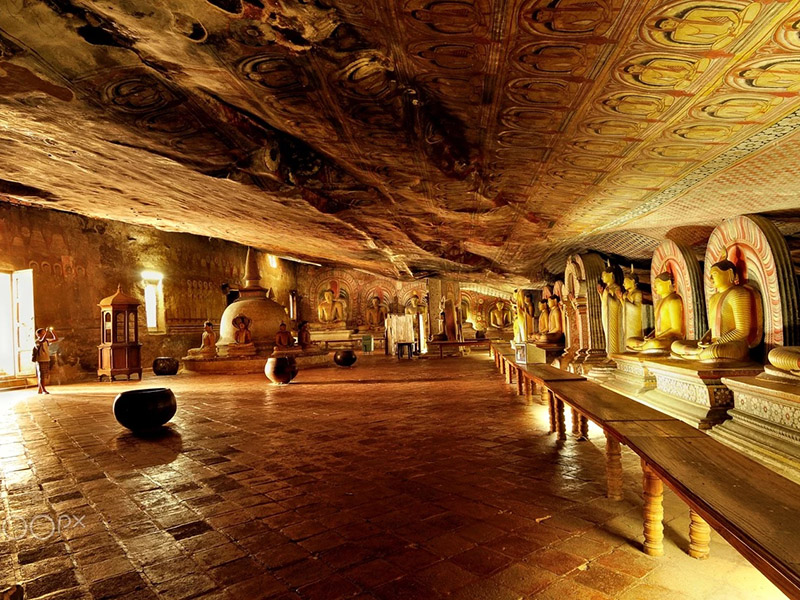
Dambulla rock temple has been built in the 1st century B.C. and it is a world heritage site. Also, it is the most impressive of Sri Lanka’s cave temples. Hewn into a 160m granite outcrop are the remarkable cave temples of Dambulla. Located at the centre of the Island and on the main route north to Anuradhapura and Polonnaruwa, the cave temples are masterpieces of Buddhist art. Each is filled with murals depicting scenes from the Buddha’s life, and gilded statues of the Buddha in various poses. In the 1st c, BC, the Dambulla caves provided refuge to a king who fled a south Indian invasion. On reclaiming his throne, the grateful king had temples constructed in the caves that had sheltered him. These were embellished by subsequent rulers, especially during the Kandyan period in the 17th and 18th centuries. Altogether, there are five caves. A cave 2, the Maharaja Vihara is the largest and most spectacular at over 50m long, 7m high and almost 25m deep. The spiritual energy at Dambulla is palpable and the Buddhist art on display is unparalleled in Sri Lanka. An added bonus is the majestic view from the top of the rock. The complex of five caves with over 2000 sq. meters of painted walls and ceilings is the largest area of paintings found in the world. It contains over 150 images of the Buddha of which the largest is the colossal figure of the Buddha carved out of rock and spanning 14 meters.

Day 2: Negombo / Dambulla

After breakfast you will transfer to Dambulla.

On router you will visit Pinnawala Elephant Orphanage.

Pinnawala Elephant Orphanage

Those who want to see the tamed and a semi wild elephant in close proximity the best place is the “Pinnawala Elephant Orphanage”. It is located northwest of Kegalle town along the Colombo -Kandy main road. The orphanage is in a beautiful greenish land with fruitful twenty five acre coconut land and having grasses over the underground near Maha Oya. The wide area of shallow water and the huge rocks of Maha Oya make the ideal place to these magnificent animals. Elephant Orphanage was established in 16th February 1975 by the Department of Wild Life Conservation. At the beginning of orphanage there were only five orphan baby elephants those who brought from different places of the island. From the inceptions to date, Neela, Wijaya, Kadira, Mathali and Kumari are some of babies that were brought to the facility still living in the orphanage. Since then orphan elephants brought to the orphanage from different parts of the island and brought up at the orphanage. They were fed with milk as well as array of fodder.

Since 1983 the elephant orphanage has being governing by the Department of National Zoological Gardens. First captive birth of the orphanage had taken place on 05th July 1984. There are 78 elephants in orphanage now and there are 69 births in the orphanage and increase the number of elephants in the herd. Pinnawala Elephant orphanage is treated as one of the largest breading center in the world. Today the heard has grown up to 69 elephants. Among the many elephants of the orphanage there are three of them which will definitely get your attention.

Overnight you will stay at Dambulla
Sigiriya Village Tour

Bullock Cart is the first vehicle in Sri Lanka, in the past once famous mode of transport of local royalty. Today this vehicle have become coordinating between the past and present. When you visit the great Sigiriya Rock, you can see a fortress that stands up in the wilderness. Where once upon a time, an aesthetic king built his hideaway to rule his kingdom, even today Sigiriya stands like a sentinel in the sky your experience begins the village called Ehelagala. It adjacent to the freat “Sigiriya Rock” you can ride the bullock cart in gravel path becomes the dust red soil of a bund. A line of black and makes its way across it, disappearing in to the grassy verge, flit between the a hive of activity butter files flit between the wild flowers, their wings coalescing and separating, in a kaleidoscope of colour. You can see many animals and birds; in the jungle. In the distance and the seemingly endless expanse of cool, cool green. Meander along the grassy bank of the picturesque Ehelagala for a truly satisfying birding experience. Reservoir is a stunning mixture of the village after the cart ride visitor can get a canoe boat ride in the reservoir. Then visitor can get experience of the pleasures of village life. Visit a poor house in the village. You can see a farmer going to his rice field with a hoe on his shoulder and his wife making the lunch to him. You can get enjoy the village tour and have a simple home cooked meal and village drink by journeying into the heart of Ehelagala. At the end visitor have a Tuk Tuk tour or Hand Tractor tour back to the starting point.

Day 3: Dambulla / Sigiriya

Breakfast at the hotel, transfer to Sigiriya.

Sigiriya (Lion Rock)

Part hedonistic pleasure palace, part fortress and part sacred complex, Sigirya is one of the island’s most awe-inspiring archaeological sites and a leading tourist attraction. In fact some consider it to be one of the oldest tourist attractions in the world with early visitors recording their impressions as graffiti on a wall described as the world’s first interactive book. Located north of Dambulla, the site consists of a sheer rock that rises over 200m with the ruins of a palace on the top and a vast pleasure garden complex at the foot. For just two decades in the 5th c.AD, Sigiriya rose to prominence following a power struggle between two brothers, and an act of patricide that saw the then king walled-up alive by his son, Kasyapa. Fearful that his defeated brother would return from exile to extract vengeance, Kasyapa shifted the capital to Sigiriya.

The Megalomaniac yet spiritual Kasyapa clearly had an eye for beauty. The Pleasure gardens include a series of symmetric pools, channels and fountains that still spurt water after 1500 years. Partway up the rock are the famous Sigiriya Frescoes, featuring 21 bare-breasted damsels that may represent celestial nymphs, but were surely modeled on Kasyapa’s own consorts. Halfway you’ll encounter a pair of giant Lion’s Paws, part of the original entrance, which required visitors to pass through the open mount of the lion. The summit yields a dramatic vista of the surrounding jungle and contains the foundations of the palace complex, replete with bathing pool. But all this was to be in vain. Kasyapa descended from his palace in the clouds to face his brother astride an elephant, eventually taking his own life when facing certain defeat.

Elephant Ride

Elephant Ride in Sri Lanka is a very popular activity among the children and also one the favorites of the adults. The scenery Elephant Ride is not only a ride; it is a marvelous way to explore the Sri Lankan nature. You will get a chance to ride thought wildest regions and attractive riverside scenery if you are dreaming to have a ride with this intelligent mammal; this is the best chance you will ever get. While you are on round tour, don’t forget to enjoy the Elephant Ride as it will be a memorable activity witch you ever have. The best places for Elephant Rides are Sigiriya and it is a delightful experience as this riding path moves through lakes, villages and wildlife.

Overnight you stay at hotel in Sigiriya
In the evening you can visit a Wood Carving Center

Sri Lanka, which is well-known for handicrafts, holds long olden times of craft heritage. According to “Mahawamsa” the prevailed arts and crafts were innovated with the arrival of Nun “Sanghamitta” to Sri Lanka from India. The history report that crafts men belong to sixty special castes arrived to Sri Lanka along with her on her visit that brought the Sacred Bo- Tree to Anuradhapura. With this heritage Sri Lanka got fame all over the world for its arts and crafts. If you visit ancient cities like Anuradgapura, Polonnaruwa, Sigiriya and Kandy you will wonder at the complicated designs of Sri Lankan craftsmen. The perfect stone carving of Samadhi Buddha statue, the stone Buddha statues at Anuarhapura: Awkana, Polonnaruwa Gal Vihara is exclusive in their carving. Still Polonnaruva have traditional carpenters who are engaged in wood carving. They create those age old master pieces. You can also wines a wood carving superstore where you will be shown all the types of timber and hardwood available

Day 4: Sigiriya / Polonnaruwa

After breakfast you will proceed to Minneriya National Park at Polonnaruwa.

Minneriya National Park

The area was designated as a national park on 12 August 1997, having been originally declared as a wildlife sanctuary in 1938. The reason for declaring the area as protected is to protect the catchment of Minneriya tank and the wildlife of the surrounding area. The tank is of historical importance, having been built by King Mahasen in third century AD. The park is a dry season feeding ground for the elephant population dwelling in forests of Matale, Polonnaruwa, and Trincomalee districts. The vegetation of the park consists of mixed evergreen tropical forests, abandoned oaks, grasslands and wetlands. Among the 24 species of mammals residing in the park are elephants, leopards, lazy bear, spotted deer, deer, wild ox, wild pig, gray leopard, purple leaf monkey, The three species of mongoose, the porcupine and the Indian pangolin. Minneriya National Park has registered more than 170 species of birds. Among the nine species of amphibians in Minneriya National Park are the endemic and threatened thin frog and the common frog. Of the 25-reptile species recorded in Park 8 are endemic, including the Red Lizard lizard. Water and soil monitors are also visible here. The Crocodile Mugger can be seen near the tank. Many freshwater fish species are found in the Minneriya reservoir.

Overnight you stay at Polonnaruwa
Day 5: Polonnaruwa / Ampara

After breakfast you will transfer to Ampara.

Check-in to the hotel and relax.

Overnight you stay in Ampara.

Wild elephants can be seen throughout the year and the highlight is seeing the elephants swim from island to island. In the middle of the lake, one can find the Birds’ Island, a nesting place for colonies of birds where exotic assortments of species jostle thickly for space. Bird’s Island,an island amidst the reservoir used by birds for nesting, especially the eagle species. The Sri Lankan axis deer, grey headed fish eagle and thousands of birds can be seen here. More than 150 bird species have been identified.

Things to Do: Wildlife, bird watching, photography, camping, archeology.

Day 6: Ampara

After breakfast you will transfer to Gal Oya National Park.

Gal Oya National Park

Arrive in Ampara and in the evening visit Gal oya National park where you will have the chance to witness Elephant Swimming. The Gal Oya National Park is surrounded by mighty mountains. It is a fascinating land, which you can take your time to discover. The Gal oya National Park is Sri Lanka’s most untouched national park which was established in 1954. The largest reservoir in Sri Lanka, the Senanayake Samudraya is encompassed by the Gal oya National Park. Gal Oya National Park has grown from its original 9324 hectares to nearly 63,000 hectares today giving sanctuary to much wildlife and winning a name as a big game sanctuary in the region. This is the only wild life park in Sri Lanka where safaris are undertaken by boat. Apart from the land route, the national park can also be accessed by boat, crossing the Senanayake Samudraya at Inginiyagala. It gives a rare opportunity for visitors to see wild animals drink water from the edge of the lake and forage along the shore. 

Overnight you will stay at Ampara
Day 7: Ampara /Mahiyanganaya

After breakfast you will transfer to Mahiyanganaya to visit Vedda Community.

Visit Vedda Community ( Sri Lanka's Aborigines)

Dambana located 19km north east of Mahiyangana bordering the Maduru Oya Sanctuary is home to the indigenous “Vedda” community numbering close to 1000 individuals. Sri Lanka’s Aborigines’, or the Veddha’s meaning “people of the forest” of Sri Lanka has a history much older than prince Vijaya’s landing in 5th century BC and the origins of the Sinhala race. The natural habitat of these people, whose livelihood once depended solely on hunting, was confined to the forest. They are essentially hunter gatherer forest dwellers without much change in their life style from Stone Age to modern times. Veddha’s also collect bee’s honey and exchange it with the locals for axe hanging from their shoulders and a bow slung behind them.

The total extinction of their traditions of hunting for food, cooking in open fire with a group, collecting Bees Honey, their songs and dances has now become a rare possibility. Today, the Veddha’s are more modernized as far as at least the cloths are concerned and perfect way to observe Veddha is to organise a camp close to or within a reservation However during the recent decades, they have been shifting in a slow transformation into Chena dry land for cultivation. An ideal place to observe Veddha is their last remaining village of Dambana. Veddha’s will be more than happy to show you their ways of life, with an axe hanging from their shoulders and a bow slung behind them, gives you the feeling nothing much has changed since the dawn of time for these proud warriors of the jungle.

Overnight you will stay at Mahiyanganaya.
Kandy

Nestled in lush green hills and built around a scenic lake, the Royal City of Kandy, at 500m above sea level, is the hub of any visit to the hill country. Kandy, a UNESCO World heritage Site, was the last bastion of resistance to colonial rule, surviving two centuries of colonial incursions by the Portuguese and the Dutch before falling to the British in 1815. Even today, Kandyans pride themselves on their distinctive architecture, music, dance and art. The showpiece of the city is the Dalada Maligawa or Temple of the Tooth Palace, which hosts the Lord Buddha’s tooth relic, an item of veneraltion to all Buddhists, is an experience no tourist should miss. Said to have been snatched from the Lord Buddha’s funeral pyre and smuggled to Sri Lanka in the hair or a princess, the tooth relic is of great spiritual significance. Strolling around the lake or exploring the numerous temples that dot the hills nearby is a great way to get the feel of this historic city. Each Year, in August, the city holds the Esala Perahera (procession), a spectacular display of medieval Pageantry replete with caparisoned elephants, whirling fire dancers, and pulsating drummers.

Visit Bazaar area, Arts & crafts centre, a Gem museum and a lapidary etc.

In the evening visit Temple of the Tooth Relic. Late evening witness the Cultural Show, experiencing the pulsating drum rhythms and colorful traditional dances at a cultural show is another must.

Day 8: Mahiyanganaya / Kandy

After breakfast you will transfer to Kandy.

On route we will visit Mahiyanganaya Temple. As well as on route you can visit Gem museum & silk garden (optional).

Mahiyanganaya Temple

This town is dominated by Buddhists. It is believed that Lord Buddha’s first visit to Sri Lanka was to this city and an ancient Buddhist Temple named Mahiyangana Maha Viharaya was built on this site by the rulers at that time. The Mahaweli river flows through this city and majority of people in this area are paddy farmers which is also the main activity that provides economy.

Gem Museum

Gems & Jewelry Museum – Sri Lanka is world famous for its valuable & semi-precious Gems. Specially Sri Lankan Blue Sapphire. It is very exclusive & owns a huge reputation in the world. Clients could visit a Gemological Museum, a gem cutting factory & also can witness a documentary on Gem mining & the process. Later you can shop for Gems, Jewelry & Other ornaments. Don’t forget to collect your authenticity certificate for gems.

Silk Garden

Silk Garden – Visit the Silk Garden. Clients will be shown the process of making silk & how the handloom sarees are been made in Sri Lanka.The ladies will be given a chance to wear a traditional Sri Lankn saree & it be an ultimate opportunity to experience the Sri Lankan dressing culture. You can shop for Silk items, sarees, sarongs, shirts & many other gorgeous materials according to your choice.

Overnight you will stay at Kandy
Day 9: Kandy / Ella

After breakfast you will transfer to Millennium Elephant Foundation. 

“Spend time with an Elephant”. You will be walking along with an Elephant and will be given information about the foundation and elephants. And then you will get the chance of bathing the same Elephant in the river and also you can visit the Elephant Dung paper factory nearby.
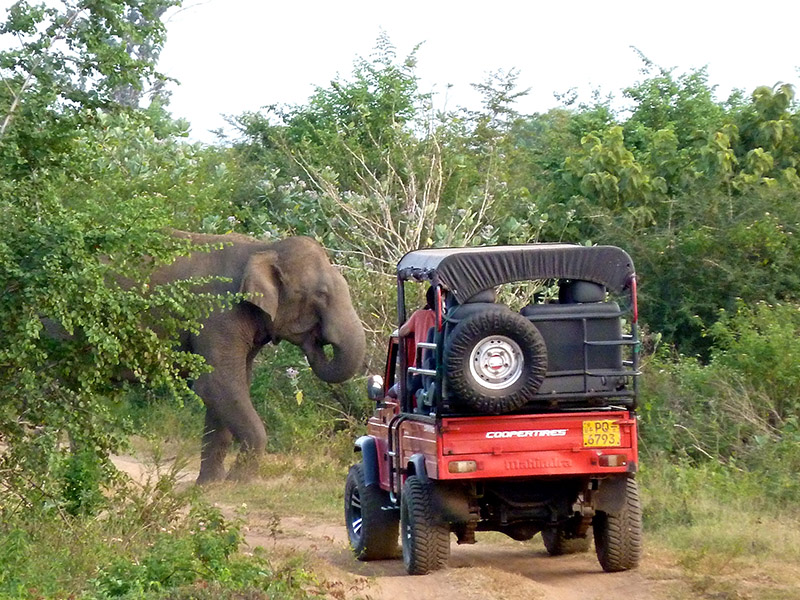
After spending the time with the Elephant at Millennium Elephant Foundation you will transfer to Ella.
Overnight you will stay at Ella
Arrive in Udawalawa and check-in to the hotel.
Overnight you will stay in Udawalawa.
Day 10: Ella / Udawalawa

After breakfast you will transfer to Udawalawa.

On route you will visit Ravana Water Fall.

Ravana Falls

The 25m-high Ravana Falls cascades from an oval-shaped concave rock outcrop. Kirinidi Oya is the water course for this beautiful cascading waterfall. It currently ranks as one of the widest falls in the country. This waterfall measures approximately 25 m (82 ft) in high and cascade from an oval-shaped concave rock outcrop. During the dry season water level reduces drastically and Ravana falls becomes very skinny, but again becomes majestic during the upstream rainy seasons. In the dry season, the flow of water is markedly reduced, whereas rain turns the fall into what is said to resemble an area flower with withering petals. But this is not the case in the wet season, where the flow of water reduces dramatically. The falls have been named after the legendary character Ravana, which is connected to the famous Indian epic, the Ramayana. According to story, it is said that Ravana (who was the king of Sri Lanka at the time) had kidnapped princess Sita, and had hidden her in the caves behind this waterfall, now simply known as the Ravana Ella Cave. At the time, the cave was surrounded with thick forests in the midst of wilderness. It is also believed that Rama’s queen bathed in a pool that accumulated the water falling from this waterfall. Locals who are traveling to upcountry used to stop by the Ella and get shower at here, so you can stay, relax and refresh and continue your journey.

yala-national-park
After spending the time with elephant you will transfer to Colombo.
Overnight you will stay at Colombo
DAY 11: Udawalawa/ Colombo

After breakfast you will transfer to Udawalawa national park.

Udawalawa National Park

Udawalawe is undoubtedly the best place in Sri Lanka to see wild Asian Elephants throughout the year: there are about 500 elephants in the park and they often roam in herds of up to 100. It is an ideal place to see elephants in large numbers. Udawalawe National Park is unique in terms of consistency in numbers of elephants roaming the park: it has no a seasonal variation in herds of elephants. The best hours to visit the park are in the mornings and evenings. Late evening also affords the photographic opportunities in the backdrop of loveliest sunsets. Udawalawe has rich biodiversity. Udawalawe is one of the best places for watching birds where species including Black-winged Kite, Asian Openbill, Black-capped Kingfisher, Crested Serpent Eagle, Changeable Hawk Eagle, Grey-headed Fishing Eagle and Brown Fish Owl can be seen. National Park is an awe-inspiring site from which to experience Sri Lanka’s wilderness and unique wildlife. Along the border of Udawalawe reservoir, the park extends over 30,000 hectares with almost unparalleled diversity and a sheer number of animals.Udawalawe is a habitat for an abundance of exalting animals including sloth bears, sambar deer, wild boar and junglefowl. Count on your luck for you could even spot reclusive leopards strutting around the scrublands or hidden by foliage on trees.

DAY 12: Colombo/ Airpot

After breakfast you will do city tour of Colombo.

Colombo is the commercial and business center of Sri Lanka located on west coast. The city blends together with old colonial type building, high-rise commercial buildings and hotels. It is filled with shopping malls. Some of the finest structures built during the colonial times still preserved in one part of the City. For example, there is a 100-year-old clock tower, and the Bandaranaike Memorial International Conference Hall (BMICH) which was a gift to Sri Lanka from the People’s Republic of China.

Ask for rates
Price Includes

Welcome the guests at the Airport by a Representative of Aliyah Tours
All Local Transfers and Sightseeing by an air-conditioned vehicle throughout the tour
Entrance Fees for Sights Visited
Visit according to the program
One litter water bottle per day
Highway Tolls
All Local Taxes

Price Excludes

Air tickets and insurance
Immunizations / Medical
Meals and accommodation
Video camera permits
Vehicle use for night life activities
Porter rage & Tips
Cost of beverage throughout the tour
Expenses of a personal nature
Any other services not specified above

Conditions

Client should pay 50% of tour amount at the arrival and the rest can be paid during the tour or at the Airport where you’re ready for the departure.
You should provide accommodation and meals for the driver.

Cancellation Policy

Cancellations within 01 to 06 days of the arrival date – 100% of the value of the booking
Cancellations within 07 to 13 days of the arrival date – 50% of the value of the booking
Cancellations within 14 to 28 days of the arrival date – 25% of the value of the booking
Cancellations beyond 30 days of the arrival date – not charge

Birds Watching Packages

BIRD WATCHING PACKAGES

Sri Lanka, a tiny, friendly island provides immense opportunities for bird enthusiasts to explore and discover the beautiful world of small creatures with wings. Dream Round Tour organizes an array of birding , nature tour for bird enthusiasts, travelers and nature lovers. Our birding tour will truly unwind your senses with an unimaginable encounter with the lovely and colorful birds. Here is a glimpse of places covered under our birding tour packages. With plenty of resident and endemic birds, Sri Lanka is one of the most popular birding destinations across the globe.  The best time to visit Sri Lanka for a birding tour is from November to April, as during this period, you can catch migrants as well as resident birds.

The Best time : The best time is November to April Because winter migrants also accompanied with island resident birds. There for you can count more than 250 Birds with this tour.

Our Target : We are targeting over 250 with all 33 endemics and also leopards ,sloth bare, Elephants,Lizards,Snakes
For Whom: Individual, Couple , Families or groups of up to 10
Extensions: At the end, you can be a relaxing in a tropical sandy beach as per your wish.

About Drives/Guides: All Our Drives and Guides are Sri Lankan’s .They are well experienced.

Transport : A/C Comfortable Mini Van / Car/ bus

Extra Activities:
Whale Watching
Elephant Riding
River Safari with fish Massaging
Fish Therapy
or you named it we do the rest…


Seasonal Activities:
Esala Perahera (kandy Procession) July to August
Adam’s Peak December to May

Main Attractions

Kumana National Park

Kumana National Park in Sri Lanka is renowned for its avifauna, particularly its large flocks of migratory waterfowl and wading birds. The park is 391 kilometres (243 mi) southeast of Colombo on Sri Lanka’s southeastern coast.Kumana is contiguous with Yala National Park, Kumana was formerly known as Yala East National Park, but changed to its present name in 5 September 2006.

Bundala National Park

Bundala National Park is an internationally important wintering ground for migratory water birds in Sri Lanka. Bundala harbors 197 species of Birds, the highlight being the Greater Flamingo, which migrate in large flocks. Bundala was designated a wildlife sanctuary in 1969 and redesignated to a national park on 4 January 1993. In 1991 Bundala became the first wetland to be declared as a Ramsar site in Sri Lanka. In 2005 the national park was designated as a biosphere reserve by UNESCO, the fourth biosphere reserve in Sri Lanka. The national park is situated 245 kilometres (152 mi) southeast of Colombo.

Kaudulla National Park

Kaudulla National Park is a national park on the island of Sri Lanka located 197 kilometres (122 mi) away from the largest city, Colombo. It was designated a national park on April 1, 2002 becoming the 15th such area on the island. In the 2004–2005 season more than 10,000 people visited the National Park, generating an income of Rs.100,000 from entrance fees.Along with Minneriya and Girithale BirdLife International have identified Kaudulla as an Important Bird Area. Historically Kaudulla was one of the 16 irrigation tanks built by King Mahasen. Following a period of abandonment it was reconstructed in 1959. It now attracts and supports a variety of plant and animal life, including large mammals, fish and reptiles.

Horton Plains

Horton Plains National Park is an Important Bird Area with many species not only endemic to Sri Lanka but restricted to the Horton Plains.

Anawilundawa

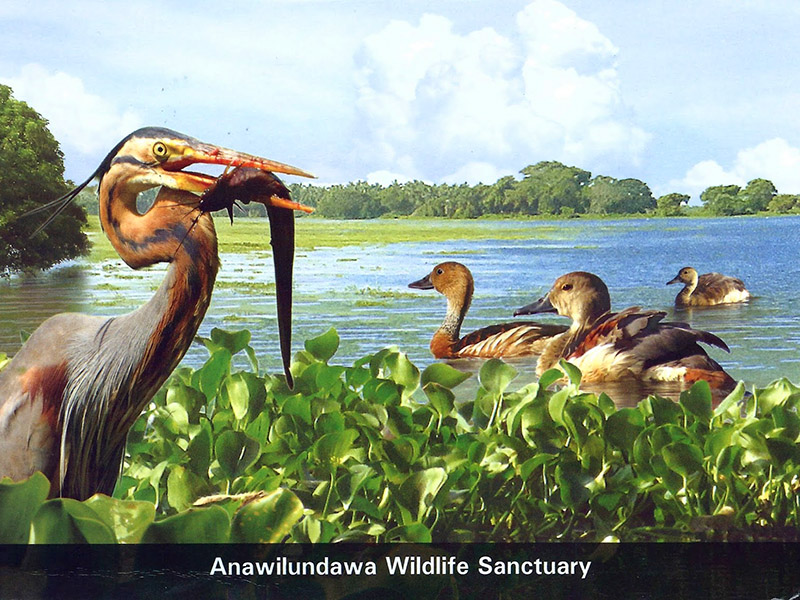
Anawilundawa wetland sanctuary is located between the coast and the Chillaw – Puttalam railway line of the North-Western province of Sri Lanka and covers an extent of 1400hectares. Anawilundawa is the second RAMSAR wetland site in Sri Lanka and has proudly recorded the sighting of more than 20, 000 birds of 150 species! Anawilundawa is marshy and packed with luscious vegetation. Water lilies such as Olu and Manel crowd the water-logged soil which is surrounded by tall grass with patches of thick forest growing here and there. It is one of the finest wetlands in the island for sighting water birds. During the migration season, a large variety of birds can be seen using this area as feeding ground as well as breeding ground. An abundant number of Waterfowl are found here including the Little Grebe, Lesser Whistling Duck and the Cotton Teal. Migrant birds like the Sand-piper, Pintail, Garganey Common and Pintail Snipe are seen seasonally. In addition to these water birds, large numbers of Asian Open-bill and Little Cormorants alsonest here.

Muthurajawela Marsh

Muthurajawela Marsh is situated towards the southern part of Negombo. The boundaries span from Negombo lagoon (which also helps to create a costal eco system) and Kelaniya River situated at the northern tip of Colombo. Muthurajawela is in close proximity to Colombo.Muthurajawela Marsh is said to be the island’s largest saline peat bog. It is believed to have originated about 7000 years ago.           There are some residuals which extend up to 500 years towards the history from now. Muthurajawela bears staggering species of flora and fauna. Numerically 192 flora and 209 fauna,excluding 102 species of birds have been discovered. Some indigenous floras and faunas have also been found in Muthurajawela marsh. Visitors may see water birds such as herons, egrets in abundance in the lagoon and the marsh. It is also a residence for 40 different species of fish, of which 15 falls under the category of indigenous fauna. The nocturnal animal, slender Loris, which is believed to be endangered, can be seen once in a blue moon

Knuckles Range

Lying 25km east of the city of Kandy, the Knuckles mountain range exists as a unique ecosystem separate from the rest of the central hills. Covering a distance of about 12 miles Knuckles extends roughly from the northwest to the southwest of Sri Lanka. Over 120 bird species recorded here include many endemic ones including the yellow-fronted barbet, dusky-blue flycatcher, Ceylon lorikeet, Ceylon grackle, yellow-eared bulbul and Layard’s parakeet.

Kithulgala Forest Reserve

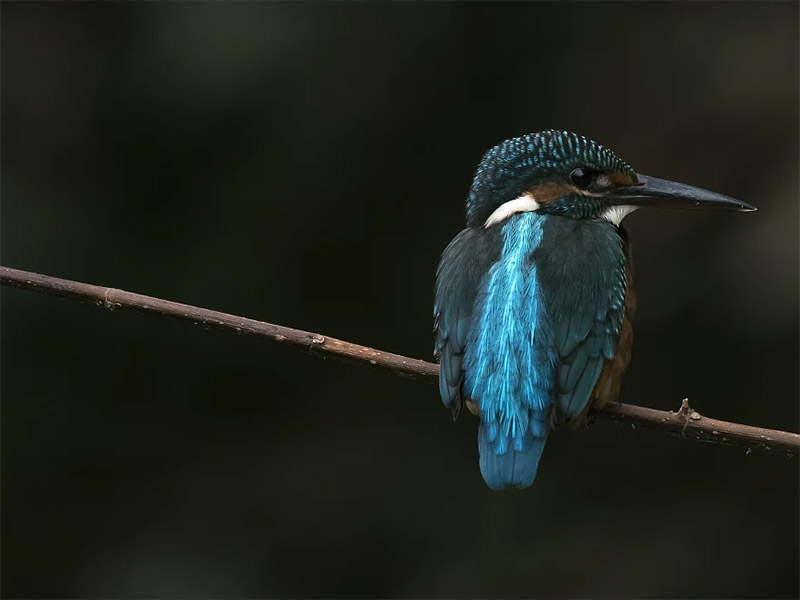
The Kithulgala forest is a secondary rain forest situated beside the Kelani River, one of our longest rivers. There is a tributary flowing through the forest to this river. The forest reserve has a high biodiversity. Though it is mostly secondary forest, it’s faunal and floral diversity is very similar to a primary forest. Wild boar, Toque Macaque, Purple faced leaf monkey, and Barking deer are some of the interesting mammal species. Among the interesting bird species Red faced Malkoha, Ceylon Blue Magpie, Oriental Dwarf Kingfisher, Frog Mouth and Layard’s Parakeet are outstanding


Some of these parks are not opened all the year, and some have seasons to visit if you are targeting for bird watching, so let us know your requirements , we will let you know the availability.

Sinharaja Rain Forest

With an array of endemic species, Sinharaja national park is an excellent destination for bird watching. You get chance to check out some of the sheer varieties of birds such as Sri Lankan Frogmouth and Seredip Scops Owl. It is one of the best places in Sri Lanka to watch the several varieties of endemic birds. At Dream Round Tour, we specialise in organising amusing and entertaining birding Tour. If you are planning to visit Sri Lanka for a birding tour, give us a call and we will help you to get the most out of it.

Yala National Park

With over 100 species of birds, Yala National Park is a place not to be missed by any bird enthusiast. Situated in south East of Sri Lanka, Yala National Park is surrounded by diverse eco systems, scrub plains, rocky outcrops, fresh water lakes, rivers and beaches and is home to a large number of animal and bird species. At Yala National Park, visitors get opportunities to spot Brown-capped Babbler, Sri Lanka Gray Hornbill, Sri Lanka Wood Shrike, Sri Lanka Green Pigeon, Malabar-pied Hornbill, Blue-faced & Shirkeer Malkoha, Yellow-wattled Lapwing, Great & Eurasian Think-knee and more.

Sigiriya

From Negombo you will be taken to Sigiriya. On the way, you can explore the most fascinating birds at the couple of roadside birding stops such as Green Chestnut-headed & Blue-tailed Bee-eaters, House Swift, Common Iora, Indian Robin, Spot-billed Pelican, Thick-billed Flower pecker, Black-capped Bulbul and more. An overnight stay at Sigiriya will let you explore the wonderful bird species in the early morning. In Sigiriya, you can watch all dry zone birds, which you miss at other destinations.

ask for rates
Price Includes

Welcome the guests at the Airport by a Representative of Aliyah Tours
All Local Transfers and Sightseeing by an air-conditioned vehicle throughout the tour
Entrance Fees for Sights Visited
Visit according to the program
One litter water bottle per day
Highway Tolls
All Local Taxes

Price Excludes

Air tickets and insurance
Immunizations / Medical
Meals and accommodation
Video camera permits
Vehicle use for night life activities
Porter rage & Tips
Cost of beverage throughout the tour
Expenses of a personal nature
Any other services not specified above

Conditions

Client should pay 50% of tour amount at the arrival and the rest can be paid during the tour or at the Airport where you’re ready for the departure.
You should provide accommodation and meals for the driver.

Cancellation Policy

Cancellations within 01 to 06 days of the arrival date – 100% of the value of the booking
Cancellations within 07 to 13 days of the arrival date – 50% of the value of the booking
Cancellations within 14 to 28 days of the arrival date – 25% of the value of the booking
Cancellations beyond 30 days of the arrival date – not charge

Ayurveda Spa Tour

AYURVEDA SPA TOUR

11 Days/ 10 Nights

Ayurvedha, one of the world’s oldest approaches to medicine is an ancient healing system that is based on 5000 years of tradition. It is a healing system that has been extremely popular in India and Sri Lanka. With its aromatic baths and massages that stimulate your senses, Ayurvedha fuses centuries of knowledge in a detailed healing art and science that rejuvenates the health, lifestyles and desires of every guest.

Day 01: Airport/ Negomo

On arrival at the Bandaranaike International Airport, you will get your first taste of warm Sri Lankan hospitality; Representative from Aliyah Tours will Welcome you and transfer to Negombo.

The Ayurveda Tour in Sri Lanka begins as you check-in to the first hotel and relax.


Overnight stay in Negombo.

DAY 02 - 03: Hikkaduwa

Breakfast at the hotel and transfer to Hikkaduwa.

enjoy an Ayurvedic Massage


Overnight stay In Hikkaduwa.

DAY 04 - 09: Galle

Breakfast at the hotel and transfer to Galle.


stay at hotel for Ayurveda Treatments & Yoga Sessions.


Overnight stay in Galle.

DAY 10: Galle/ Colombo

Breakfast at the hotel and transfer to Colombo.

Evening visit Colombo.

Do a city tour of Colombo. Colombo is the commercial and business center of Sri Lanka located on west coast. The city blends together with old colonial type building, high-rise commercial buildings and hotels. It is filled with shopping malls. Some of the finest structures built during the colonial times still preserved in one part of the City. For example, there is a 100-year-old clock tower. And the Bandaranaike Memorial International Conference Hall (BMICH) which was a gift to Sri Lanka from the People’s Republic of China.

Overnight stay in Colombo.

DAY 11: Colombo/ Airport

After enjoying your tour, end your journey and departure at the airport.

ask for rates
Price Includes

Welcome the guests at the Airport by a Representative of Aliyah Tours
All Local Transfers and Sightseeing by an air-conditioned vehicle throughout the tour
Entrance Fees for Sights Visited
Visit according to the program
One litter water bottle per day
Highway Tolls
All Local Taxes

Price Excludes

Air tickets and insurance
Immunizations / Medical
Meals and accommodation
Video camera permits
Vehicle use for night life activities
Porter rage & Tips
Cost of beverage throughout the tour
Expenses of a personal nature
Any other services not specified above

Conditions

Client should pay 50% of tour amount at the arrival and the rest can be paid during the tour or at the Airport where you’re ready for the departure.
You should provide accommodation and meals for the driver.

Cancellation Policy

Cancellations within 01 to 06 days of the arrival date – 100% of the value of the booking
Cancellations within 07 to 13 days of the arrival date – 50% of the value of the booking
Cancellations within 14 to 28 days of the arrival date – 25% of the value of the booking
Cancellations beyond 30 days of the arrival date – not charge

Adventure Tour

ADVENTURE TOUR

15 Days/ 14 Nights

All our tours are tailor made tour. We can customize this tour in Sri Lanka to suit your requirements. You can decide where do you want to go and how many days stay in Sri Lanka. As you wish, if you mention the names of the hotels you want to stay, we can reserve it for you.

DAY 01: Airport / Negombo

Arrival to Colombo International Airport and meet Aliyah Tours representative at the airport arrival lobby

On arrival at the Bandaranaike International Airport, you will get your first taste of warm Sri Lankan hospitality; representative from Aliyah Tours will welcome you at the airport arrival lobby.
Transfer to Negombo.

Check-in to the hotel and relax.

Overnight you will stay at Negombo.
Overnight you will stay at Dambulla.
DAY 02: Negombo / Dambulla

After breakfast you will transfer to Dambulla.

Dambulla Rock Cave Temple

Dambulla rock temple has been built in the 1st century B.C. and it is a world heritage site. Also, it is the most impressive of Sri Lanka’s cave temples. Hewn into a 160m granite outcrop are the remarkable cave temples of Dambulla. Located at the centre of the Island and on the main route north to Anuradhapura and Polonnaruwa, the cave temples are masterpieces of Buddhist art. Each is filled with murals depicting scenes from the Buddha’s life, and gilded statues of the Buddha in various poses.

Altogether, there are five caves. A cave 2, the Maharaja Vihara is the largest and most spectacular at over 50m long, 7m high and almost 25m deep. The spiritual energy at Dambulla is palpable and the Buddhist art on display is unparalleled in Sri Lanka. An added bonus is the majestic view from the top of the rock. The complex of five caves with over 2000 sq. meters of painted walls and ceilings is the largest area of paintings found in the world. It contains over 150 images of the Buddha of which the largest is the colossal figure of the Buddha carved out of rock and spanning 14 meters.

Hot Air Ballooning

Registered with Civil Aviation Authority of Sri Lanka, Sun Rise Balloning is based in the Cultural Triangle launching from Kandalama. Operated by certified commercial Hot Air Balloon Pilots, with an excellent knowledge of the equipment, weather and terrain to make all flights sage. A balloon fling time is approximately one hour. Pick time between 4.45 am – 5-30am. The launch and picturesque landscape at sunrise, as nature awakens to the first rays of the new day is the reward to an early start. Ballooning is totally weather dependent and can be cancelled at the launch site. The final decision will be made by the Pilot as safety first is vital. Landing…. the smiling faces and hearty welcomes of the local villagers coming to greet you is an unexpected delight. Hot Air Baloon will come down to earth and the reality of returning to life as seen from the ground.
The distance and direction of travel will depend on the winds of the day. Season is November to April.

After enjoy Hot Air Ballooning you will transfer to Polonnaruwa.

DAY 03: Dambulla / Polonnaruwa / Sigiriya

After breakfast you will transfer to takeoff point to Hot Air Ballooning.

Explore Polonnaruwa.

The next great capital which succeeded Anuradhapura and taken up for excavation and conservation by the Cultural Triangle Project is Polonnaruwa. Polonnaruwa was the medieval capital of Sri Lanka from the eleventh to the end of the first quarter of the 13th century AC. However, archaeological evidence suggests that there had been human settlements in Polonnaruwa even as far back as the second century BC. With the development of agriculture, Polonnaruva developed over the years as a vigorous agrarian economy. Both Anuradhapura and Polonnaruva came within the dry zone of the country and one of the formidable tasks the ancient rulers had to face was the conservation of the water necessary for agriculture. It is this exigency that led them to make the large and small reservoirs that lie scattered in the dry zone. In the fourth century AC, king Mahasena, the great tank builder, built the Minneriya reservoir not far from Polonnaruva. Some other reservoirs in and around Polonnaruva were also the work of Anuradhapura kings. This provided the farmers ready access to the much needed water, which resulted in a flourishing agrarian economy that makes them self-sufficient. King Parakramabahu I combined three small tanks and built the largest reservoir called the ‘Sea of Parakrama’ of which you can have a panoramic view from the lounge of the Rest House in Polonnaruwa. Today the ancient city of Polonnaruwa remains one of the, standing testimony to the discipline and greatness of the Kingdom’s first rulers. The ancient city of Polonnaruwa has been declared a World Heritage site by UNESCO. Polonnaruwa is the second largest city in North Central Province, but it is known as one of the cleanest and more beautiful cities in the country. The green environment, amazing ancient constructions, Parakrama Samudra and attractive tourist hotels and hospitable people, attract tourists.

Then you transfer to Sigiriya.
Overnight you will stay at Sigiriya.

In the evening you will engage Sigiri Village Trekking. .

Village Trekking

Bullock Cart is the first vehicle in Sri Lanka, in the past once famous mode of transport of local royalty. Today this vehicle have become coordinating between the past and present. When you visit the great Sigiriya Rock, you can see a fortress that stands up in the wilderness. Where once upon a time, an aesthetic king built his hideaway to rule his kingdom, even today Sigiriya stands like a sentinel in the sky your experience begins the village called Ehelagala. It adjacent to the freat “Sigiriya Rock” you can ride the bullock cart in gravel path becomes the dust red soil of a bund. A line of black and makes its way across it, disappearing in to the grassy verge, flit between the a hive of activity butter files flit between the wild flowers, their wings coalescing and separating, in a kaleidoscope of colour. You can see many animals and birds; in the jungle. In the distance and the seemingly endless expanse of cool, cool green. Meander along the grassy bank of the picturesque Ehelagala for a truly satisfying birding experience. Reservoir is a stunning mixture of the village after the cart ride visitor can get a canoe boat ride in the reservoir. Then visitor can get experience of the pleasures of village life. Visit a poor house in the village. You can see a farmer going to his rice field with a hoe on his shoulder and his wife making the lunch to him. You can get enjoy the village tour and have a simple home cooked meal and village drink by journeying into the heart of Ehelagala. At the end visitor have a Tuk Tuk tour or Hand Tractor tour back to the starting point.

DAY 04: Sigiriya / Kandy

After breakfirst you will visit Sigiriya Rock.

Sigiriya (Lion Rock)

Part hedonistic pleasure palace, part fortress and part sacred complex, Sigirya is one of the island’s most awe-inspiring archaeological sites and a leading tourist attraction. In fact some consider it to be one of the oldest tourist attractions in the world with early visitors recording their impressions as graffiti on a wall described as the world’s first interactive book. Located north of Dambulla, the site consists of a sheer rock that rises over 200m with the ruins of a palace on the top and a vast pleasure garden complex at the foot. For just two decades in the 5th c.AD, Sigiriya rose to prominence following a power struggle between two brothers, and an act of patricide that saw the then king walled-up alive by his son, Kasyapa. Fearful that his defeated brother would return from exile to extract vengeance, Kasyapa shifted the capital to Sigiriya. The Megalomaniac yet spiritual Kasyapa clearly had an eye for beauty. The Pleasure gardens include a series of symmetric pools, channels and fountains that still spurt water after 1500 years. Partway up the rock are the famous Sigiriya Frescoes, featuring 21 bare-breasted damsels that may represent celestial nymphs, but were surely modeled on Kasyapa’s own consorts. Halfway you’ll encounter a pair of giant Lion’s Paws, part of the original entrance, which required visitors to pass through the open mount of the lion. The summit yields a dramatic vista of the surrounding jungle and contains the foundations of the palace complex, replete with bathing pool. But all this was to be in vain. Kasyapa descended from his palace in the clouds to face his brother astride an elephant, eventually taking his own life when facing certain defeat.

Elephant Ride (Optional)

Elephant Ride in Sri Lanka is a very popular activity among the children and also one the favorites of the adults. The scenery Elephant Ride is not only a ride; it is a marvelous way to explore the Sri Lankan nature. You will get a chance to ride thought wildest regions and attractive riverside scenery if you are dreaming to have a ride with this intelligent mammal; this is the best chance you will ever get. While you are on round tour, don’t forget to enjoy the Elephant Ride as it will be a memorable activity witch you ever have. The best places for Elephant Rides are Sigiriya and it is a delightful experience as this riding path moves through lakes, villages and wildlife

After end of village tour you will transfer to Kandy. On route you will visit a spice garden.
Overnight you will stay at Kandy.
Peradeniya Royal Botanic Garden

The history of the Royal Botanic Gardens dates as far back as 1371 when king Wickramabahu III ascended the throne and kept court at Peradeniya near Mahaweli River. Later, in the reign of King Kirti Sri Rajasinghe from 1747 to 1780 this was made a Royal Garden and from 1780 – 1798 King Rajadhi Rajasinghe resided therein, where a temporary residence was erected for him. This was a pleasure garden of a Kandyan King of the 16th Century and later made in to a Botanical Garden during the British regime.The most amazing of the Garden have, Flower Garden, Palm Avenues, Plant House and Cacti, Bamboo Collection, Orchid House and Gardens, Fernery, Great Lawn, The lake, Spice Garden and Flowering Trees and the Arboretum. The most spectacular of the Gardens are the flowering trees which come into bloom at various times with peak blooming during the first half of the year. Amherstia nobilis popularly known as the Pride of Burma is the finest and a row of this is found planted near the main entrance. An extensive Arboretum of 20 ha in extent contains approximately 8000 trees. Some of these trees are magnificent specimens which are over 100 years old.

DAY 05: Kandy

After breakfast you will transfer to enjoy Royal Botanic Garden.

Nestled in lush green hills and built around a scenic lake, the Royal City of Kandy, at 500m above sea level, is the hub of any visit to the hill country. Kandy, a UNESCO World heritage Site, was the last bastion of resistance to colonial rule, surviving two centuries of colonial incursions by the Portuguese and the Dutch before falling to the British in 1815. Even today, Kandyans pride themselves on their distinctive architecture, music, dance and art. The showpiece of the city is the Dalada Maligawa or Temple of the Tooth Palace, which hosts the Lord Buddha’s tooth relic, an item of veneraltion to all Buddhists, is an experience no tourist should miss. Said to have been snatched from the Lord Buddha’s funeral pyre and smuggled to Sri Lanka in the hair or a princess, the tooth relic is of great spiritual significance. Strolling around the lake or exploring the numerous temples that dot the hills nearby is a great way to get the feel of this historic city. Each Year, in August, the city holds the Esala Perahera (procession), a spectacular display of medieval Pageantry replete with caparisoned elephants, whirling fire dancers, and pulsating drummers.

Wood Carving / Handy Crafts Centre / Braze work

Wood carving is a traditional industry in Sri Lanka. Believed to be emerged in the ancient temples, the traditions & the techniques were passed from one generation to another. Today some of the wonderful craftsmen who belonged to such generations are still engaged in the field. They create wood carvings, statues, furniture, habitual masks, sculptures, handy craft, and paintings and to a variety of other products of same nature. A visit to a wood carving centre involves.

In the evening visit Temple of the Tooth Relic.

Late evening witness the Cultural Show, experiencing the pulsating drum rhythms and colorful traditional dances at a cultural show is another must.

Overnight you will stay at Kandy.
Ramboda Falls

Sri Lanka is blessed with over one hundred waterfalls. Ramboda Ella is the 11th highest waterfall in Sri Lanka and 729th highest waterfall in the world. The fall is height about 109m and height from Sea Level: 945m.This gigantic water fall consists of three sections. This unique and beautiful sight can be seen at the Pussellawa area of Nuwara Eliya, at the Ramboda Pass. The Ramboda Falls or Ramboda Ella or Puna Ella as these falls are called is created from Puna Oya, a branch of Kothmale Oya. It makes a twin with Dunsinane Falls which is created by Pundalu Oya, also a branch of Kothmale River, and combines at the base to form a Y shape. During normal periods of the year Dunsinane Falls which falls on the right receives more volume of water than Ramboda falls. However during periods of drought the role is reversed as Dunsinane Falls, whose branch passes through farming lands before falling, has less water coming through compared to Ramboda Falls whose branch passes through a forest reserve. In this case, instead of Ramboda Falls having more water it is more due to Dunsinane receiving less water while Ramboda remains the same.

DAY 06: Kandy / Nuwara Eliya

After breakfast you will transfer to Nuwara Eliya.
On route you will visit Gem Museum, Silk Garden, Tea Factory and a Water Fall.

Gems & Jewelry Museum

Sri Lanka is world famous for its valuable & semi-precious Gems, especially Sri Lankan Blue Sapphire. It is very exclusive & owns a huge reputation in the world. Clients could visit a Gemological Museum, a gem cutting factory & also can witness a documentary on Gem mining & the process. Later you can shop for Gems, Jewelry & Other ornaments. Don’t forget to collect your authenticity certificate for gems.

Silk Garden

Visit the Silk Garden. Clients will be shown the process of making silk & how the handloom sarees are been made in Sri Lanka.The ladies will be given a chance to wear a traditional Sri Lankn saree & it be an ultimate opportunity to experience the Sri Lankan dressing culture. You can shop for Silk items, sarees, sarongs, shirts & many other gorgeous materials according to your choice.

Tea Factory

Among the most iconic vistas of hill country are the rolling tea estates that carpet vast swathes of estates that carpet vast swathes of terrain in an emerald sea. Women draped in colorful saris resemble butterflies as they work their way deftly along the tea bushes, picking just two leaves and a bud from each branch and tossing them into the baskets slung on their backs. Introduced to the island in the late 19th century by the British, tea remains of vital importance to the economy. Some of the finest teas in the world are produced in the hill country and a visit a Tea Factory during a trip to plucked tea is dried, crushed fermented and fired using machinery that has remained largely unchanged since Victorian times. Sri Lanka is world famous for Ceylon Tea. Clients will be shown a tea plantation & a factory. You will be able to witness the processing of Tea and also taste a cup of nice & hot Ceylon Tea. You can buy various different Tea products from the Tea shop.

Then you will transfer to Nuwara Eliya
You will overnight stay at Nuwara Eliya
Horton Plains

South of Nuwara Eliya, the Horton Plains is a hauntingly desolate, windswept plateau set at an elevation of over 2130m. A world apart from the rest of Sri Lanka, the plains offers one of Sri Lanka’s most unforgettable views & excellent trekking, including a 9km circular walk to world’s End, here the land plunges down a dizzy gorge to the southern foot hills and on clear days, even a glimpse of the sea more than 80 km away is possible. A dawn start is advisable as the clouds often roll in by mid-morning. The escarpment with a depth of 900 meters called World’s End and Baker’s Falls are the highlights of the Horton Plains. The Horton Plains are the habitat of giant Rhododendron (an evergreen shrub with large clusters of trumpet shaped flowers), tree fern primrose and daffodil orchids and birds such as the Sri Lanka Whistling Thrush and Arranga, the Shaggy Bear monkey and the blue Mormon butterfly, herds of sambar deer, beautiful lizards and many endemic bird species enhance the Horton Plains experience and there is always the hope of a glimpse of a leopard and many other endemic and endangered Montana species.

DAY 07: Nuwara Eliya
After breakfast you will transfer to Horton’s Plains Trekking.

Nuwara Eliya is located at the heart of the hill country 6182 feet above from the sea level. At the heart of the southern hill county is Nuwara-Eliya, Sri lanka’s highest town and a favorite hill station during British colonial times. It is still very much like an old English town with styled Bungalows and buildings. The cool calm climate, gorges rolling tea plantation which makes the best “Ceylon tea” and the breathtaking beautiful waterfalls makes Nuwara Eliya one of the most beautiful town in the world. The town is still touted as ‘Little England’, an illusion maintained by the presence of the finest 18 whole golf courses in South Asia, a racecourse, the Victoria Park and excellent trout fishing in nearby lakes and rivers. The temperature can drop to close to freezing at nights and it is common to se smoke rising from the chimneys of many Tudor-style manors. Adding to the town’s atmosphere is the spectacle of its townsfolk wrapped up in winter jackets and woolly hats, carting great bundles of turnips, leeks, marrows and cabbages to and from the markets. Nuwara Eliya is a great base to explore the surrounding countryside and there are many walks on offer, including hiking around the lower slopes of the thickly forested Mount Pidurutalaga, at 2,555m the island’s highest peak.

Gregory Lake - In the evening you can take a nice evening walk around the Gregory Lake. As your choice we can arrange horse ride, boat ride and Cycling.
Overnight you will stay at Nuwara Ealiya.
Why is the Nuwara Eliya to Haputhale train journey so amazing?

In the 19th Century, during the British occupation of Sri Lanka, British constructed the railway lines in Sri Lanka and started the Railway service in Sri Lanka. So Sri Lanka’s hill country Railway line goes through Tea Estates, thus making the train journey a scenic ride. The views on both sides of the rail are breathtaking. The train winds through the mountains overlooking farms and villages and of course vast tea plantations. The scenery changes throughout the trip. Often at times, you are looking out at an entire green view than the next minute you are in the middle of a green forest. The train also passes through several tunnels. As well as often you can see the waterfalls too. The views from the window will have you snapping photos at every turn. Therefore we facilitate our clients to get that experience.

DAY 08: Nuwara Eliya / Haputhale / Ella

After breakfast you will transfer to Haputhale by train.

Lipton Seat

The Lipton’s Seat lookout is one of Sri Lanka’s most impressive viewpoints. This view point is located at a perilous location at the top of Poonagala Mountain at a height of over 1950 meters with a sheer drop over one side and a 360 degree view. This precise spot in the Haputale Mountains overlooking the Dambetenna Tea Estate is where the Scottish tea baron and tea planter Sir Thomas Lipton used to sit and contemplate his growing empire plantation with its stony landscape and green tea bushes and that it one of the favorite places to entertain his guests.

For those who wish for even more stunning view or photographers wishing to snap a picture of nature at its best, Lipton’s Seat is best visited early in the morning before sunrise. On good weather conditions, you will witness some incredible panoramic views you would ever find in the hill-country. Today it’s said you can see across emerald hills and tea estates to no fewer than seven different provinces. The point of Lipton’s Seat is reached by climbing for around 7km surrounded by peaceful green tea plantations and occasional a very good chance to see basket bearing tea pluckers making their way to work. You need to take ticket for to enter the tea estate. From here the road is narrow and a hike would take about 2.5 hours. Some parts of the road even have some of the original stone constructions from the British era of Ceylon, and hence are worth seeing from a historical point of view. The location is also accessible by a Tuk Tuk or a jeep.

The change of colors as the sun shows its face, as the thick mist flees the heat revealing the carpet of greens and browns spread out below, is a spectacular sight. In addition there are a few other attractions along the way including Catherine’s Seat and Lemathota waterfall.

Then you will transfer to Ella. Overnight you will stay at Ella
Little Adam’s Peak

One of the best ways to spend a morning in Ella is to tackle the beautiful short walk up to the top of Little Adam’s Peak, a pyramid-shaped rock which stands opposite the far larger Ella Rock and offers marvelous views out over the hills. The beginning of the path goes through beautiful lush green tea plantations full of tea picking ladies. If you want to enjoy some of the best views without needing to hike for hours, Little Adam’s Peak is the perfect trek, especially for an unforgettable sunset. There are some great photo opportunities early on in the hike if you keep your eyes open! The Little Adam`s Peak, 1141 m high, is fairly easy to climb, with a good path all the way up.
The trip took us about 2-3 hours in total. The trail is marked the whole way with well-maintained paths and stairs to the first set of viewpoints. As you can see below there are multiple platforms, rocks, and viewpoints perfect for photos once you hit the top of Little Adam’s Peak. Although, you can and should keep going along the ridge and the view only gets better. It is not a challenging hike and it`s quite short, but gives you a good impression of the landscape around Ella and the view is fantastic! So absolutely worth the climb! For just a short hike, Little Adam’s Peak gives you unbelievable views and is the ideal way to spend sunset in Ella. It’s definitely a worthy addition to your Sri Lanka itinerary!

DAY 09: Ella / Thissamaharama

After breakfast you will visit Ravana Falls, Little Adam’s Peak & Nine Arch Bridge.

Ravana Falls

The 25m-high Ravana Falls cascades from an oval-shaped concave rock outcrop. Kirinidi Oya is the water course for this beautiful cascading waterfall. It currently ranks as one of the widest falls in the country. This waterfall measures approximately 25 m (82 ft) in high and cascade from an oval-shaped concave rock outcrop. During the dry season water level reduces drastically and Ravana falls becomes very skinny, but again becomes majestic during the upstream rainy seasons. In the dry season, the flow of water is markedly reduced, whereas rain turns the fall into what is said to resemble an area flower with withering petals. But this is not the case in the wet season, where the flow of water reduces dramatically. The falls have been named after the legendary character Ravana, which is connected to the famous Indian epic, the Ramayana. According to story, it is said that Ravana (who was the king of Sri Lanka at the time) had kidnapped princess Sita, and had hidden her in the caves behind this waterfall, now simply known as the Ravana Ella Cave. At the time, the cave was surrounded with thick forests in the midst of wilderness. It is also believed that Rama’s queen bathed in a pool that accumulated the water falling from this waterfall. Locals who are traveling to upcountry used to stop by the Ella and get shower at here, so you can stay,relax and refresh and continue your journey.

Nine Arch Bridge

The Demodara nine arch bridges close to Ella station is as picturesque as bridges get. Visitors can ride the train over the bridge and also walk along it in the other direction if they spend a night in the area. The bridge was constructed in the early 1900’s and is built completely out of rocks and cement without a single bit of steel. The views from the window will have you snapping photos at every turn. The journey through the hill country not only gives you countless breathtaking sights, it also takes you through long dark tunnels where there is always fun to be had for the passengers, yelling while the train travels through the tunnels.

Then you will transfer to Thissamaharamaya. Overnight you will stay at Thissamaharamaya.
After Safari you will back to hotel & checkout. After you will enjoying Canoeing at Thissa Lake.

Canoe is in the scenic lake in Tissamaharama to see beautiful islands, lake fishermen and many sights of the locality around Yala and Tissamaharama. Enjoy a traditional Sri Lankan refreshment tea with local sweet meats.

After enjoying the canoeing you will transfer to Mirissa. Overnight you will stay at Mirissa.
DAY 10: Thissamaharama / Mirissa

Early morning we are engaging the Wild Life Safari at Yala National Park.

Yala National Park

Declared on 1st March1938, Ruhunu National Park better known as Yala National Park is one of the most popular national parks in Sri Lanka and is well known for its rich ecological and archaeological heritage. The park is divided into five blocks and tourism is allowed only in block I. Block I is also famous for its wide range of wildlife, including the highest density of leopards in the country. It is situated in the southeast region of the country, and lies in Southern Province and Uva Province. The park covers 979 square kilometers. Yala was designated as a wildlife sanctuary in 1900, and along with Wilpattu was one of the first two national parks in Sri Lanka, has been designated in 1938.  Located in the dry zone, Yala National Park has a distinct wet and dry season. Inter-monsoon rains occurring between march-April are followed by a drought extending from May-September, followed by the northeast monsoon in September-December. The onset of the monsoon brings about a lushness which decorates it with a myriad of striking wildflowers adding scenic value to the landscape. Yala hosts a variety of ecosystems ranging from moist monsoon forests to freshwater and marine wetlands. Yala National Park is popular among local and foreign visitors for its mega fauna – Elephant, Sloth Bear, Leopard and Wild buffalo and Wild boar. However, many smaller species inhabit the diverse habitats in the park. Although endemicity is low in comparison to wet zone forests, a large number of dry zone faunal species are found in the Yala National Park. Mammals are the biggest attraction so in addition to Elephant, Leopard and Sloth bear, keep an eye out for species such as Toque macaques, Grey langur, Ruddy mongoose, Grey mongoose, Stripe necked mongoose, wild boar, Spotted deer, Sambur, Black backed jackal and Black naped hare. The number of mammals that has been recorded from the park is 44.

After enjoying Whale Watching you will transfer to Galle. On route you will visit Still Fishing.
Stilt Fishing

Ritipanna is the Sinhalese expression for stilt fishing, which is a long-established method for fishing practiced by most fishermen along the southern coast of Sri Lanka. A stick standing up with another piece of wood tied to it to create a seat where fisherman climb on to during the low tide to fish in the increasing waters of the high wave, though is a lovely sight is a hard and uncomfortable task of few hours fishermen on stilts usually catch small fish like the spotted herring and tiny mackerel it’s enough to feed few mouths. Stilt fishing season is at its hit the highest point during the southwest monsoon because fishermen using boats also end up on stilts since the sea is too rough.  Stilt fishing is a huge attraction for tourists. If you need to get that experience, on your request, you can get an opportunity to test their skills at stilt fishing in exchange for cash from the stilt fishermen, you should have to come to Ahangama Beach; it is a 15-minute drive from Galle. Sri Lankan fishermen will gladly give up their stilt seats to you for additional pay or they can even let somebody use their tackle. The main thing is to go up the stilt and take hold till the first catch. Actually the sundown stilt fishing session is usually to entertain foreigners, and this ends at sunset. Tourists are fond of to climb up on the stilt and truly skill this activity as well as capture photographs for memoirs.

DAY 11 : Mirissa / Galle

After having breakfast we will proceed to see the beauty of the Indian Ocean & whale watching.

Whale watching

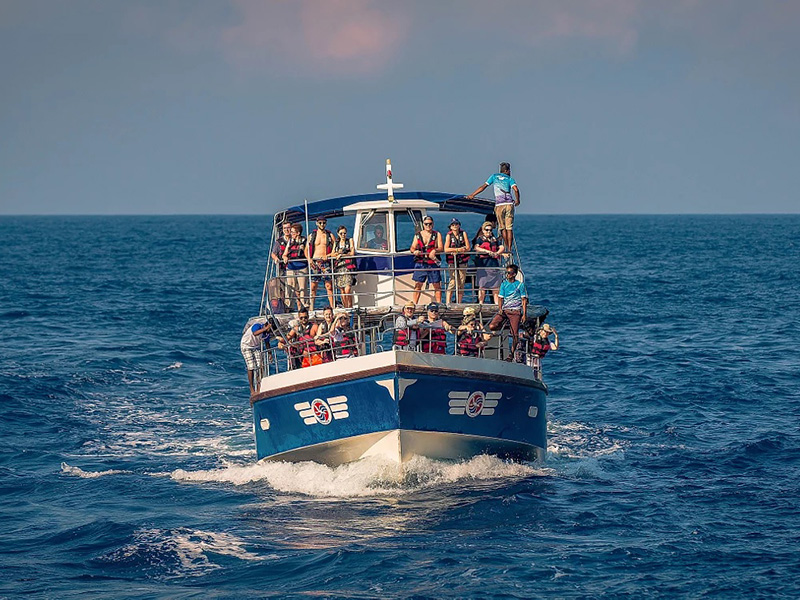
Mirissa and its magnificent sandy beach cute much transform your imaginings and visions of a tropical paradise into an everyday reality. Mirissa Located close to the Southern tip of the Island of Sri Lanka and only about 200 km from the Equator, this beach is the perfect place to sit back, relax and forget about all the hustle and bustle of your other life that’s a million miles away. This small tropical beach boasts some of Sri Lanka’s most excellent and most. Since of late it has become the best place in the world to observe the mighty Blue Whale, as it has come to be that unlike other places where they roam, most of the Blue Whales in Sri Lanka do not migrate. They can be found residing among other whales and all kinds of dolphins. The ever cheery, playful dolphins will put on a show while some of the oldest and the largest marine creatures, the humpback and the blue whales, will nonchalantly glide past you, when you embark on a whale/dolphin watching excursion off the Southern coast of Sri Lanka. The perfect locations for whale watching would be Mirissa.

In the evening you will visit Dutch Fort at Galle.
Galle Fort

The 16th c. Dutch Fort at Galle, close to the island’s southern most point has the distinction of being the best-preserved sea fort in South Asia. Enter through the imposing stone bastions that encircle the sea-facing promontory and step back in time. Inside the Fort you will find that it exudes old-world charm. The narrow streets are dotted with Dutch colonial villas and there’s a welcome absence of vehicular traffic. There are several museums and antique shops that display curiosities from the island’s colonial era. Of the many colonial buildings, perhaps the most absorbing is the Dutch Reformed Church, containing ornately carved memorials to the city’s Dutch settlers. The Fort also hosts some of the island’s most exclusive boutique-style accommodation in former villas restored to their colonial glory. The Portuguese established the first fort in Galle. This was captured by the Dutch in 1640, after which the fortifications were expanded and the grid street system established. Further extensions were made during the British period. The passenger port gained importance, but with the construction of a breakwater at Colombo, Galle slipped into maritime decline. Stroll along the massive ramparts at dusk. Experience the tranquil ambience of a bygone era yet see life as it proceeds: children flying kites, games of softball cricket, and couples canoodling behind the privacy of umbrellas. They all seem to enhance the magic of the fort.

Overnight you will stay at Galle.
Day 12: Galle / Dooli Ella

After breakfast you will transfer to enjoy beauty of Doovili Ella.

Dooli Ella

Dooli Ella Fall – Many secrets and wonders of nature lie hidden within the Sinharaja Forest Reserve. One such wonder is the Dooli Ella; a beautiful waterfall a beautiful creation of nature. A rivulet cascading down the slopes of Sinharaja forest forms into a nearly 500ft. waterfall at Kosmulla a village of Neluwa. A four wheel drive up to a point and a walk down a narrow foot path take you the foot of the falls. The flow rate of the waterfall is constant all year through, and the spray creates a misty halo around the area. Dooli Ella gets its name from the falling waters spreading over the surrounding area. The name ‘Dooli’ means ‘fine dust’ –therefore we can assume that the natives compared the water spray to a dusty look and hence the waterfall was named Dooli Ella. The road up to the Fall from galle, you going through the Kottawa Jungle. A short foot path from the tea factory through a dense thicket leads to the base of the waterfall which is a beautiful creation of nature. There are many indigenous plant and animal species to be establish in this pure environment surrounding the waterfall. It has retained its natural habitat due to its location, which is not easily easy to get to by motor vehicles. A number of smaller waterfalls, about 50 to 60 feet high, can be spotted on the path to Dooli Ella, point of view you on towards the vision of beauty ahead.

Overnight you will stay at Galle.
In the evening you will enjoy Madu River Boat Ride at Bentota

The estuary of the Madu Ganga River is a complex coastal ecosystem of mangroves and islands. It is situated in and around Balapitiya in the Southern Province within the Wet zone of Southern coastal belt of Sri Lanka. It passes through the wet zone of Sri Lanka opening up into the large Madu Lagoon on its way to the Indian Ocean Maadu Estuary is perhaps one of the last remaining tracts of pristine mangrove forests in Sri Lanka, with a rich biodiversity. The Madu River is very rich in biodiversity. History states there used to be 64 islands along Madu River. However most seem to have sunk under the water, as only 25 islands are reported today and all are covered in forests and shrubs. One of the larger populated islets, ‘Koth Duwa’, houses a Buddhist Temple that dates back to the days of the oldest kings of the country. Meanwhile two other islets bear the history of the country by having been the refuges to two different kings, King Dhathusena and King Mugalan.

DAY 13: Galle / Bentota

After Breakfast you will transfer to Bentota.
On route you will visit Moonstone Mine & Turtle Hatchery

Moonstone Mine

Have you ever wondered where that pretty little moonstone on your finger actually comes from? Head inland 7km to Mitiyagoda and you can descend into the mucky world of mining – 18th-century style! Moonstone has been mined in these sweltering forests forever and the moonstone mines, little more than muddy rabbit holes, 6m or 7m long, are fascinating – as is the process of filtering out the precious stones, cutting them up and polishing them up ready for sale. Entrance is free, but expects a hardcore sales pitch in the on-site shop afterwards. To get there head towards Kahawa and turn inland to Mitiyagoda after which it’s clearly signed

Turtle Hatchery – (Sea Turtle safari)

Seven species of sea turtles representing two families, Dermochelyidae and Cheloniidae are the only living members among the turtles. These seven species include the largest among the turtle, the leatherback and the smallest, the olive ridley turtle. The other five species are the hawskbill turtle, green turtle, loggerhead turtle, Kemp’s ridley and flatback turtle. Five of the seven known species of sea turtles are reported form the Sri Lanka. All the species of sea turtles found in Sri Lanka are presently endangered and are protected by law.

Overnight you will stay at Bentota.

And also you can get experience with lagoon fishing, fish therapy (foot massage) and canoeing. A motivating thing to be visited of the area is the Open-Air Fish Massage. The fish massage is quite popular all over the world, mainly in East Asian countries. The unique factor about this massage is that the fish are held in their natural surroundings, the river. A large space is sectioned off by nets tied between poles; restricting the fish from leaving that area. Other than that, they are free to move around. The client simply sits on a pier and dips his or her feet into the water.

Overnight you will stay at Bentota.
Day 14: Bentota Leisure

Full day leisure at Bentota Beach.

Bentota Beach/Water Sports

On the costal route 64Km from Colombo, visitors crossing the Bentota River at Bentota the Southern tip of the Galle district. It is secure to say that this urban is a complete water linked place as almost all activities are done on water, whether it’s the marine or the river. The Bentota Beach which extends across 7-8 kilometers is truly a symbol of peace, calmness and freshness. It is a trendy place for those who find irresistible water sports as the beach is famous for its bumpy waves, perfect for water skiing and wind surfing. If you are like to spend your holidays and give yourself a quiet and natural care for, with no bars and restaurants, this is the most refreshing and relaxing spot. One of its strongest points is its hushed environs which according to many communities run the natural and relaxing environment of the beach. There is plenty of space of everyone to settle in rightly and enjoy the sun bath to the fullest.

Bentota beach is also pretty popular for scuba, surfing, snorkeling, Diving, jet skiing, slow boat, speed boat, banana ride, wave surfing, and also wind surfing are just a few ways in which the town keeps its visitors engrossed. Based on the views generated by the tourist who have visited this beach, if you want to take pleasure in an absolutely warm and quiet holidays then it are a perfect place for you.Though enjoying the eye infectious view of the Bentota seashore another thing that caught the attention of many tourists is the stunning River Cruise. Bentota has become a much sought after holiday destination for water sports lovers because of its unique location, partly surrounded by the sea and the river. It is highly recommended by natives who have taken the 3 hour journey on boat of the river. People have witnessed different kinds of animals, birds, reptiles for example mongoose, crocodile, monitor, iguana in their natural habitats, which makes it an animal’s lover daydream as well.

DAY 15: Bentota / Colombo City Tour / Airport to Departure

After breakfast you will transfer to Colombo.

Colombo City Tour

In the afternoon, do city tour of Colombo. Colombo is the commercial and business center of Sri Lanka located on west coast. The city blends together with old colonial type building, high-rise commercial buildings and hotels. It is filled with shopping malls. Some of the finest structures built during the colonial times still preserved in one part of the City. For example, there is a 100-year-old clock tower, and the Bandaranaike Memorial International Conference Hall (BMICH) which was a gift to Sri Lanka from the People’s Republic of China.

After enjoying your tour, end your journey and departure at the airport. End of Services!
ask for rates
Price Includes

Welcome the guests at the Airport by a Representative of Aliyah Tours
All Local Transfers and Sightseeing by an air-conditioned vehicle throughout the tour
Entrance Fees for Sights Visited
Visit according to the program
One litter water bottle per day
Highway Tolls
All Local Taxes

Price Excludes

Air tickets and insurance
Immunizations / Medical
Meals and accommodation
Video camera permits
Vehicle use for night life activities
Porter rage & Tips
Cost of beverage throughout the tour
Expenses of a personal nature
Any other services not specified above

Conditions

Client should pay 50% of tour amount at the arrival and the rest can be paid during the tour or at the Airport where you’re ready for the departure.
You should provide accommodation and meals for the driver.

Cancellation Policy

Cancellations within 01 to 06 days of the arrival date – 100% of the value of the booking
Cancellations within 07 to 13 days of the arrival date – 50% of the value of the booking
Cancellations within 14 to 28 days of the arrival date – 25% of the value of the booking
Cancellations beyond 30 days of the arrival date – not charge

Aliyah Tours
aliyah tours

We're warmly welcome you to our offcial website of Aliyah Tours. We do any kind of tour in Sri Lanka. If you would like to have just a nice vehicle with a driver, or help from us to plan your dream tour, We'll be always here. Guide through the website and you'll find more interesting stories.

Contacts
Latest Articles
Privacy Settings
We use cookies to enhance your experience while using our website. If you are using our Services via a browser you can restrict, block or remove cookies through your web browser settings. We also use content and scripts from third parties that may use tracking technologies. You can selectively provide your consent below to allow such third party embeds. For complete information about the cookies we use, data we collect and how we process them, please check our Privacy Policy
Youtube
Consent to display content from Youtube
Vimeo
Consent to display content from Vimeo
Google Maps
Consent to display content from Google
Cresta Help Chat
Send via WhatsApp